

5 Books to Read When You Have No Plan
Most of us hit a point where the plan we had, or the plan someone else had for us, stops making sense. Maybe you finished school and nobody told you what comes next. Maybe you have a perfectly respectable career and still feel like you’re living someone else’s life. Whatever brought you here, the uncomfortable truth is that very few people actually know what they’re doing. They’re just better at looking like they do.
The books below won’t solve everything. They won’t hand you a five-year plan on a silver platter. What they will do is give you some honest, genuinely useful frameworks for thinking about work, meaning, and what it looks like to build a life that actually fits you. Some are practical. Some are more philosophical. All of them are worth your time if you’re standing at a crossroads and the signposts aren’t making much sense.
Designing Your Life: How to Build a Well-Lived, Joyful Life
1. Designing Your Life: How to Build a Well-Lived, Joyful Life by Bill Burnett and Dave Evans
Bill Burnett and Dave Evans are Stanford design professors who got tired of watching students freeze up when asked what they wanted to do with their lives. Their answer was to apply design thinking, the same iterative, prototype-heavy process used to build products, to the problem of building a life. The result is a book that is refreshingly unbothered by the idea that you need to find your one true calling before you can get started.
The central argument is that there is no single right answer to the question of what your life should look like. Instead of searching for the perfect path, Burnett and Evans encourage readers to prototype several possible lives, try things in small ways, and pay attention to what actually gives them energy versus what drains it. They introduce the concept of “workview” and “lifeview,” two short personal statements that help you understand what you believe about work and the world before you start making decisions based on those beliefs.
The tone is warm and occasionally a little cheerful in that Silicon Valley way, which some readers find motivating and others find slightly exhausting. The exercises are concrete, though, and that matters. This is not a book that asks you to meditate on your purpose and wait for the universe to respond. It asks you to actually do things, talk to people, reflect on your days, and keep moving. That practical orientation is what sets it apart from a lot of books in this space.
“You cannot think your way into a well-designed life. You have to live your way into it.” The whole book is essentially an expansion of that one idea, and it holds up.
This is perfect for recent graduates, career changers, or anyone who feels stuck and wants a structured, hands-on way to start exploring options rather than just thinking about them endlessly.
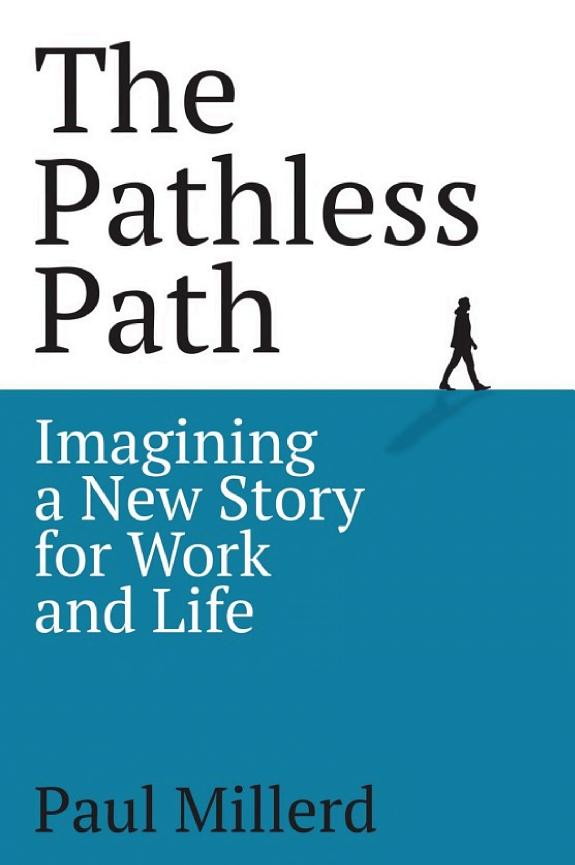
The Pathless Path: Imagining a New Story For Work and Life
2. The Pathless Path: Imagining a New Story For Work and Life by Paul Millerd
Paul Millerd had a consulting career that looked great from the outside and felt hollow from the inside. When he left it, he didn’t have a grand plan. He had a lot of uncertainty and a growing suspicion that the story most of us have been told about work, that you find a good job, climb a ladder, and eventually earn the right to enjoy your life, might not be the only story available. The Pathless Path is his attempt to work through that suspicion honestly and share what he found.
What makes this book stand out is how genuinely personal it is without becoming self-indulgent. Millerd is not trying to sell you on his lifestyle or convince you to quit your job tomorrow. He’s trying to open up the question of what it means to build a working life around curiosity and meaning rather than security and status. He draws on thinkers like Ivan Illich and Alan Watts without making the whole thing feel like a philosophy lecture, which is a harder balance to strike than it sounds.
The writing is clear and honest, and Millerd is upfront about the difficulties of leaving the default path, including financial anxiety, social confusion, and the strange grief of stepping away from an identity you spent years building. If you are someone who has already started questioning the conventional script, this book will feel like a conversation with someone who has been there. If you are deeply attached to traditional career structures, it may feel unsettling, which is not necessarily a bad thing.
Millerd describes the “default path” not as a conspiracy but as a story so widely shared that most people never think to question it. That framing alone is worth the price of the book.
This is perfect for people who have already sensed that the conventional career path isn’t working for them and want thoughtful company while they figure out what comes next.
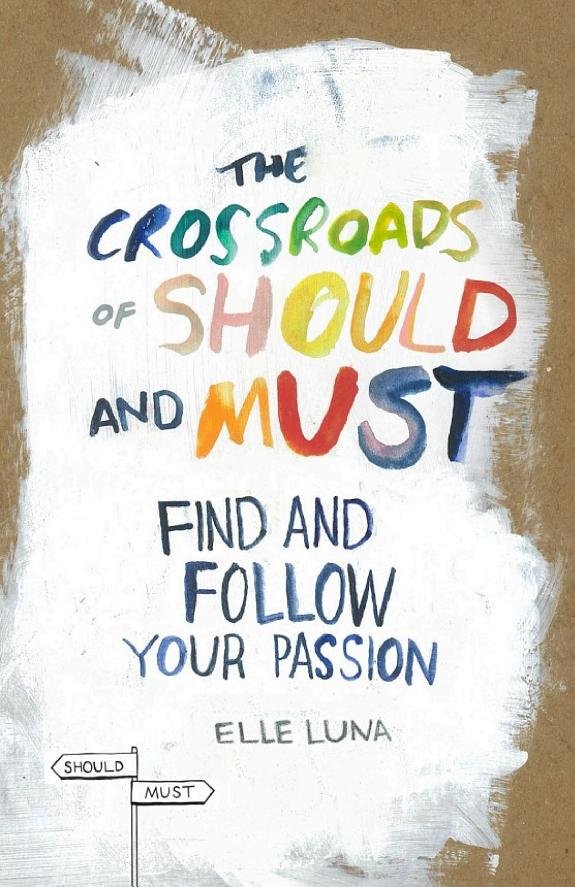
The Crossroads of Should and Must: Find and Follow Your Passion
3. The Crossroads of Should and Must: Find and Follow Your Passion by Elle Luna
Elle Luna started with an essay that went viral, and then turned it into this slim, beautifully illustrated book about the tension between what we feel we should do and what we feel compelled to do. “Should” is the accumulated weight of other people’s expectations, social norms, and the fear of disappointing someone. “Must” is the thing you return to again and again even when it makes no practical sense. The book is an argument for paying attention to your Must, even when it’s inconvenient.
The visual design of the book is part of the experience. Luna is an artist, and the pages are full of hand-lettered text, watercolor illustrations, and a general aesthetic that is warm and a little dreamy. This is not a book for people who want charts and frameworks. It is a book for people who respond to images and stories and the feeling of being seen. Luna’s own story, leaving a promising tech career to paint, runs through the book as both illustration and evidence.
It’s worth being honest about what this book is not. It does not grapple seriously with financial reality, structural barriers, or the fact that following your Must is a lot easier when you have a safety net. The perspective is idealistic, and if you’re in a genuinely precarious situation, some of it may feel frustrating rather than freeing. But as a short, beautiful prompt to ask yourself what you keep coming back to, it does its job well.
“Should is how others want us to show up in the world. Must is who we are, what we believe, and what we do when we are alone with our truest, most authentic self.” Simple, but it lands.
This is perfect for creative people who are feeling suffocated by obligations and expectations and need a gentle, visually rich nudge to remember what actually matters to them.
What Color Is Your Parachute? 2022: Your Guide to a Lifetime of Meaningful Work and Career Success
4. What Color Is Your Parachute? 2022 by Richard N. Bolles
What Color Is Your Parachute? has been around since 1970, which is either a testament to its enduring usefulness or a sign that the job market has always been confusing enough to keep it in print. Probably both. Richard Bolles spent decades refining this guide, and the updated editions have kept pace with how hiring actually works now, including online applications, networking in the digital age, and the changed landscape of remote work. It remains one of the most thorough and practical career guides ever written.
The heart of the book is the Flower Exercise, a detailed self-inventory that asks you to identify your skills, values, preferred working conditions, ideal geography, and more. It sounds like a lot of homework, because it is. But the payoff is a genuinely detailed picture of what kind of work would actually suit you, not just what you’re qualified for on paper. Bolles was always skeptical of the idea that job hunting is primarily about sending out resumes and waiting, and the book pushes readers toward a more active, relationship-based approach to finding work.
The writing is a little earnest and occasionally dated in its tone, and some readers find the religious undercurrents in certain sections surprising. It is also a long book, and not every chapter will apply to every reader. But if you are willing to do the exercises rather than just read past them, this is one of the few career books that actually changes how you think about what you want and how to go after it. Consider it less of a casual read and more of a working document.
Bolles always insisted that the most important question is not “what jobs are out there” but “who are you and what do you do best.” After fifty-plus years, that reframe still cuts through a lot of noise.
This is perfect for people who are actively job searching or considering a career change and want a thorough, proven process for understanding their own strengths and finding work that fits them.
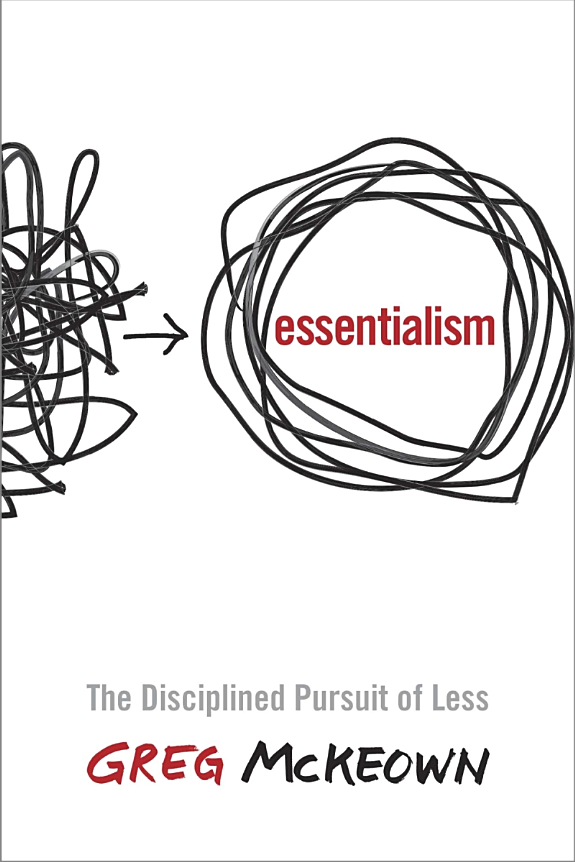
Essentialism: The Disciplined Pursuit of Less
5. Essentialism: The Disciplined Pursuit of Less by Greg McKeown
Greg McKeown opens with a question that is deceptively simple: what if you could do less but accomplish more of what actually matters? Essentialism is not a productivity book in the usual sense. It is not about squeezing more tasks into your day. It is about the discipline of figuring out what is truly important to you and protecting that ruthlessly, while letting go of everything that is just noise dressed up as obligation.
The book is built around the idea that most of us are living lives shaped by other people’s priorities. We say yes to too many things, spread ourselves thin, and then wonder why we feel busy but not purposeful. McKeown’s argument is that clarity about what matters most is not a luxury but a necessity, and that the inability to say no is one of the central problems of modern working life. He is not wrong, and he makes the case crisply and with enough real examples to keep it grounded.
Where the book has limits is in its assumptions about autonomy. McKeown writes largely for knowledge workers with a fair degree of control over their schedules, and the advice lands differently if you are in a job or a life situation where saying no has real consequences. The framework is also more useful as a thinking tool than as a step-by-step plan, so readers who want very specific tactics may find it a little abstract. That said, as a corrective to the cult of busyness and an argument for doing fewer things with more intention, it is one of the clearer books on the subject.
“You cannot overestimate the unimportance of practically everything.” McKeown attributes a version of this to others, but the whole book is an attempt to make that idea operational, and it mostly succeeds.
This is perfect for people who feel overwhelmed by obligations and commitments and want a clear framework for deciding what actually deserves their time and energy.
None of these books will hand you a ready-made direction. If you were hoping for that, I’m sorry, and also, no book can actually do that, no matter what the cover promises. What these five can do is give you better questions, sharper self-knowledge, and a few different ways of thinking about what a good life and a good working life might look like for you specifically.
The honest advice is to start with whichever one matches where you are right now. If you want structure and exercises, start with Designing Your Life or What Color Is Your Parachute. If you want to question the whole premise of conventional work before you make any decisions, The Pathless Path is waiting for you. If you need to remember what you actually care about, Luna and McKeown are both short enough to read in a weekend. Pick one, read it with a pen in hand, and see what it stirs up. That’s usually enough to get moving.