
8 Books for Women Who Struggle With Self-Expression
There is a particular kind of exhaustion that comes from swallowing your words. From nodding along when you want to push back, from shrinking in meetings, from writing three drafts of a text message and then deleting the whole thing. If any of that sounds familiar, you are not alone, and you are not broken. You have just, perhaps, never been handed the right tools.
Books cannot fix everything. But the right book at the right time can feel like someone finally putting words to something you have been carrying for years. The eight titles below are not a prescription or a self-improvement checklist. They are invitations. Some will resonate immediately. Others might sit on your nightstand for a month before you are ready. That is fine too. Reading, like self-expression, works on its own schedule.
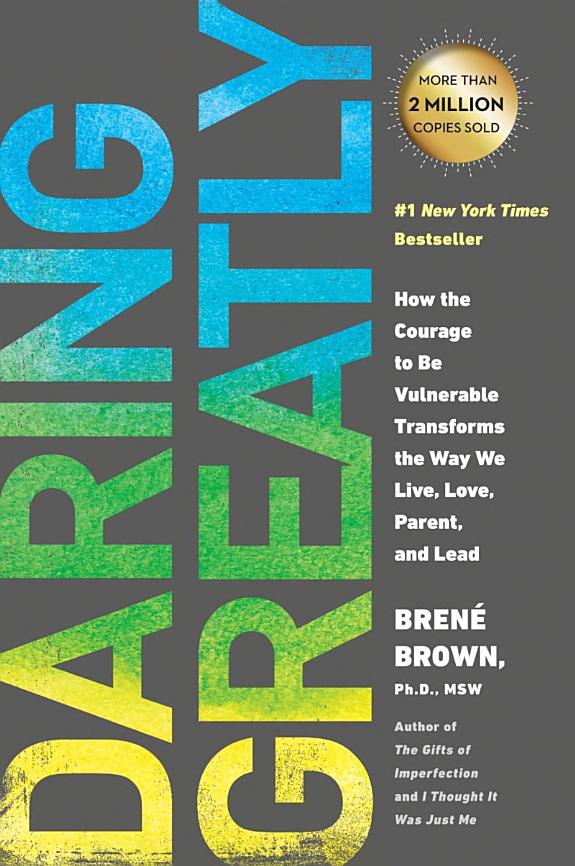
Daring Greatly
1. Daring Greatly by Brené Brown
Brené Brown spent years as a shame researcher before she became a household name, and that background shows. This is not a cheerleading book. It is a careful, research-backed argument that vulnerability is not weakness, and that the inability to be seen, really seen, is at the root of most of what holds women back from saying what they actually think and feel. Brown writes with warmth but also with precision. She is not telling you to overshare. She is telling you that the armor you have built around yourself is costing you more than it is protecting you.
The central idea is deceptively simple: you cannot connect with others, or with yourself, without risking exposure. Brown calls this “daring greatly,” borrowing from a Theodore Roosevelt speech, and she spends the book unpacking what that actually looks like in daily life, in relationships, in workplaces, in parenting. For women who have been socialized to be agreeable and accommodating, the chapter on perfectionism alone is worth the price of the book.
Her writing style is conversational and grounded in real stories, which makes the research feel accessible rather than clinical. She is also genuinely funny in a dry, self-deprecating way that keeps the heavier material from becoming oppressive. If you have ever stayed quiet in a room because you were afraid of saying the wrong thing, this book will feel like it was written specifically for you.
That said, if you are already well-versed in therapy culture and vulnerability discourse, some of this may feel familiar. Brown covers ground that has since been explored in many other books, and readers who have spent time in therapy or done significant inner work may find the early chapters more introductory than revelatory.
Vulnerability is not about winning or losing. It is about having the courage to show up when you cannot control the outcome.
This is perfect for women who have been told they are “too sensitive” or “too quiet” and have started to believe it, and for anyone who wants a research-backed framework for understanding why speaking up feels so terrifying.
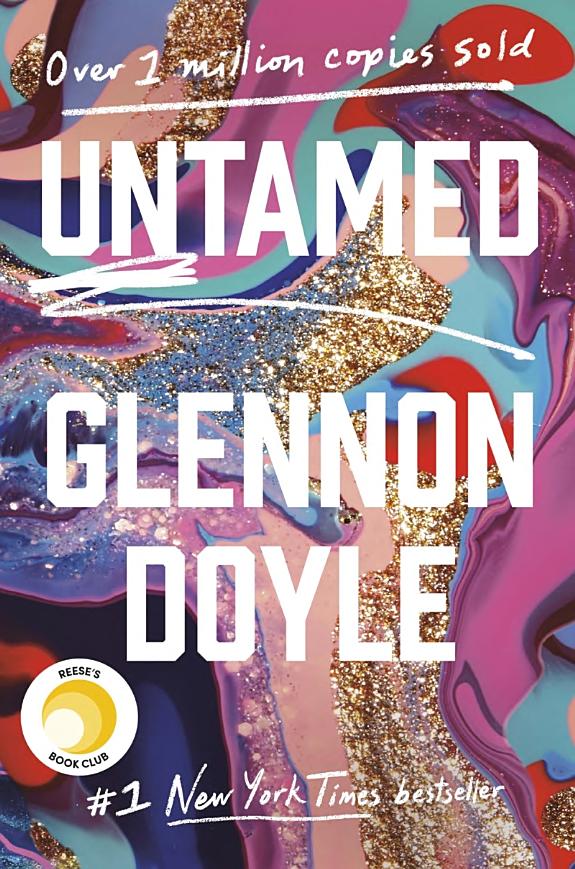
Untamed
2. Untamed by Glennon Doyle
Glennon Doyle writes like she is sitting across from you at a kitchen table, slightly out of breath, telling you the most important thing she has ever figured out. “Untamed” is her memoir of dismantling the life she had carefully constructed to please everyone around her, and it is one of the more honest accounts of what it costs a woman to suppress her own voice for decades. It is raw in a way that some readers will find cathartic and others will find a bit much, which is honestly a fair warning to give upfront.
The book’s central argument is that women are domesticated from childhood, trained to be palatable and pleasant, and that reclaiming your voice requires a kind of deliberate unlearning. Doyle uses the word “untaming” to describe this process, and she traces her own journey through addiction, an affair, the end of her marriage, and falling in love with soccer player Abby Wambach. The personal stakes are high, which gives the philosophical points real weight.
What makes this book particularly useful for women who struggle with self-expression is Doyle’s insistence that the voice you have been suppressing is not dangerous or wrong. It is just yours. She is a gifted storyteller, and even the moments that veer into the slightly evangelical, she is a Christian writer and that does color the text, are carried by the sheer momentum of her prose. You may not agree with every conclusion she draws, and that is fine. The book is still worth reading.
Readers who prefer a more measured, analytical approach to personal development may find Doyle’s style too emotional or too declarative. She is not interested in nuance for its own sake, and there are moments where her certainty can feel a little breathless.
The braver I am, the luckier I get.
This is perfect for women who have spent years performing a version of themselves that does not quite fit, and who are ready to read someone else’s account of what it looks like to stop.
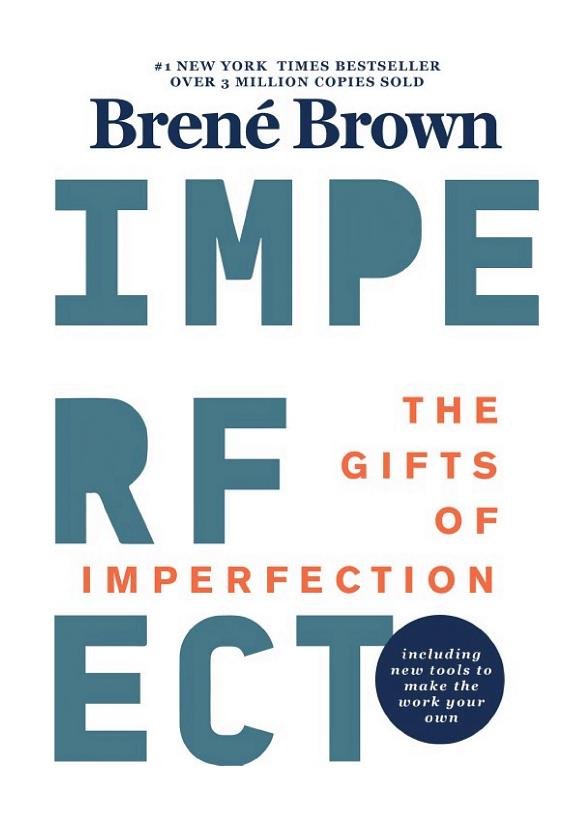
The Gifts of Imperfection
3. The Gifts of Imperfection by Brené Brown
If “Daring Greatly” is Brené Brown’s argument for vulnerability, “The Gifts of Imperfection” is her practical companion for living it out. The book is structured around ten “guideposts” for what she calls wholehearted living, which sounds like the kind of phrase that belongs on a motivational poster but is handled here with considerably more depth. Each guidepost addresses a specific pattern that keeps people, and women in particular, from expressing themselves honestly, things like perfectionism, numbing, and the need for certainty.
Brown’s voice here is slightly more personal than in her later work. She includes her own stumbles and contradictions, which keeps the book from feeling like a lecture. The section on letting go of what other people think is particularly strong. She does not pretend this is easy. She acknowledges that the fear of judgment is real and that it has real consequences, which makes her advice feel earned rather than glib.
The book is shorter and more accessible than some of her other titles, which makes it a good starting point if you are new to her work. It does not assume you have done a lot of prior reading in this space, and it does not require you to. The writing is clear, the examples are relatable, and the ideas are presented in a way that invites reflection rather than demanding it.
For readers who have already worked through “Daring Greatly,” some overlap may feel redundant. Brown is covering similar philosophical territory from a slightly different angle, and while the framing is distinct, the underlying ideas are consistent enough that reading both books in quick succession can feel repetitive.
Authenticity is the daily practice of letting go of who we think we are supposed to be and embracing who we actually are.
This is perfect for women who are just beginning to examine the gap between how they present themselves to the world and how they actually feel inside, and who want a gentle, structured entry point into that work.
Becoming
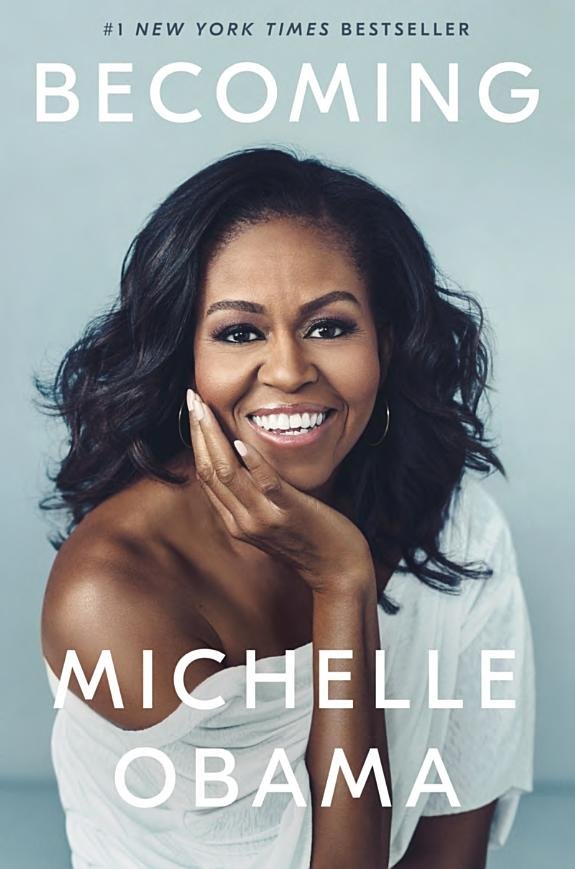
4. Becoming by Michelle Obama
Michelle Obama’s memoir is, among many things, a sustained meditation on the experience of being a woman whose voice is consistently underestimated. She writes about growing up on the South Side of Chicago, about a college counselor who told her she might not be “Princeton material,” about the years she spent reshaping herself to fit spaces that were not designed with her in mind. And then she writes about what it took to stop doing that. The book is elegant and unhurried, which is a reflection of Obama’s voice as a writer, and it rewards slow reading.
What sets “Becoming” apart from other memoirs in this space is the specificity. Obama does not traffic in vague inspiration. She describes particular moments, particular conversations, particular decisions, and she is honest about the cost of each one. The chapters about her time in the White House are especially good on the subject of self-expression, because she was operating in a context where every word she said was scrutinized and politicized, and she had to find a way to remain herself inside that pressure.
Her prose is warm but never soft. She has opinions and she states them clearly, which is itself a kind of lesson for women who have been taught to hedge and qualify everything they say. There is also a quiet humor running through the book that makes even the heavier sections feel livable. She is not asking you to feel sorry for her. She is asking you to think about what it means to become yourself.
If you are looking for a book that offers explicit strategies or frameworks for self-expression, this is not that book. It is a memoir, and its wisdom is embedded in story rather than stated outright. Some readers prefer their insights delivered more directly.
Your story is what you have, what you will always have. It is something to own.
This is perfect for women who are navigating spaces where they feel like outsiders, and who need the reminder that finding your voice is not a single moment but a long, ongoing practice.
Big Magic: Creative Living Beyond Fear
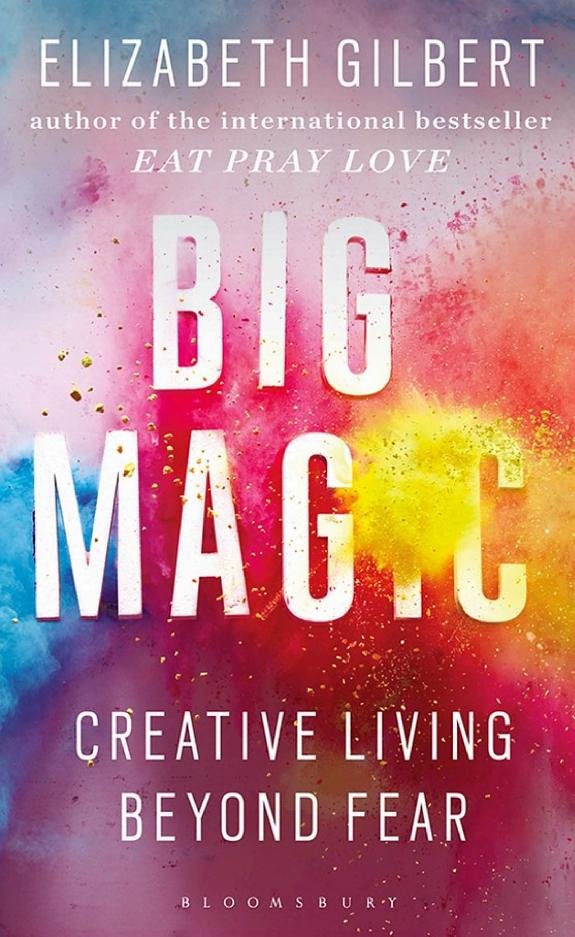
5. Big Magic: Creative Living Beyond Fear by Elizabeth Gilbert
Elizabeth Gilbert wrote “Big Magic” for people who have a creative impulse they have been ignoring, suppressing, or apologizing for. Self-expression and creativity are not the same thing, but they are close enough neighbors that this book belongs in any conversation about finding your voice. Gilbert’s argument is that fear is a natural companion to any creative act, and that the goal is not to eliminate fear but to stop letting it drive. She is a generous, enthusiastic writer, and her enthusiasm is mostly contagious rather than exhausting, which is a harder balance to strike than it sounds.
The book is structured loosely around ideas like courage, enchantment, permission, and trust. Gilbert draws on her own experience as a writer, including the years before “Eat Pray Love” when she was working in bars and diners to support her writing habit, and she is bracingly honest about the unglamorous reality of creative work. She does not romanticize struggle, but she does insist that the struggle is worth it, and she makes a convincing case.
One of the book’s most useful ideas for women who struggle with self-expression is her insistence that you do not need anyone’s permission to make things or to speak. You do not need a credential or an audience or a guarantee that what you create will be good. You just need to begin. This sounds simple, but Gilbert unpacks it with enough specificity and humor that it actually lands rather than bouncing off the reader like most motivational advice does.
If you are skeptical of Gilbert’s slightly mystical framing around creativity, which involves ideas about inspiration as an external force that visits you, some sections may feel too woo-adjacent for your taste. She is aware of this and addresses it directly, but it does not fully resolve the tension for every reader.
Done is better than good.
This is perfect for women who have a creative or expressive life they have been putting off until they feel ready, braver, or more qualified, and who need someone to tell them, convincingly, that they already have what it takes.
The Confidence Code
6. The Confidence Code by Katty Kay and Claire Shipman
Katty Kay and Claire Shipman are both veteran journalists, and it shows in how they approach this subject. “The Confidence Code” is the most research-heavy book on this list, drawing on neuroscience, psychology, and genetics to explore why women tend to have lower confidence than men and what, if anything, can be done about it. If you have ever wondered whether your reluctance to speak up is a personality flaw or something more structural, this book will give you a much more nuanced answer than either extreme.
The central finding, drawn from interviews with scientists, psychologists, and high-achieving women, is that confidence is partly genetic but also substantially behavioral. You can build it. Not by repeating affirmations in the mirror, which is a relief to hear, but by taking action, tolerating failure, and gradually recalibrating your relationship with risk. The authors are clear that the confidence gap between men and women is real, documented, and rooted in both biology and socialization, and they resist the temptation to oversimplify either cause or solution.
The writing is accessible without being dumbed down. Kay and Shipman have a light touch with the science and a good instinct for when an anecdote will land better than a study citation. The book is also notably honest about the ways in which the confidence gap is not entirely a personal problem. Some of it is systemic, and women who speak up confidently are sometimes penalized for it in ways that men are not. The authors do not pretend otherwise.
This book is less useful for women who are primarily looking for a deeply personal or emotional exploration of self-expression. Its strengths are analytical and practical, and readers who want something more narrative or introspective may find it a little dry in places.
Confidence is not some fixed asset that you either have or you don’t. It is something you build, action by action.
This is perfect for women who want to understand the structural and psychological roots of their silence before they try to change it, and for anyone who finds data more convincing than anecdote.
You Are a Badass
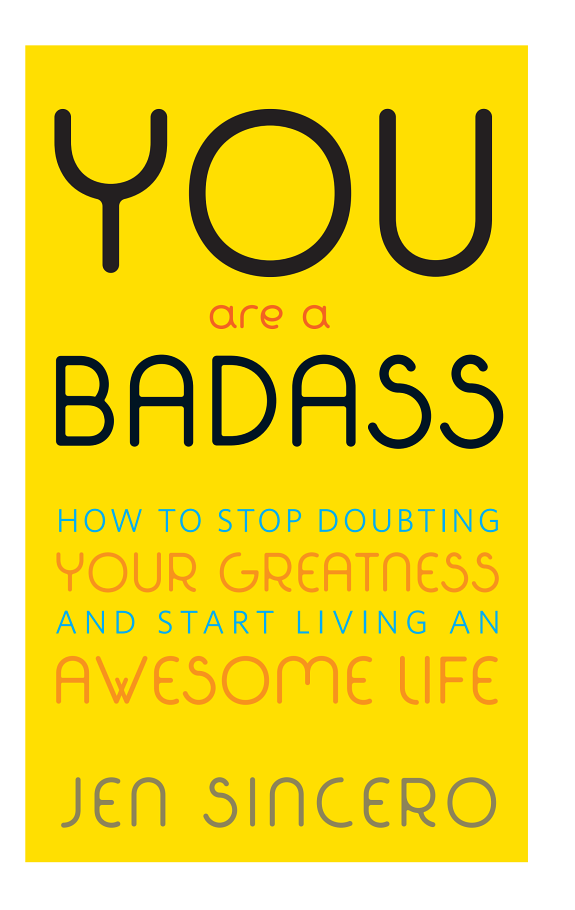
7. You Are a Badass by Jen Sincero
Full disclosure: “You Are a Badass” is the loudest book on this list, and it knows it. Jen Sincero writes in a voice that is part motivational coach, part brash older sister, and entirely unapologetic about both. If the more measured tone of the other books on this list has started to feel a little polite, this one will wake you up. Sincero’s central message is that you are sabotaging yourself with limiting beliefs you absorbed before you were old enough to question them, and that the first step to expressing yourself fully is identifying and dismantling those beliefs.
The book covers a lot of ground, from self-perception to money to relationships, and some chapters are more relevant to self-expression than others. The sections on fear, on the stories we tell ourselves about who we are and what we deserve, and on the habit of seeking external validation are particularly strong. Sincero has a gift for making the familiar feel urgent, and her humor is genuinely funny rather than performative, which is not something every self-help writer can claim.
She does lean into some metaphysical ideas about the universe and energy that not every reader will find convincing. If you are the kind of person who rolls your eyes at phrases like “the Universe has your back,” you will be doing some eye-rolling here. Sincero is aware that this is divisive and does not particularly care, which is consistent with the book’s overall message about not contorting yourself to suit other people’s comfort.
For readers who prefer a more grounded, evidence-based approach, the lack of citations and the breezy confidence with which Sincero makes some fairly large claims may feel unsatisfying. This is a book built on conviction rather than data, and that is either its strength or its weakness depending on what you are looking for.
You are responsible for what you say and do. You are not responsible for whether people freak out about it.
This is perfect for women who know intellectually that they should speak up but keep finding reasons not to, and who need a book that will be a little impatient with their excuses in the most affectionate possible way.
Quiet: The Power of Introverts in a World That Can’t Stop Talking
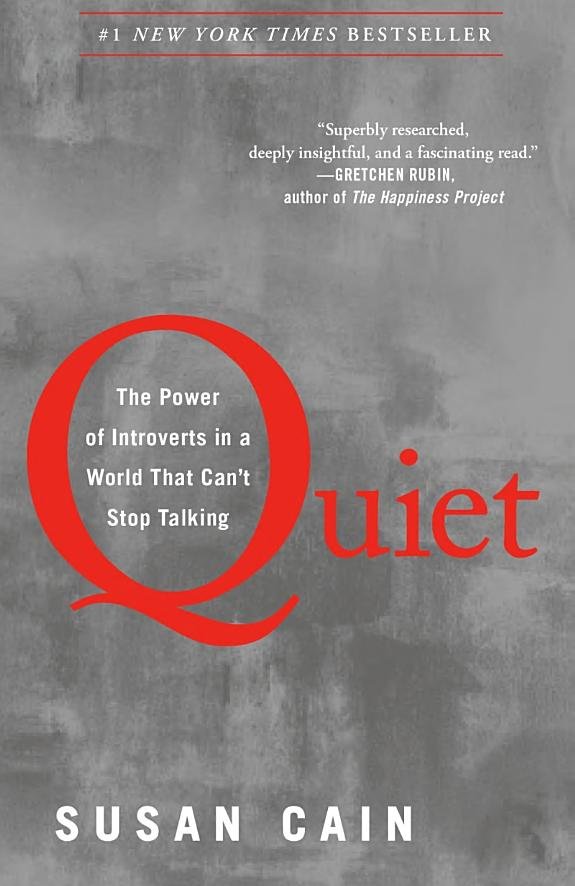
8. Quiet: The Power of Introverts in a World That Can’t Stop Talking by Susan Cain
Susan Cain’s “Quiet” is not strictly a book about self-expression, but it is one of the most important books a woman who struggles to speak up could read, particularly if the struggle is rooted in introversion rather than, or in addition to, fear or socialization. Cain’s argument is that Western culture has built an “Extrovert Ideal” that pathologizes quietness, and that introverts have been systematically taught to see their natural mode of engagement as a deficiency. This is a book that will make you reconsider whether the problem was ever really yours to fix.
Cain is a meticulous researcher and a graceful writer. She moves between neuroscience, psychology, history, and personal narrative with real skill, and the book never feels like a textbook even when it is covering dense material. The chapters on how introverts are treated in schools and workplaces are particularly illuminating for women who have spent years wondering why group brainstorming sessions make them want to disappear into the floor. (It turns out this is a reasonable response, not a character flaw.)
What “Quiet” offers for women who struggle with self-expression is a reframe. It asks whether the goal should be to become louder, or whether the goal should be to find contexts and methods of expression that suit who you actually are. Cain does not tell introverts to stay home and avoid all social interaction. She offers a much more nuanced picture of how introverts can communicate effectively without pretending to be something they are not.
If you identify strongly as an extrovert, this book may feel less directly applicable to your experience, though the sections on the cultural overvaluation of loudness and confidence are interesting regardless of where you fall on the introvert-extrovert spectrum. It is also worth noting that this is a book about introversion broadly, not specifically about women, so some readers may wish it engaged more directly with the gendered dimensions of the subject.
There is no such thing as a pure introvert or extrovert. Such a person would be in a lunatic asylum.
This is perfect for women who have always felt that something was wrong with them for not wanting to speak up in groups, and who are ready to consider the possibility that the problem is not them but the rooms they have been asked to perform in.
Finding your voice is rarely a single decision. It is more like a slow accumulation of small moments where you choose to say the thing instead of swallowing it, to show up as yourself instead of the version of yourself that takes up less space. These eight books will not do that work for you, but they will keep you company while you do it, which is sometimes exactly what you need.
Some of these titles will resonate immediately. Others might sit quietly on your shelf for a while before they find their moment. Either way, the fact that you are here, looking for books about this particular struggle, suggests you are already paying attention to something important. That is a fine place to start.