

5 Books That Help You Stop Avoiding Conflict
Most of us were never taught how to handle conflict well. We were taught to be polite, to keep the peace, to let things go. And so we do, until we have been letting things go for so long that a minor disagreement about whose turn it is to do the dishes somehow carries the weight of seventeen unresolved arguments from the past three years. Sound familiar?
The good news is that conflict avoidance is a habit, not a personality trait. It can be unlearned. The books on this list won’t promise to make hard conversations easy, because that would be a lie. What they will do is give you frameworks, language, and a bit of courage to stop stonewalling, softening, or simply fleeing the room when tension rises. Whether you’re dealing with a difficult colleague, a partner who shuts down, or your own tendency to rehearse arguments in the shower but never actually have them, there is something here for you.
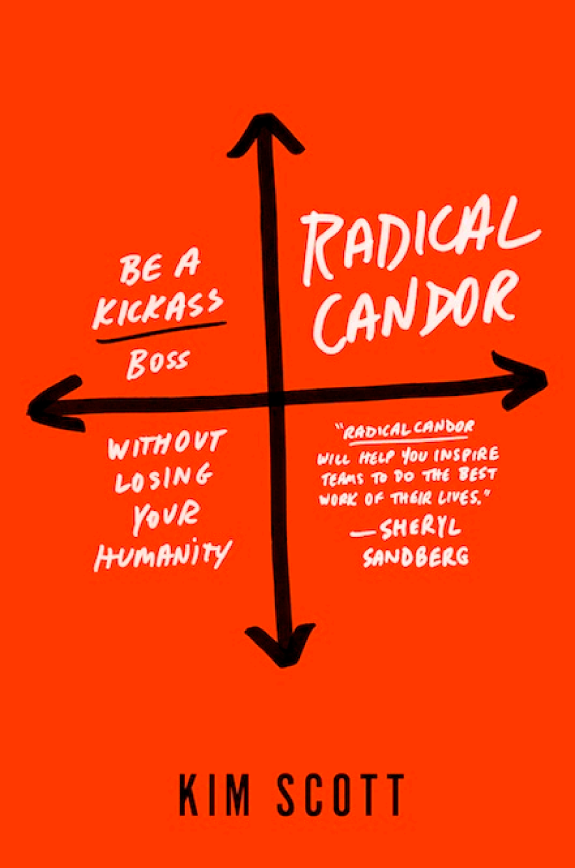
Radical Candor: Be a Kick-Ass Boss Without Losing Your Humanity
1. Radical Candor: Be a Kick-Ass Boss Without Losing Your Humanity by Kim Scott
Kim Scott spent years working at Google and Apple, and what she noticed was that most managers fall into one of two traps: they are either brutally blunt in ways that crush people, or they are so worried about being liked that they say nothing useful at all. Radical Candor is her argument for a third path, one built on caring personally about the people you work with while still challenging them directly. The book is warm and specific, grounded in real stories from her own career rather than abstract theory.
The central framework is a simple two-axis grid, but Scott does something smart with it. She spends real time on “ruinous empathy,” the tendency to withhold honest feedback because you don’t want to hurt someone’s feelings. This, she argues, is actually the least kind thing you can do. Letting someone walk around with spinach in their teeth because you don’t want an awkward moment is not kindness. It is conflict avoidance dressed up as consideration. That reframe alone is worth the price of the book.
Scott writes with a conversational directness that matches her subject matter, and she is honest about her own failures and missteps, which makes the whole thing feel trustworthy. The book is primarily aimed at managers and team leaders, and if you are not in that context, some sections will feel less immediately relevant. But the core ideas about honest communication apply well beyond the office.
If you have ever given someone a glowing performance review while privately thinking they needed to change course, or if you have stayed silent in a meeting when you should have spoken up, this book will make you a little uncomfortable in the best possible way.
“Radical Candor is what happens when you put ‘challenge directly’ and ‘care personally’ together. It’s not about being harsh. It’s about being honest in a way that actually helps.”
This is perfect for managers, team leads, and anyone who has ever given feedback so vague and gentle that the other person had no idea anything was wrong.
Crucial Conversations: Tools for Talking When Stakes Are High
2. Crucial Conversations: Tools for Talking When Stakes Are High by Kerry Patterson, Joseph Grenny, Ron McMillan, Al Switzler
Four authors is a lot of cooks for one kitchen, but Crucial Conversations pulls it off. The book defines a crucial conversation as one where opinions vary, stakes are high, and emotions run strong. Which, if you think about it, covers a remarkable amount of daily life. The authors spent years studying what separates people who handle these moments well from those who either blow up or go silent, and this book is their distillation of those findings.
The writing is clear and practical, with a slightly corporate flavor that will feel comfortable to some readers and a little dry to others. The frameworks have names like “STATE my path” and “CRIB,” which sounds like the kind of acronym a consultant charges a lot of money to explain, but they are genuinely useful once you get past the branding. The core insight is that most conversations go badly not because of the topic itself but because people stop feeling safe, and once safety breaks down, rational dialogue follows shortly after.
What the book does particularly well is help you notice your own patterns. Do you go silent when things get tense? Do you mask your real feelings with sarcasm? Do you find ways to control the conversation rather than genuinely engage? The authors have a name for all of these, and naming them is the first step toward changing them. The book is heavy on workplace examples, so if you are hoping for guidance on deeply personal or romantic conflicts, it addresses those but with less nuance than some of the other books on this list.
It is worth noting that Crucial Conversations rewards re-reading. The first time through, you absorb the concepts. The second time, you start catching yourself mid-conversation thinking, “Oh, I just did the thing.”
“The root cause of most failed conversations is not the topic. It’s the moment when one person stops feeling safe enough to be honest, and neither person knows how to fix that.”
This is perfect for people who want a structured, step-by-step approach to high-stakes conversations, particularly in professional settings.
Difficult Conversations: How to Discuss What Matters Most
3. Difficult Conversations: How to Discuss What Matters Most by Douglas Stone, Bruce Patton, Sheila Heen
This one came out of the Harvard Negotiation Project, which sounds intimidating, but the book itself is anything but. Stone, Patton, and Heen write with a lot of warmth and a genuine understanding of why these conversations feel so impossible. Their central argument is that every difficult conversation is actually three conversations happening at once: the “what happened” conversation, the feelings conversation, and the identity conversation. Most of us only acknowledge the first one, which is exactly why things go wrong.
The identity piece is where the book really earns its place on this list. The authors explain that difficult conversations feel threatening not just because of the practical stakes involved, but because they challenge our sense of who we are. If someone criticizes how you handled a situation, it’s hard not to hear that as a verdict on your character. Understanding that dynamic, really sitting with it, changes how you approach both giving and receiving hard feedback. You stop defending yourself quite so reflexively once you understand why you were doing it in the first place.
The writing is thoughtful and the examples are drawn from a wide range of contexts, from workplace disputes to family tensions to friendships that have quietly gone sideways. It is notably more nuanced than most books in this genre when it comes to the emotional and psychological layers of conflict, which makes it feel less like a manual and more like a genuinely insightful read. If you want quick scripts and action items above all else, this might feel too reflective. But if you want to understand yourself better as a communicator, it is hard to beat.
One thing the authors are admirably honest about is that some conversations won’t go well no matter how skillfully you approach them. That honesty is refreshing, and it makes the advice feel more credible.
“We don’t have difficult conversations because we’re bad at them. We have them because they threaten something deeper than the topic at hand, our sense of who we are and whether we’re okay.”
This is perfect for people who want to understand the psychological underpinnings of conflict, not just the tactics, and who are willing to do a bit of honest self-examination in the process.
The Dance of Connection: How to Talk to Someone When You’re Mad, Hurt, Scared, Frustrated, Insulted, Betrayed, or Desperate
4. The Dance of Connection: How to Talk to Someone When You’re Mad, Hurt, Scared, Frustrated, Insulted, Betrayed, or Desperate by Harriet Lerner
Harriet Lerner is a psychologist and the author of the well-known “The Dance of Anger,” and she brings that same clinical wisdom and readable prose to this follow-up. The subtitle is doing a lot of work here, but honestly, it earns every word. This book is less about tactics and more about understanding the emotional landscape of connection and disconnection, particularly in close relationships. It is warmer and more personal in tone than most of the other books on this list.
Lerner’s central concern is authenticity. She is deeply skeptical of communication formulas that tell you exactly what to say, because real relationships don’t run on scripts. What she offers instead is a way of thinking about voice, about when to speak and when to stay quiet, about what it means to tell the truth without using the truth as a weapon. She is particularly good on the subject of overfunctioners and underfunctioners in relationships, the person who takes on all the emotional labor and the person who lets them, and how both patterns make genuine communication harder.
The book is written primarily with personal and romantic relationships in mind, and it shows. If you are looking for help with a difficult boss or a workplace negotiation, this is probably not your first stop. But if the conflict you are avoiding is with someone you love, or someone you used to love, Lerner writes about that territory with unusual clarity and compassion. She also has a dry sense of humor that surfaces occasionally and makes the whole thing feel like advice from a very wise friend rather than a textbook.
This is not a book that will hand you a five-step plan. That is precisely the point. Lerner wants you to think more carefully, not just act more strategically.
“Speaking up doesn’t mean saying everything you feel. It means finding a way to be honest that serves the relationship rather than just relieving your own discomfort.”
This is perfect for people navigating difficult conversations in close personal relationships, particularly those who feel stuck between speaking their truth and protecting the connection.
Nonviolent Communication: A Language of Life
5. Nonviolent Communication: A Language of Life by Marshall B. Rosenberg
Marshall Rosenberg’s book is the most philosophically ambitious of the five, and it requires a certain willingness to sit with ideas that might initially feel a bit idealistic. Nonviolent Communication, or NVC, is built on the premise that most human conflict arises from a failure to recognize and express our own needs, and a corresponding failure to recognize the needs of others. When we communicate from judgment and evaluation, we trigger defensiveness. When we communicate from observation and need, we open space for genuine connection.
The four-part framework at the heart of the book covers observations, feelings, needs, and requests. Rosenberg is careful to distinguish between genuine observations and the evaluations we disguise as observations, between feelings and the thoughts we mislabel as feelings, and between real needs and the strategies we confuse with needs. These distinctions sound subtle on paper and feel genuinely revelatory in practice. The moment you start noticing how often you say “I feel like you don’t care” instead of “I feel hurt” is the moment the whole framework clicks.
A fair warning: the writing style can feel a little repetitive, and some of the dialogue examples Rosenberg uses to illustrate his points are so idealized that they strain credibility. Nobody talks quite like that in the heat of an argument. The book is also grounded in a particular worldview about human nature that some readers will find deeply resonant and others will find a bit earnest. If you are deeply skeptical of anything that sounds like it belongs in a therapy session, this might not be your entry point into conflict literature.
But for readers who are willing to meet it on its own terms, NVC offers something the other books on this list don’t quite reach: a fundamental reorientation of why we communicate at all. Less about winning, less about being right, more about actually being heard and hearing others.
“Every criticism, demand, and judgment is a tragic expression of an unmet need. When you can hear the need underneath the attack, the whole conversation changes.”
This is perfect for readers interested in communication as a practice of empathy, those drawn to deeper relational and psychological work, and anyone who has noticed that being right in an argument rarely makes them feel better.
None of these books will make conflict disappear. Some conversations are going to be hard no matter how well-prepared you are, and some relationships require more than better language to repair. But there is a real difference between avoiding a difficult conversation because you genuinely don’t know how to have it, and avoiding one because you have chosen not to. These books move you from the first category toward the second, which at least makes it a choice.
Start with whichever one speaks most directly to the kind of conflict you are currently sidestepping. If it’s a work situation, Radical Candor or Crucial Conversations will feel most immediately applicable. If it’s personal, Harriet Lerner or Difficult Conversations might land closer to home. And if you want to rebuild the whole foundation of how you communicate, Rosenberg’s book is waiting patiently for you whenever you’re ready.
The conversations you keep putting off are not going anywhere. You might as well get a little better at having them.