5 Books to Read When You Feel Like Giving Up
There are days when everything feels too heavy. The goal seems too far, the loss too fresh, or the effort simply too exhausting to justify. Most of us have been there, staring at the ceiling at two in the morning, wondering if any of it is worth it. And the last thing you want in those moments is someone handing you a motivational poster.
What you actually need is a book written by someone who has genuinely been through something hard. Not a curated highlight reel, but a real account of struggle, doubt, and the slow, unglamorous work of continuing anyway. The five books below were chosen precisely because they do not promise easy answers. They offer something rarer: honest company in difficult moments, and a quiet, stubborn argument for going on.
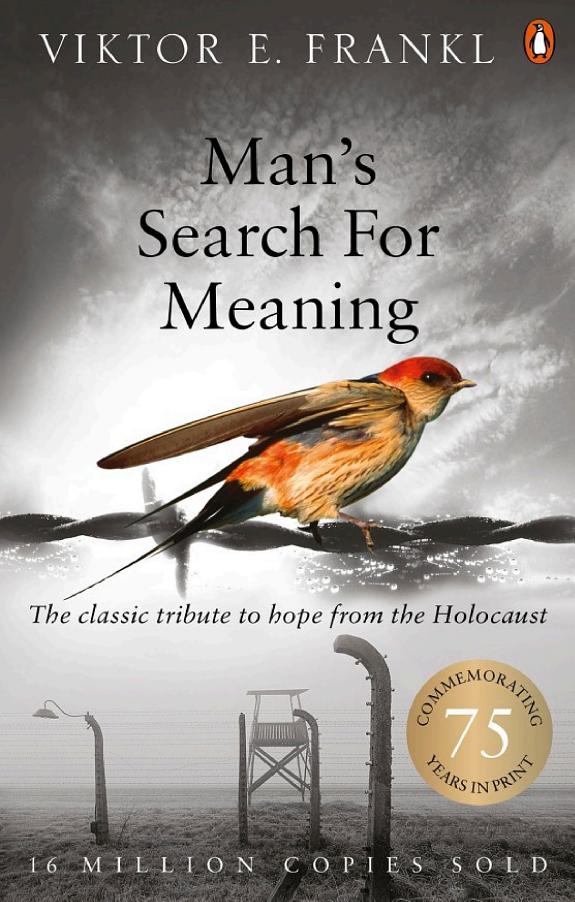
Man’s Search for Meaning
1. Man’s Search for Meaning by Viktor E. Frankl
Viktor Frankl was a psychiatrist and Holocaust survivor who spent years in Nazi concentration camps, including Auschwitz. He wrote this book not as a memoir of suffering for its own sake, but as a careful, almost clinical examination of what allowed some people to endure the unendurable while others collapsed. The answer he arrived at, after watching both, was meaning. Not happiness, not comfort, not the absence of pain. Meaning.
Frankl’s voice is something unusual. He writes with the precision of a scientist and the tenderness of someone who has genuinely loved people and lost them. The first half of the book recounts his experiences in the camps with a restraint that somehow makes it more affecting, not less. The second half introduces logotherapy, his school of psychotherapy built on the premise that the primary human drive is the search for meaning in life. It sounds abstract until you read it, and then it feels almost embarrassingly obvious.
This is not a comfortable read. Frankl does not let you off the hook by suggesting that meaning is found rather than chosen. He places the responsibility squarely on the reader, which is either bracing or annoying depending on your mood. If you are looking for someone to tell you that things will simply get better on their own, this is the wrong book. If you are ready to ask harder questions about what you are actually living for, it is exactly right.
“Everything can be taken from a man but one thing: the last of the human freedoms, to choose one’s attitude in any given set of circumstances, to choose one’s own way.” The weight of that sentence only grows the longer you sit with it.
This is perfect for readers who are willing to sit with difficult questions and want a philosophical framework for enduring hardship, not just a story of survival.
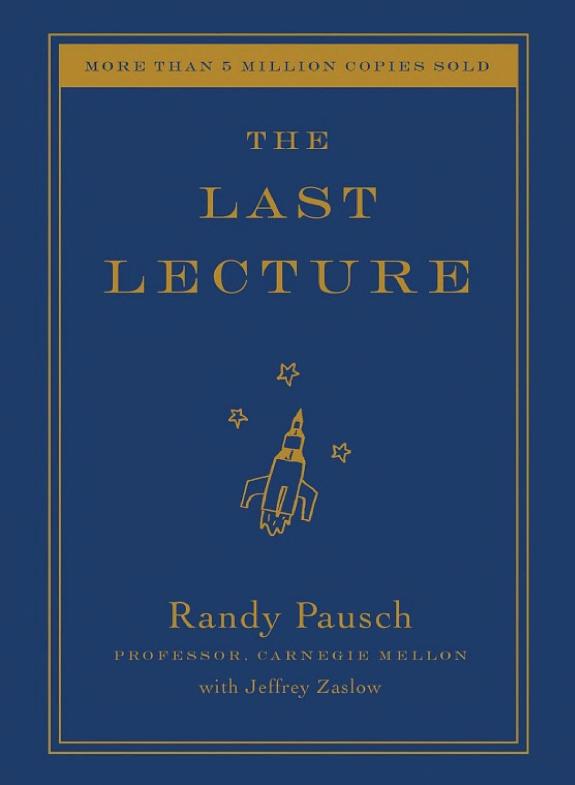
The Last Lecture
2. The Last Lecture by Randy Pausch with Jeffrey Zaslow
Randy Pausch was a computer science professor at Carnegie Mellon who was diagnosed with terminal pancreatic cancer at 47. When the university invited him to give a traditional “last lecture,” the kind professors sometimes give as a hypothetical farewell to their field, Pausch delivered something that caught the entire internet off guard. The actual lecture, and the book that followed, were not about dying. They were about living. Specifically, about childhood dreams, what it takes to achieve them, and what it means to enable the dreams of others.
Pausch’s writing style, shaped significantly by journalist Jeffrey Zaslow, is warm and direct without being saccharine. He is funny in the way that genuinely funny people are, which is to say naturally and without trying too hard. There is a famous moment in the lecture where he does push-ups on stage to prove he is still healthy enough to be worth listening to. That kind of personality comes through on every page. He is not performing bravery. He just seems to genuinely believe that how you spend your time and attention is the whole ballgame.
The book is not for everyone. If you find inspirational stories of people facing death with grace to be emotionally exhausting or manipulative, this one might frustrate you. Pausch’s relentless optimism is real, but it is also the product of a specific temperament and a very specific set of circumstances. Not everyone has his energy, and that is worth acknowledging. Still, for readers in a low period who need reminding that ordinary life contains remarkable things, this book delivers.
Pausch writes that the brick walls in life are not there to stop us. They are there to show how badly we want something. It is the kind of line that should feel like a bumper sticker but somehow, in context, does not.
This is perfect for readers who respond well to warmth and personal storytelling, and who want a book about living fully rather than a meditation on hardship.
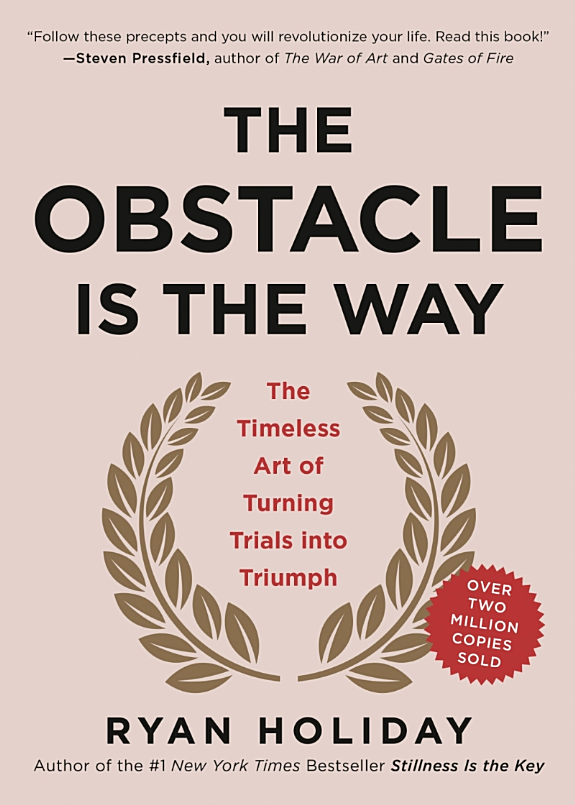
The Obstacle Is the Way: The Timeless Art of Turning Trials into Triumph
3. The Obstacle Is the Way: The Timeless Art of Turning Trials into Triumph by Ryan Holiday
Ryan Holiday draws on Stoic philosophy, particularly the writings of Marcus Aurelius, Epictetus, and Seneca, to build a practical argument for one idea: the thing blocking your path is not separate from your progress. It is the path. The title comes directly from Marcus Aurelius, and Holiday spends the book unpacking that idea through historical examples ranging from Amelia Earhart to Ulysses S. Grant to Steve Jobs. The writing is brisk, almost urgent, and the chapters are short enough that you can read them in stolen moments.
Holiday’s voice is confident, occasionally to the point of cockiness, but his research is solid and his examples are well chosen. He is not asking you to feel better about your obstacles. He is asking you to use them. The distinction matters. There is no wallowing here, no extended sympathy. The book operates on the assumption that you are capable of more than you think, and it is not especially interested in entertaining the possibility that you might disagree. Some readers find this energizing. Others find it a little cold.
The Stoic framework is genuinely useful, but it works better for some types of problems than others. If you are dealing with grief, illness, or loss that is simply not within your control to reframe or act upon, the book’s relentless emphasis on agency can feel tone-deaf. It is a book for people who are stuck, not necessarily for people who are broken. That is an important distinction. When the fit is right, though, it is one of the most practically useful books on this list.
Holiday argues that great people do not avoid obstacles. They develop a kind of clarity that lets them see the obstacle as the whole point. That is either wisdom or a very useful lie, and honestly, the difference might not matter much in practice.
This is perfect for readers who want a practical, action-oriented framework for dealing with setbacks, and who respond well to historical examples and Stoic philosophy.
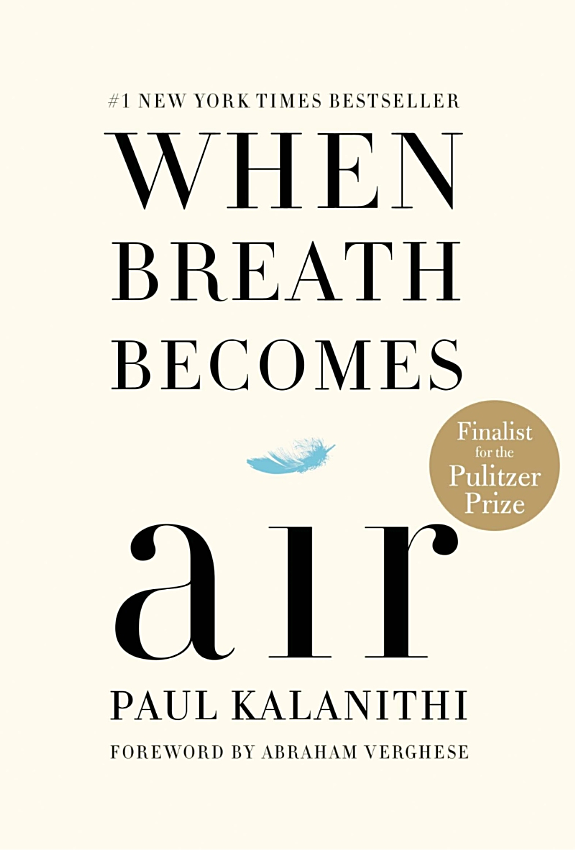
When Breath Becomes Air
4. When Breath Becomes Air by Paul Kalanithi
Paul Kalanithi was a neurosurgeon who, just as he was completing his residency and standing at the beginning of the career he had worked toward for over a decade, was diagnosed with stage IV lung cancer. He died in 2015 at 37. He wrote this book while he was dying, which is not a detail you can separate from the reading of it. Every sentence carries that weight, and yet the book is not heavy in the way you might expect. It is, more than anything else, a meditation on what makes a life worth calling a life.
Kalanithi was a literary scholar before he became a doctor, and it shows. His prose is precise and beautiful without being showy. He writes about medicine, mortality, identity, and fatherhood with the kind of clarity that only comes from having genuinely thought something through rather than performed the thinking. His wife Lucy’s epilogue, written after his death, is one of the most quietly devastating pieces of writing you will encounter anywhere, and it earns every word.
This book is not for readers who want a roadmap or a set of lessons. Kalanithi is not trying to teach you anything. He is trying to understand his own life in the time he has left, and he invites you to watch him do it. If you need a book that tells you what to do with your despair, look elsewhere on this list. If you need a book that reminds you that the question of how to live is worth asking even when, especially when, the answer is uncertain, this is it.
Near the end of the book, Kalanithi writes to his infant daughter: “When you come to one of the many moments in life where you must give an account of yourself, provide a ledger of what you have been, and done, and meant to the world, do not, I pray, discount that you filled a dying man’s days with a sated joy.” That sentence does not leave you.
This is perfect for readers who are drawn to literary memoir and want a book that asks deep questions about meaning and identity without pretending to answer them neatly.
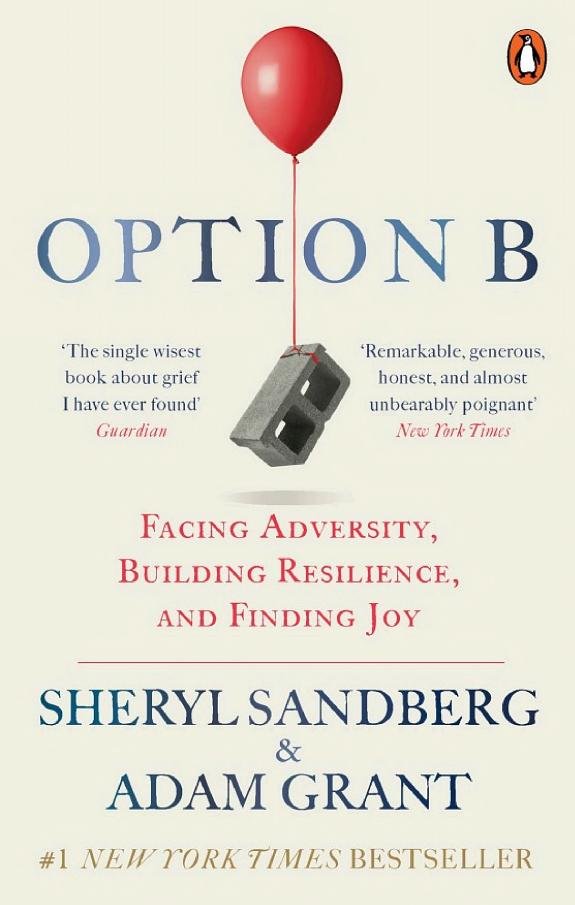
Option B: Facing Adversity, Building Resilience, and Finding Joy
5. Option B: Facing Adversity, Building Resilience, and Finding Joy by Sheryl Sandberg and Adam Grant
Sheryl Sandberg’s husband Dave Goldberg died suddenly in 2015, and this book grew out of her experience navigating grief while raising two young children and running one of the largest companies in the world. She co-wrote it with Adam Grant, a psychologist at Wharton whose research on resilience and post-traumatic growth gives the book its structural backbone. The combination works better than you might expect. Sandberg brings the raw personal experience, and Grant brings the research without letting it crowd out the humanity.
The title comes from a moment early in Sandberg’s grief when she asked a friend to help her talk to her son before a father-son activity at school. The friend said the obvious thing, that it would be hard because his father was not there, and Sandberg said she wanted Dave. “Option A is not available,” her friend told her. “So let’s just kick the shit out of Option B.” That is the spirit of the whole book. Not toxic positivity, not pretending things are fine, but a genuine, research-backed argument that resilience is not a fixed trait. It is something you build, often in the middle of a mess.
The book is at its best when Sandberg is being honest about the strange, specific humiliations of grief, like not knowing whether to check the box for “married” or “widowed” on a form, or the way well-meaning people say the wrong thing with such consistency that it becomes almost darkly funny. It is slightly less convincing when the corporate lens creeps in, which it occasionally does. Readers who have little patience for Silicon Valley framing may find certain sections grating. But the core of the book, the argument that joy and grief can coexist, and that both are worth making room for, is genuinely earned.
Grant’s research on post-traumatic growth, woven throughout the book, makes a case that adversity does not just test character. It can, under the right conditions, actually build it. The key phrase there is “under the right conditions,” which the book is honest enough to explore rather than assume.
This is perfect for readers who are navigating loss or major life disruption and want a book that combines personal honesty with practical, research-grounded perspective on building forward.
None of these books will fix a hard season. That is not what books do, and any that claim otherwise should be treated with suspicion. What these five do offer is something more modest and more durable: the sense that you are not alone in struggling, that people before you have faced worse and found reasons to continue, and that the question of how to live is not a sign of weakness. It is the most human question there is.
Pick the one that matches where you are right now. If you need philosophy, start with Frankl or Holiday. If you need to feel accompanied by someone in grief, Kalanithi or Sandberg. If you need warmth and a reminder of what ordinary life is worth, Pausch. There is no wrong choice. The fact that you are still looking for something to hold onto is itself a kind of answer.