

5 Books to Stop Second-Guessing Yourself
There is a particular kind of exhaustion that comes from living inside your own head too much. You replay conversations. You rewrite emails three times before sending them. You make a decision, feel okay about it for roughly eleven minutes, and then spend the rest of the day quietly dismantling it. If any of that sounds familiar, you are not broken. You are just someone who could use a good book or five.
The titles below are not quick fixes or cheerful pep talks dressed up as self-help. They are thoughtful, well-researched, and occasionally uncomfortable in the best way. Each one approaches self-doubt from a slightly different angle, whether that is the psychology of inner dialogue, the role vulnerability plays in confidence, or the gap between how we feel and how we act. Taken together, they form a pretty solid reading cure for a mind that will not quiet down.
Feel the Fear and Do It Anyway
1. Feel the Fear and Do It Anyway by Susan Jeffers
Susan Jeffers wrote this book in the 1980s and it has never really gone out of print, which tells you something. The central argument is disarmingly simple: fear does not go away when you become more capable or more prepared. It goes away when you decide that you can handle whatever comes next. That shift, from “I need certainty before I act” to “I can cope with whatever happens,” is the whole engine of the book.
Jeffers writes with a warmth that feels genuine rather than performed. She is not lecturing you from some elevated position of fearlessness. She is a person who was afraid and kept going anyway, and that comes through on every page. The book covers everything from fear of failure to fear of making the wrong choice, which is very much the territory of the chronic second-guesser.
The exercises are practical without being gimmicky, and the ideas build on each other in a way that feels satisfying rather than repetitive. Some of the language is a little dated, and a few sections lean into positive-thinking territory that more skeptical readers might find a bit much. But the core framework holds up remarkably well.
“The real issue is never about what you fear. It is about whether you believe you can handle it.”
This is perfect for readers who know intellectually that they are capable but keep waiting to feel ready before they act. It is not the right fit for someone looking for a heavily research-driven or clinical approach.
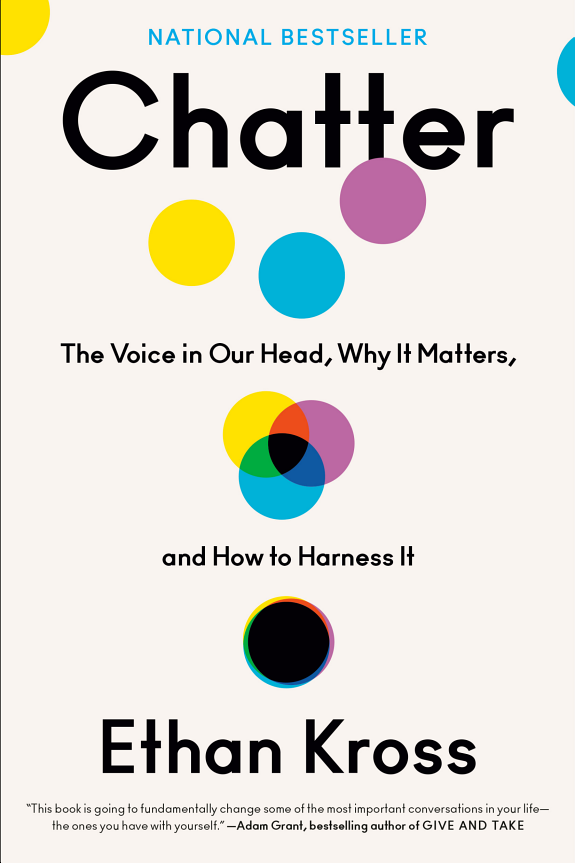
Chatter
2. Chatter by Ethan Kross
Ethan Kross is a psychologist who runs a lab at the University of Michigan dedicated to studying the inner voice, and this book is the result of years of research into why that voice so often turns against us. Chatter is what Kross calls the negative spiral of self-talk that kicks in when we are stressed, anxious, or second-guessing a choice we already made. It is specific, it is noisy, and according to Kross, it is also manageable.
What separates this book from a lot of the self-help field is its grounding in actual science. Kross is not asking you to take his word for things. He walks you through studies, explains the mechanisms behind why certain techniques work, and gives you a toolkit that has been tested rather than simply theorized. The writing is clear and accessible without dumbing anything down, which is a harder balance to strike than it sounds.
The specific techniques he offers, things like distanced self-talk, where you refer to yourself by name rather than “I,” or the practice of mental time travel to remind yourself that this moment will pass, are genuinely useful and not particularly difficult to implement. Some readers might wish the book went deeper on the emotional side of things, since it is more analytical than tender in its approach. But for people who respond well to understanding the “why” before the “how,” this is a strong read.
“The inner voice is not the enemy. Chatter is. And the two are not the same thing.”
This is perfect for analytically minded readers who want to understand the neuroscience behind self-doubt before trying to address it. It is less suited to someone looking for an emotionally warm or narrative-driven reading experience.
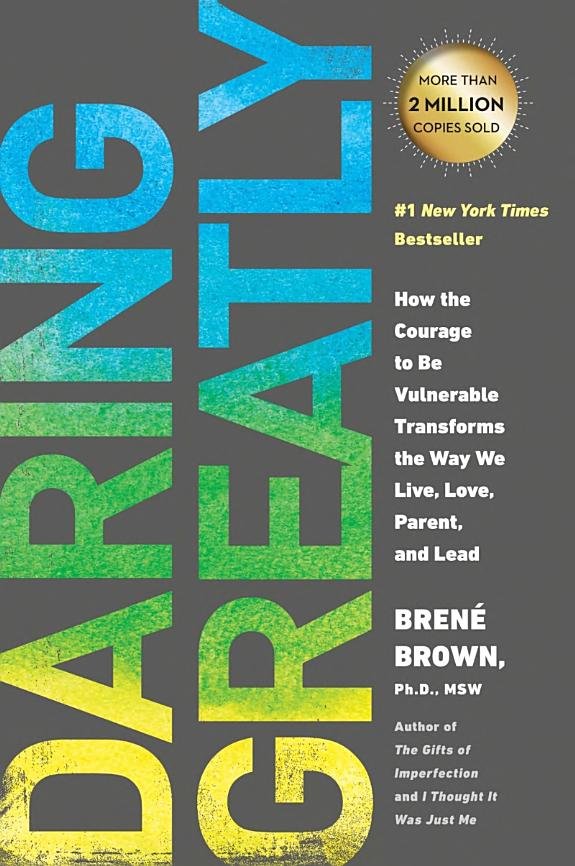
Daring Greatly
3. Daring Greatly by Brené Brown
Brené Brown spent years researching shame and vulnerability before writing this book, and it shows. Daring Greatly makes a case that second-guessing yourself is often not really about logic or risk assessment. It is about shame. It is about the fear that if you act, if you put something real out into the world, people will see who you actually are and find it lacking. That is a harder problem to solve than just building confidence, and Brown takes it seriously.
Brown is a storyteller as much as she is a researcher, and the book moves between data and personal narrative in a way that keeps things from feeling dry. She is funny in places, honest about her own struggles, and very good at naming feelings that most people carry around without ever quite articulating. The title comes from a Theodore Roosevelt quote about the person in the arena, and the book is essentially an extended argument for why showing up imperfectly is still worth doing.
It is worth noting that Brown has her critics, and some of the criticism is fair. The book can feel repetitive in places, and readers who are skeptical of qualitative research methods might bristle at how she presents her findings. But for the reader who has ever held back from something because they were afraid of being judged, the book has a lot to say.
“Vulnerability is not weakness. It is the most accurate measure of courage.”
This is perfect for people whose second-guessing is rooted in fear of judgment or a deep need for approval from others. It is not the right match for readers who want concrete behavioral strategies rather than an exploration of emotional roots.
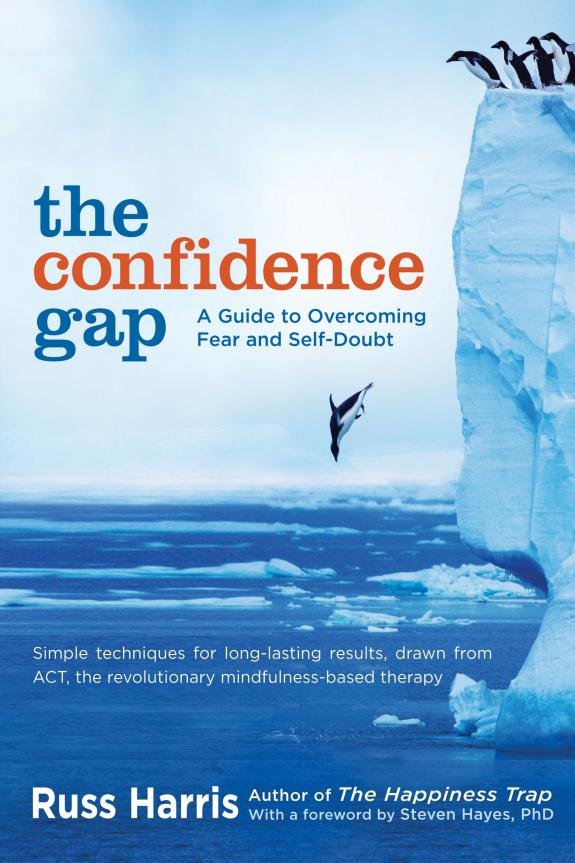
The Confidence Gap
4. The Confidence Gap by Russ Harris
Russ Harris is an Acceptance and Commitment Therapy practitioner, and this book is essentially ACT applied to the specific problem of confidence. The central insight, and it is a good one, is that most people are waiting for confidence to arrive before they take action, when in reality confidence is something that develops through action. You do not think your way into bravery. You act your way into it, even when the thinking is still messy and doubtful.
Harris writes with clarity and a certain no-nonsense quality that is refreshing in a genre that can sometimes get a little precious. He does not promise that you will stop having self-doubting thoughts. He promises that you can learn to have those thoughts without being controlled by them, which is a much more honest and ultimately more useful goal. The exercises throughout the book are drawn from ACT and are concrete enough to actually try rather than just nod at.
The book covers a lot of ground, including perfectionism, the inner critic, and the way we fuse with our own thoughts as though they are facts rather than just mental events. Some readers who are already familiar with ACT principles might find parts of it familiar territory. But as an introduction to applying those ideas specifically to self-doubt and second-guessing, it is well-structured and genuinely practical.
“The actions of a confident person and the actions of a courageous person look identical from the outside. The difference is only what is happening internally, and even that matters less than you think.”
This is perfect for people who have read plenty about self-doubt but still feel stuck in the gap between knowing and doing. It is less suited to readers looking for a deeply personal or emotionally exploratory approach.
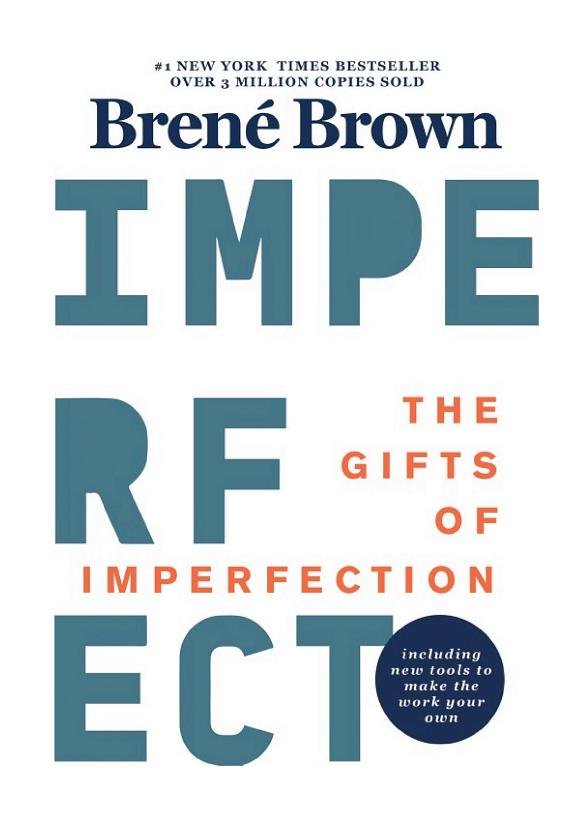
The Gifts of Imperfection
5. The Gifts of Imperfection by Brené Brown
Where Daring Greatly is about the courage to show up, The Gifts of Imperfection is about what you find when you stop trying so hard to be perfect. Brown organizes the book around what she calls guideposts, practices and qualities that support what she describes as wholehearted living. These include things like cultivating self-compassion, letting go of what other people think, and developing the ability to rest without guilt. Each one is a direct antidote to the perfectionism that fuels so much second-guessing.
This is a gentler book than Daring Greatly, and in some ways a more personal one. Brown draws heavily on her own experiences, including her own perfectionism and the slow work of unlearning it, and the book has a warmth that makes it easy to read in a way that still leaves you with something to sit with afterward. It is not a particularly long book, and you could finish it in a weekend, but the ideas tend to linger.
The structure, one guidepost per chapter, means the book does not build toward a single argument so much as accumulate a picture of what a less self-critical life might look like. Some readers find that approach satisfying. Others might wish for a tighter through-line. It is also worth saying that if you are not already sympathetic to Brown’s general worldview, this book is probably not going to convert you. She is writing for people who are willing to take the emotional work seriously.
“Perfectionism is not the same thing as striving to be your best. It is the belief that if we live perfect, look perfect, and act perfect, we can minimize the pain of blame, judgment, and shame.”
This is perfect for readers whose self-doubt is tied to perfectionism and an inability to feel like anything they do is ever quite enough. It is not the best fit for someone looking for a research-heavy or strategy-focused read.
Second-guessing yourself is not a personality flaw. It is something most thoughtful people do, and it tends to get louder during the moments that matter most. The books on this list will not silence that voice overnight, and any book that promises otherwise is probably not worth your time. What they will do is give you better ways of understanding where the doubt comes from and, more importantly, how to keep moving in spite of it.
If you are not sure where to start, think about what kind of reader you are. If you want science, start with Chatter. If you want to understand the emotional roots of your hesitation, Daring Greatly is a good entry point. If you want something practical and action-oriented, The Confidence Gap will serve you well. Any of them is a reasonable place to begin. The main thing is to actually begin, which is, fittingly, the whole point.