

7 Books That Shift How You See Yourself
Most of us carry around a version of ourselves that was built by other people. Parents, teachers, old relationships, a particularly rough Tuesday in 2009. The story gets layered on slowly, and before long it feels like the truth. These books push back on that.
The seven books below are not quick fixes or feel-good fluff. Some of them are uncomfortable. One of them might make you cry on public transport, which is a risk you should consider before opening it on the bus. But each one offers a genuinely different lens through which to look at yourself, your habits, your fears, and the ways you move through the world. They are written by researchers, therapists, philosophers, and spiritual teachers, and together they cover a lot of ground.
Whether you are in the middle of a difficult season or simply curious about what makes you tick, there is something here worth reading.
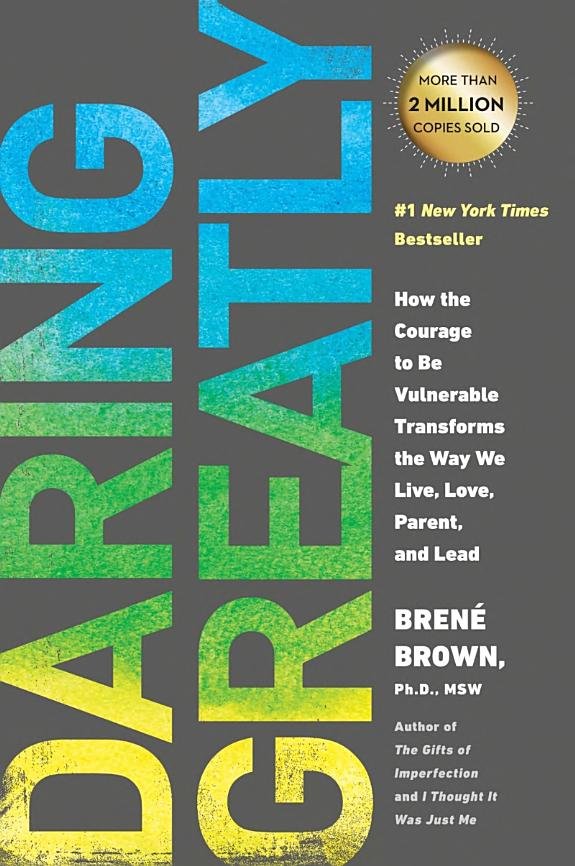
Daring Greatly
1. Daring Greatly by Brené Brown
Brené Brown spent years as a shame researcher before she reluctantly became one of the most talked-about voices on vulnerability. That reluctance is part of what makes this book feel honest. She did not set out to write a self-help manifesto. She set out to understand why some people seemed to live and connect more fully than others, and what she found, after thousands of interviews, was that vulnerability was not a weakness. It was the thing those people had in common.
The title comes from a Theodore Roosevelt speech, the one about the man in the arena with dust on his face. Brown uses it to argue that showing up, even when the outcome is uncertain, even when you might fail publicly, is the whole point. The book covers shame, worthiness, parenting, leadership, and relationships, and it does so with a conversational warmth that makes the research feel accessible rather than clinical. Brown is funny in the dry, self-deprecating way that earns trust rather than demanding it.
Where the book is strongest is in its treatment of shame versus guilt. The distinction she draws, that shame says “I am bad” while guilt says “I did something bad,” sounds simple but has real implications for how you respond to your own mistakes. It is the kind of idea that sticks around after you finish the chapter.
If you are the type who finds personal development writing too earnest or too tidy, this one might still win you over. Brown earns her conclusions. That said, readers who prefer hard neuroscience or are skeptical of qualitative research may find the methodology frustrating.
“Vulnerability is not winning or losing; it’s having the courage to show up and be seen when we have no control over the outcome.”
This is perfect for anyone who has ever held back from something meaningful because they were afraid of how it would look if it went wrong.
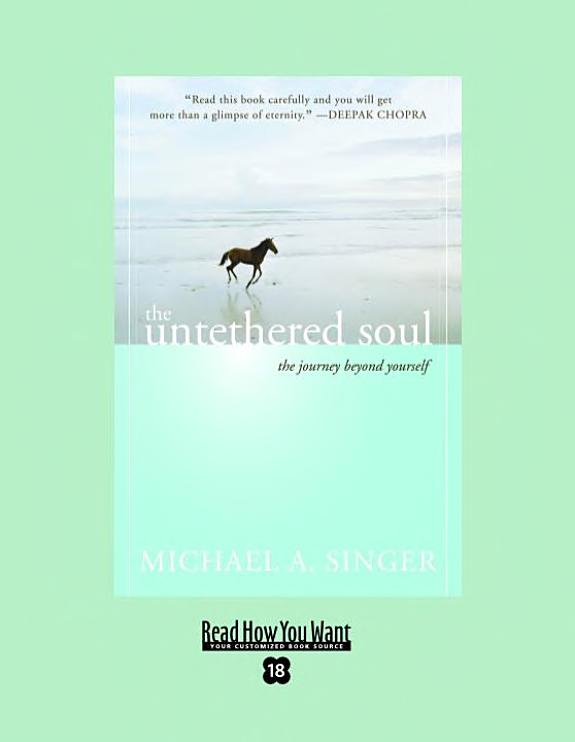
The Untethered Soul
2. The Untethered Soul by Michael A. Singer
Michael A. Singer opens this book with a question that sounds almost absurdly simple: who are you? Not your name, not your job, not your history. Who is the one noticing all of that? From that starting point, he builds one of the more quietly radical arguments in contemporary spiritual writing, that the voice in your head is not you, and that most of your suffering comes from identifying with it as though it were.
Singer draws on both Western psychology and Eastern philosophy without getting too deep into either tradition, which makes the book approachable for readers who have never touched a meditation cushion and those who have been on one for years. The prose is clear and unhurried. He writes the way a patient teacher talks, circling back to the central idea from different angles until it starts to feel real rather than theoretical.
The sections on how we store and protect emotional pain are particularly worth sitting with. Singer describes the way people build their entire personalities around avoiding certain feelings, and how exhausting that construction becomes over time. It is not a comfortable read in those passages. It is, however, a clarifying one.
This book is not for readers who want concrete, actionable steps. Singer is not offering a productivity framework. He is asking you to fundamentally reconsider your relationship to your own inner experience, and that kind of shift happens slowly, if it happens at all. Readers who need structure and exercises may find it too abstract.
“There is nothing more important to true growth than realizing that you are not the voice of the mind. You are the one who hears it.”
This is perfect for readers who feel trapped by their own thoughts and are ready to consider that the trap might be optional.
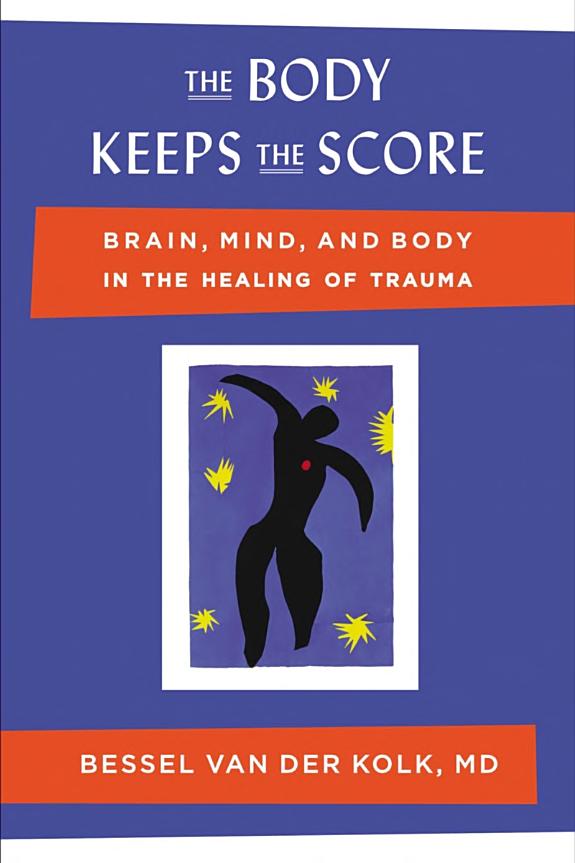
The Body Keeps the Score
3. The Body Keeps the Score by Bessel van der Kolk
This is the heaviest book on the list, and it earns that weight. Bessel van der Kolk is a psychiatrist who has spent decades working with trauma survivors, and this book is his attempt to explain what trauma actually does to a person, not just psychologically but physically, neurologically, in the body itself. The title is not a metaphor. He means it literally.
Van der Kolk writes with genuine compassion for his patients, and the case studies throughout the book are rendered with care and specificity. He covers war veterans, abuse survivors, and people whose trauma is harder to name but no less real. What holds it all together is his central argument: that talk therapy alone is often insufficient for trauma recovery because trauma is stored in parts of the brain that language does not easily reach. He explores alternatives, including EMDR, yoga, theater, and neurofeedback, with an open-mindedness that feels earned rather than trendy.
For readers who have ever wondered why certain memories feel different from others, why some experiences seem to live in the chest rather than the mind, this book offers a framework that is both scientific and, oddly, relieving. Understanding why something happens is not the same as healing it, but it is a real starting point.
This is not a book for everyone. It deals with detailed accounts of abuse, violence, and severe psychological distress. Readers who are currently in a fragile place should approach it carefully, ideally alongside a therapist. It is also long and dense in places, and readers looking for a lighter introduction to self-understanding may want to start elsewhere on this list.
“Trauma is not just an event that took place sometime in the past; it is also the imprint left by that experience on mind, brain, and body.”
This is perfect for anyone who has ever felt like their past is living in their present in ways they cannot fully explain or shake.
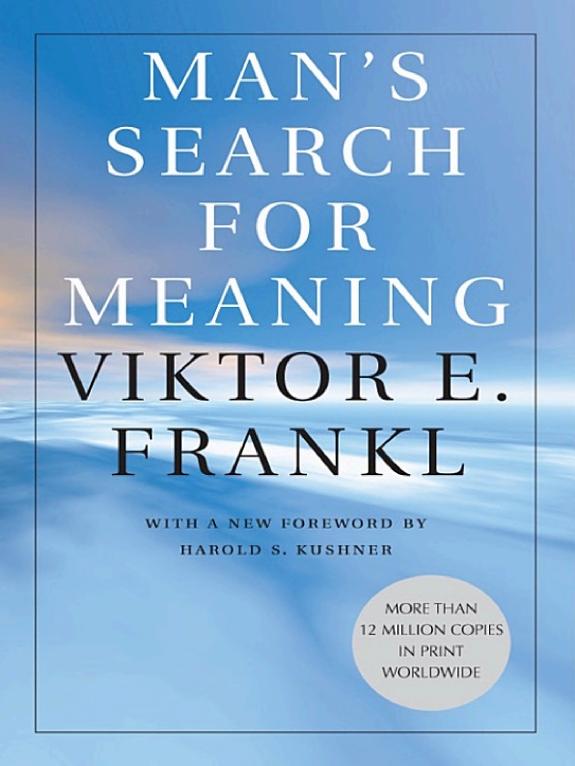
Man’s Search for Meaning
4. Man’s Search for Meaning by Viktor E. Frankl
Viktor Frankl was a psychiatrist who survived Auschwitz and three other Nazi concentration camps. He wrote this book in nine days after the war, and it has been in print ever since. That is not a coincidence. There is something in it that keeps finding readers who need it.
The book is divided into two parts. The first is a memoir of his experiences in the camps, written without sentimentality but with unflinching clarity. The second is an introduction to logotherapy, the school of psychotherapy he developed, which holds that the primary human drive is not pleasure or power but the search for meaning. Even in conditions of extreme suffering, Frankl observed, those who found a reason to endure were more likely to survive. That observation became the foundation of his life’s work.
What makes this book different from most writing on suffering and resilience is its refusal to be comforting in a cheap way. Frankl does not promise that meaning will make pain disappear. He argues that meaning makes pain bearable, which is a harder and more honest claim. The book is short, under two hundred pages, and dense with ideas that take much longer than a single reading to fully absorb.
Readers who are going through genuine crisis may find this book more useful than any other on this list. Readers who are in a relatively stable place and looking for lighter reading might find it a bit stark. It is not a book you read on a beach holiday, unless you are the kind of person who also packs Dostoevsky.
“When we are no longer able to change a situation, we are challenged to change ourselves.”
This is perfect for anyone wrestling with suffering that feels senseless and looking for a framework that does not require pretending it is not real.
Self-Compassion: The Proven Power of Being Kind to Yourself
5. Self-Compassion: The Proven Power of Being Kind to Yourself by Kristin Neff
Kristin Neff is a psychologist and researcher who became interested in self-compassion partly because she needed it herself, and she is honest about that throughout the book. That personal thread keeps the research from feeling cold. She defines self-compassion as having three components: self-kindness rather than self-judgment, recognizing that suffering is part of shared human experience rather than a personal failure, and mindful awareness of difficult emotions rather than suppression or over-identification. It sounds simple. It is harder than it sounds.
One of the more useful things Neff does is separate self-compassion from self-esteem. Self-esteem, she argues, is contingent on performance and comparison, which makes it unstable. Self-compassion is not about thinking you are great. It is about treating yourself with the same basic decency you would offer a friend who was struggling. For many people, that reframe is genuinely new.
The book includes exercises throughout, which makes it more practical than some of the others on this list. Neff also addresses the common resistance to self-compassion, particularly the fear that being kind to yourself will make you lazy or complacent. The research she cites suggests the opposite is true, that self-compassion is actually associated with greater motivation and resilience, not less.
Readers who are deeply skeptical of anything that sounds like self-help may find the tone occasionally too warm for their taste. And if you have already done significant work in therapy around self-criticism, some of the material will feel familiar. But for readers who hold themselves to a relentlessly harsh standard and have never really questioned why, this book is worth every page.
“With self-compassion, we give ourselves the same kindness and care we’d give to a good friend.”
This is perfect for the person who is endlessly patient with everyone else but treats their own mistakes like prosecutable offenses.
Mindset: The New Psychology of Success
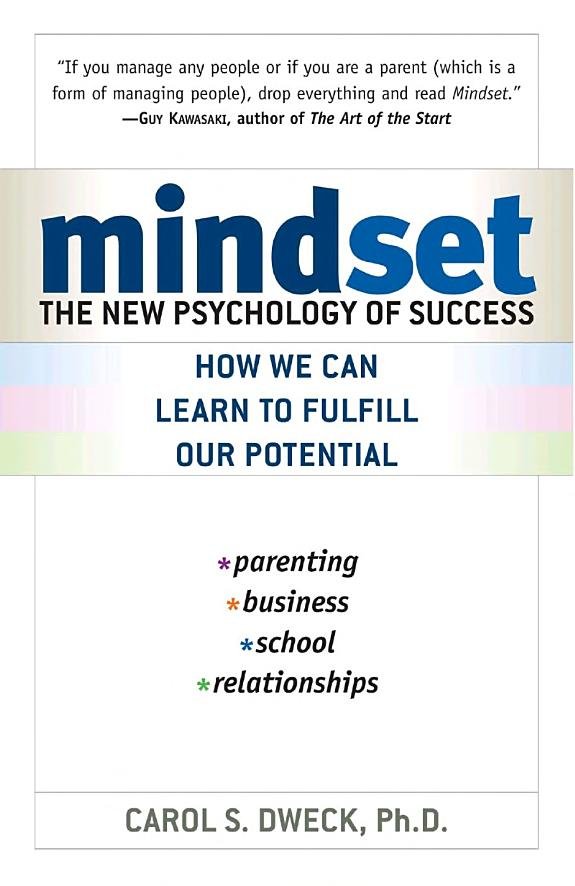
6. Mindset: The New Psychology of Success by Carol S. Dweck
Carol Dweck is a Stanford psychologist whose research on motivation and achievement led to one of the most widely discussed ideas in modern education and psychology: the difference between a fixed mindset and a growth mindset. A fixed mindset holds that your qualities, intelligence, talent, character, are essentially set. A growth mindset holds that they can be developed through effort and learning. The distinction sounds clean, but Dweck’s real contribution is showing how deeply the fixed mindset runs in most of us, and how it shapes behavior in ways we rarely notice.
The book covers not just individual psychology but relationships, parenting, sports, and business leadership. Dweck is particularly good on the ways that praising children for being smart rather than for effort can inadvertently install a fixed mindset, making them afraid to try things they might fail at. That section alone has changed how a lot of parents talk to their kids, which is either a testament to the book’s reach or a sign that everyone’s parenting guilt has found a new target.
Dweck writes clearly and uses plenty of examples, from athletes to CEOs to ordinary people navigating setbacks. The research underpinning the book is solid, though it is worth noting that some of the related studies in this area have faced replication challenges in recent years. Dweck herself has addressed this, and the core framework remains useful even if some of the edges are less certain than the book implies.
This is not a book for readers who want deep philosophical exploration. It is more practical and more optimistic in its framing than some of the others here. Readers who are already comfortable with the idea that they can grow and change may find it covers familiar ground. For those who have quietly assumed they are just not a certain kind of person, it offers a real counterargument.
“Becoming is better than being. The fixed mindset does not allow people the luxury of becoming. They have to already be.”
This is perfect for anyone who has ever given up on something early because they decided they were not naturally good at it.
The Four Agreements
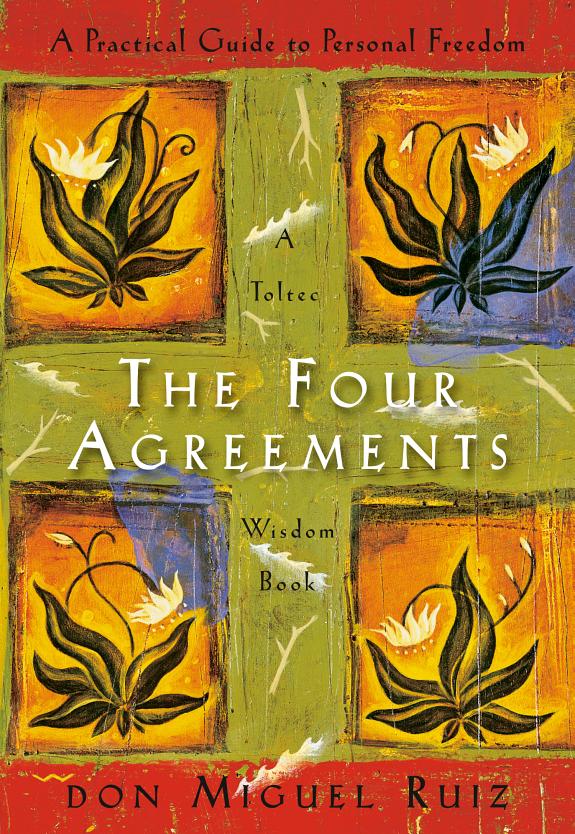
7. The Four Agreements by Don Miguel Ruiz
Don Miguel Ruiz draws on Toltec wisdom to build a framework for personal freedom that is, at its core, disarmingly straightforward. The four agreements he proposes are: be impeccable with your word, do not take anything personally, do not make assumptions, and always do your best. Written out like that, they sound like motivational poster material. In context, they are considerably more interesting.
The most compelling section of the book is the one on not taking things personally. Ruiz argues that what other people say and do is a projection of their own reality, their own fears, beliefs, and wounds, and has very little to do with you. That idea is not new, but the way he frames it, as a practice rather than a platitude, gives it more traction than it usually gets. The agreement about not making assumptions is equally worth sitting with, particularly for anyone who has ever constructed an entire argument in their head with a person who had no idea the conversation was happening.
The book is short, under 140 pages, and reads quickly. Ruiz writes in a simple, almost parable-like style that some readers will find refreshing and others will find thin. The ideas are not backed by research in the way that Dweck’s or Neff’s are, and the spiritual framing, rooted in Toltec tradition, may not resonate with every reader. If you are looking for citations and methodology, this is not your book.
What it does offer is a compact and memorable set of principles that are easy to return to when things get complicated. Many readers report coming back to it every few years and finding something different in it each time, which is a reasonable endorsement for a book you can finish in an afternoon.
“Nothing others do is because of you. What others say and do is a projection of their own reality, their own dream.”
This is perfect for readers who want a short, reflective read that offers a clear set of ideas to carry into daily life, without a lot of theoretical scaffolding around them.
None of these books will do the work for you, and none of them pretend to. What they offer is perspective, the kind that comes from people who have thought carefully about what it means to be human, to struggle, to grow, and to understand yourself a little more honestly over time. Some of them will resonate immediately. Some might sit on the shelf for a year before the right moment arrives.
If you are not sure where to start, consider what is most present for you right now. If you are dealing with the residue of difficult experiences, van der Kolk or Frankl might be where you begin. If you are more interested in the daily patterns of self-criticism or self-perception, Neff or Dweck might feel more immediately relevant. And if you are simply curious about the larger question of who you are beneath all the accumulated noise, Singer or Ruiz might be the right starting point.
The best book is always the one you actually read. Pick one, start there, and see where it takes you.