8 Books That Help You Heal and Move Forward
There is a particular kind of afternoon when you find yourself staring at a shelf, or a screen, or the middle distance, knowing something inside you needs tending to. Maybe you have been carrying something heavy for a long time. Maybe something recently broke open. Either way, you picked up this list, and that counts for something.
Books cannot replace therapy, community, or time. But they can sit with you in a way that feels remarkably close to being understood. The eight books gathered here approach healing from different angles, drawing on neuroscience, psychology, Buddhist philosophy, and plain honest memoir. Some will feel like a hand on your shoulder. Others will hand you a flashlight and point you toward a door you had been avoiding. A couple will do both at once, which is either very useful or very inconvenient, depending on the week.
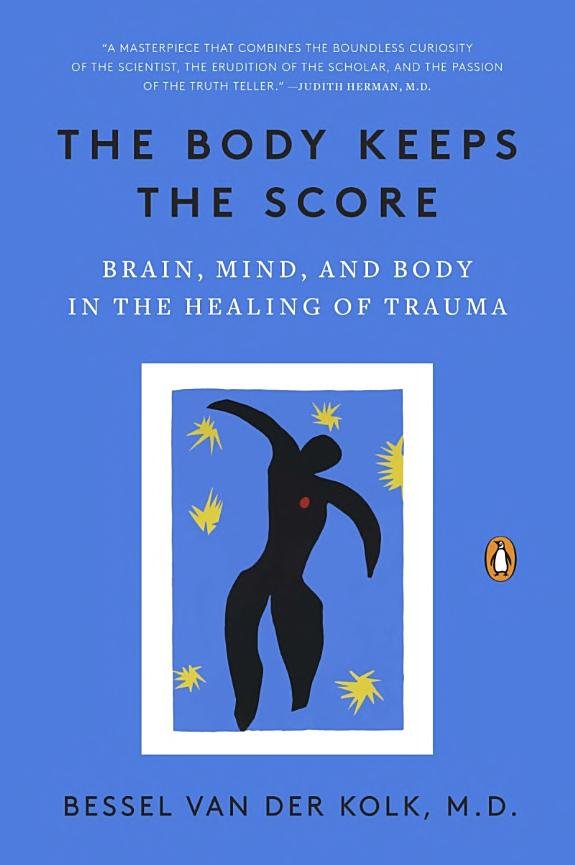
The Body Keeps the Score
1. The Body Keeps the Score by Bessel van der Kolk
Bessel van der Kolk spent decades working with trauma survivors, and this book is the distillation of that work. His central argument is both simple and quietly startling: trauma does not just live in the mind. It lives in the body, in posture and breath and the way your shoulders tighten before you even know you are afraid. Van der Kolk writes with the authority of a clinician and the patience of someone who has sat across from a great deal of human suffering and refused to look away.
The book moves through neuroscience, attachment theory, and a wide range of therapeutic approaches, from EMDR to yoga to theater. It is dense in places, and van der Kolk clearly loves a good study citation, but the clinical material is consistently grounded by real patient stories that remind you what all the science is actually for. He is not trying to impress you. He is trying to explain why so many people feel stuck even when they desperately want to move forward.
Where this book earns its reputation is in the way it shifts the question from “what is wrong with you” to “what happened to you.” That reframing alone has helped a remarkable number of readers feel less broken and more human. It is not a light read, and certain chapters on childhood trauma and abuse require some emotional preparation. But it is a serious, compassionate, and genuinely illuminating look at how we carry our histories.
“Trauma is not what happens to you. It is what happens inside you as a result of what happens to you.” Van der Kolk makes this distinction feel less like a therapy buzzword and more like a door finally opening.
This is perfect for anyone who suspects their past is showing up in their body, for therapists and curious readers alike, and for people who want a research-grounded explanation of why healing takes the shape it does. It is not ideal for someone looking for a quick, gentle read or for those who find heavy clinical detail more distancing than helpful.
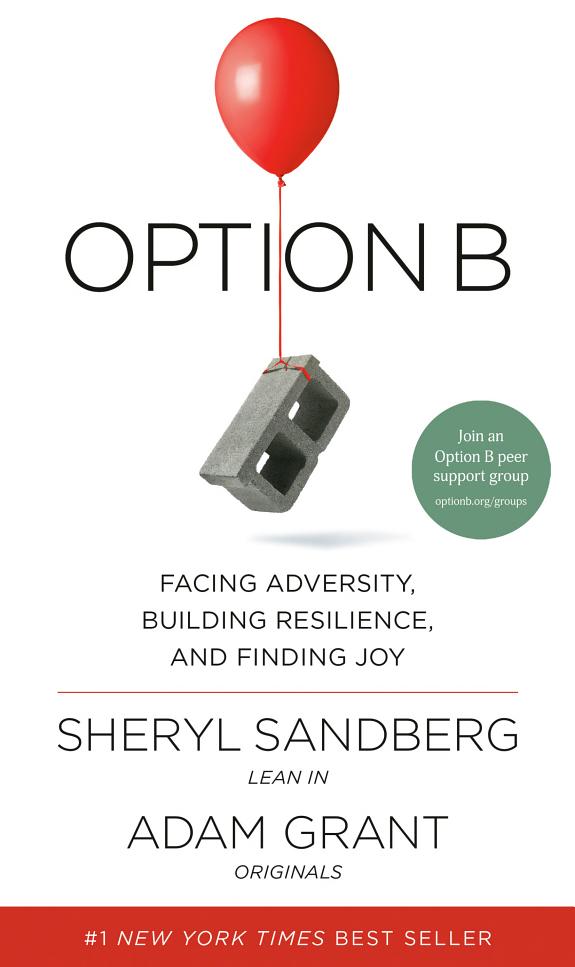
Option B
2. Option B by Sheryl Sandberg and Adam Grant
Sheryl Sandberg’s husband Dave Goldberg died suddenly in 2015, and this book began as her attempt to understand how to grieve and keep going, particularly as a mother, a professional, and a person who had built much of her identity around a future that no longer existed. She brought in social psychologist Adam Grant to help frame her experience within the broader research on resilience, and the collaboration works better than you might expect from such an unlikely pairing.
The book is honest about the awkwardness of grief, the things people say that land badly, the strange guilt of eventually laughing again, and the way children process loss differently than adults. Sandberg does not pretend her particular grief is universal, and she does not dress it up. Some of the most affecting passages are the smallest ones, the moment she realized her kids needed her to be sad with them rather than strong for them, for instance.
Grant’s contributions add structure without overwhelming the emotional core. His sections on post-traumatic growth, the importance of community, and the research around resilience give the book a useful scaffolding. The tone is warm without being saccharine, which is harder to pull off than it sounds. That said, Sandberg’s life circumstances are extraordinary, and readers who have faced compounding losses without her resources may occasionally feel the distance between her experience and their own.
Option B is not about pretending everything is fine. It is about finding, with some honesty and a lot of help, what is still possible when the thing you wanted most is gone.
This is perfect for anyone navigating grief or significant loss, for people supporting a grieving friend and wanting to do it better, and for readers who appreciate memoir woven with accessible research. It may feel less resonant for those dealing with losses that are less acute and more chronic, or for readers who find personal narrative from public figures hard to connect with.
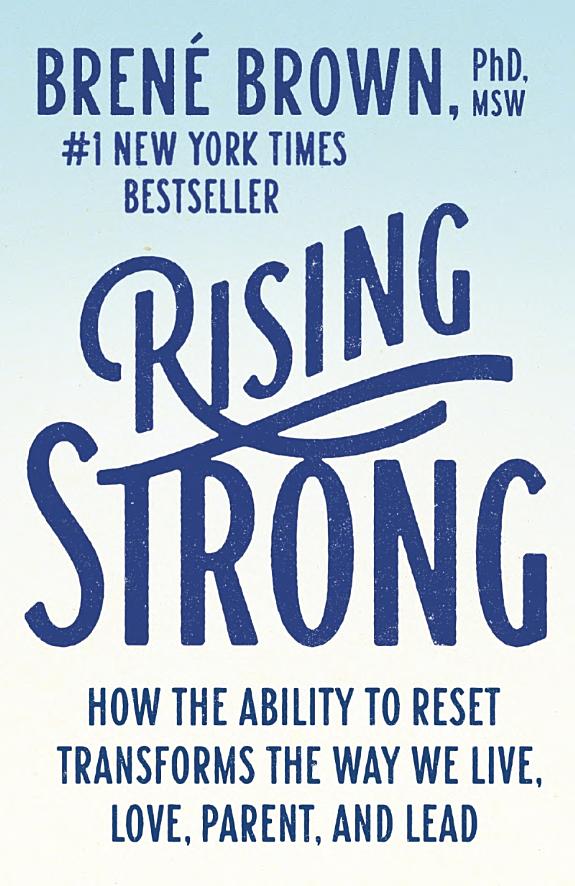
Rising Strong
3. Rising Strong by Brené Brown
Brené Brown has built an entire body of work around the idea that vulnerability is not a weakness but a prerequisite for a meaningful life. Rising Strong is her attempt to answer the follow-up question: what do you do after you fall? Not the falling itself, not the getting up, but the messy, disorienting middle part where you are facedown in the dirt and not entirely sure what happened.
Brown calls this the “reckoning, rumble, and revolution,” and while her frameworks can feel a little tidy at times, the underlying ideas are genuinely useful. She is particularly good on the stories we tell ourselves when things go wrong, the way we construct narratives that protect our ego but prevent us from understanding what actually occurred. Her concept of the “shitty first draft,” the story you tell yourself in the immediate aftermath of pain, is one of those ideas that sticks around long after you have finished the book.
Brown writes with warmth and self-deprecating humor. She is not above using her own failures as material, which gives the book a credibility that purely theoretical self-help often lacks. Some readers find her style a little folksy, and the book does repeat certain themes from her earlier work. But as a guide to processing failure and emerging with more clarity about who you are and what you value, it is genuinely useful.
Brown is not interested in resilience as a performance. She wants to know what actually happens in the uncomfortable space between breaking and rebuilding, and she is not afraid to stay there for a while.
This is perfect for people who tend to avoid processing failure, for those who want practical frameworks for emotional recovery, and for readers who have enjoyed Brown’s earlier work and want to go deeper. It is less suited to readers who prefer a more clinical or research-heavy approach, or those who find conversational, anecdote-driven writing a bit much.
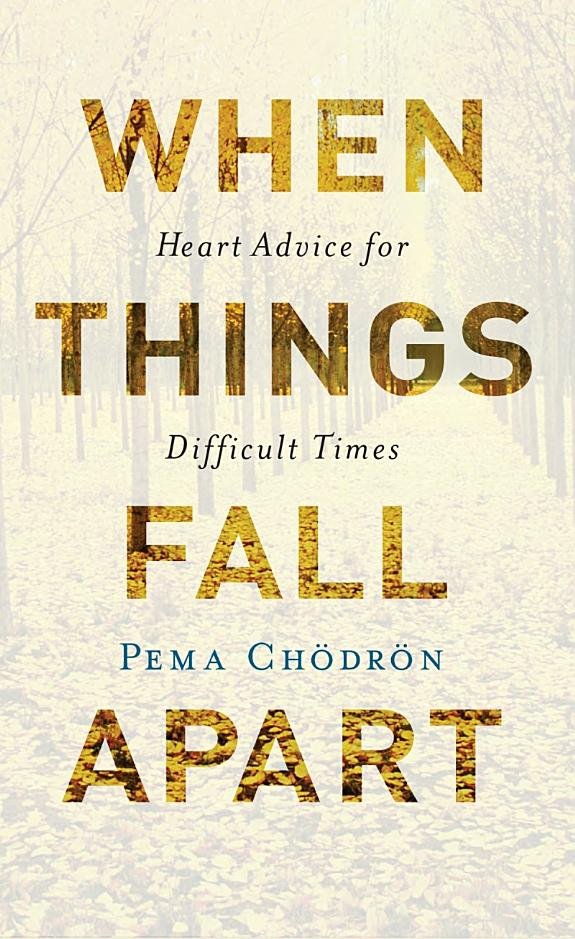
When Things Fall Apart
4. When Things Fall Apart by Pema Chödrön
Pema Chödrön is an American Buddhist nun, and this book is one of the most quietly radical things you can read when your life is coming apart. Her central argument is not that you should try harder to hold things together or that healing is a destination you will eventually reach. It is that the falling apart itself, the groundlessness, the fear, the uncertainty, is where the real work lives. She is, to put it gently, not telling you what you expected to hear.
The book draws on Tibetan Buddhist teachings but never in a way that requires any prior knowledge or religious commitment. Chödrön writes with a gentle directness that manages to be both challenging and comforting. She talks about sitting with discomfort rather than fleeing it, about the way our attempts to find solid ground often create more suffering than the original difficulty. It sounds counterintuitive, and it is, but she earns the argument slowly and carefully.
These are short chapters, almost meditative in their pacing, and the book rewards slow reading. Some passages will feel abstract on a first read and clarify themselves later, sometimes weeks later, when something in your life suddenly makes them land. It is not a book for everyone. If you are in acute crisis and need practical steps, this may not be the right starting point. But if you are ready to sit with uncertainty and look at it honestly, Chödrön is a remarkable guide.
“Things falling apart is a kind of testing and also a kind of healing.” Chödrön does not promise you solid ground. She promises you that you can learn to be okay without it.
This is perfect for readers open to contemplative or Buddhist perspectives, for those in the longer, slower work of healing rather than acute crisis, and for anyone who suspects that their resistance to uncertainty is making things harder. It is not the right fit for readers who need concrete action steps or who find philosophical abstraction frustrating when they are in pain.
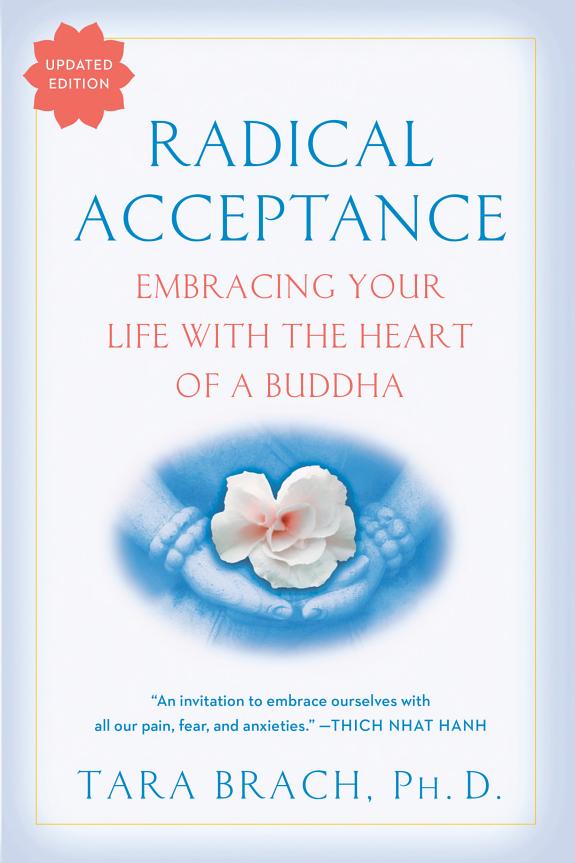
Radical Acceptance
5. Radical Acceptance by Tara Brach
Tara Brach is a psychologist and meditation teacher, and Radical Acceptance sits at the intersection of those two worlds with unusual grace. The book opens with what she calls the “trance of unworthiness,” the persistent, often unconscious belief that there is something fundamentally wrong with us, that we are not enough, that we must fix or improve or perform our way to being acceptable. It is a quietly devastating description of something a lot of people recognize immediately.
Her approach combines mindfulness practice with psychological insight, and she moves between the two with fluency. The guided meditations woven through the book are practical and accessible even for readers with no prior meditation experience. She is also a gifted storyteller, and the patient stories she shares (carefully anonymized) are some of the most moving in any book on this list. She writes about people who spent years hating themselves and slowly, haltingly, began to treat themselves with something approaching kindness.
The title can sound deceptively passive, as if acceptance means giving up or approving of everything that has happened to you. Brach addresses this directly and repeatedly. Acceptance, in her framing, is not resignation. It is the prerequisite for genuine change, the willingness to see clearly before you act. It is a distinction worth sitting with.
Brach asks a question that sounds simple and is not: what would it feel like to stop being at war with yourself? The book is, in many ways, a long and patient answer.
This is perfect for readers dealing with shame, self-criticism, or the exhausting habit of feeling not good enough, for those curious about mindfulness but wanting more than a technique, and for anyone who finds the intersection of psychology and spirituality interesting rather than suspicious. It may not resonate with readers who are skeptical of meditation or who prefer a more secular, data-focused approach.
Maybe You Should Talk to Someone
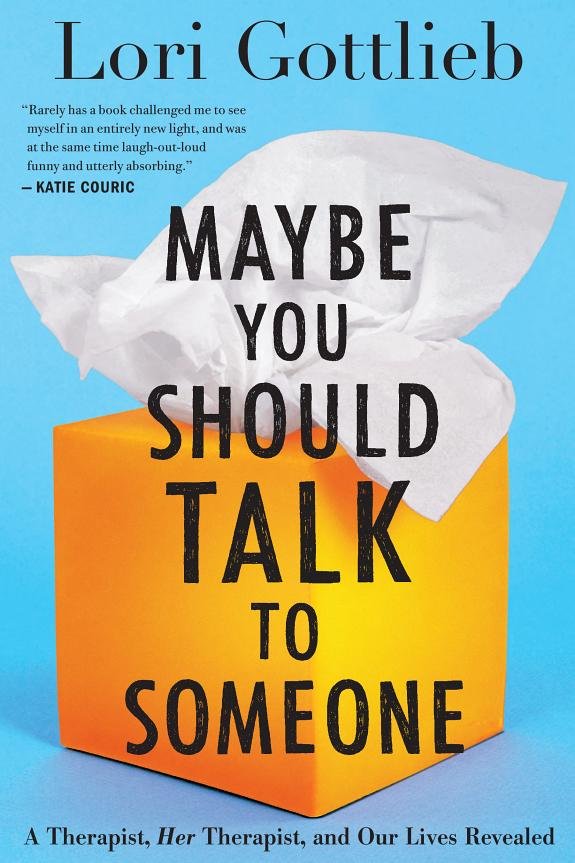
6. Maybe You Should Talk to Someone by Lori Gottlieb
Lori Gottlieb is a therapist who, after a painful breakup, went to see a therapist herself. The book she wrote about that experience is one of the most entertaining and genuinely insightful memoirs about therapy that exists, and it manages to be both because Gottlieb has the rare ability to be funny about her own blind spots without letting the humor become a deflection. She is, as she discovers, not always the most self-aware person in the room, which is both mortifying and deeply relatable.
The structure alternates between her own experience as a patient and her work with four of her own clients, whose stories are woven through the book with great care. There is the Hollywood producer who is terrible to everyone around him and does not understand why, the young woman with a terminal diagnosis, the older woman who has been married three times and cannot figure out why, and the newlywed who wants to blow up her life. Each of them, in different ways, is trying to figure out the same thing Gottlieb is: why do we keep doing the things that hurt us?
The book demystifies therapy in a way that is enormously useful, both for people who have never tried it and for those who have had mixed experiences. It is also, underneath its wit and warmth, a serious meditation on mortality, meaning, and the courage it takes to change. Gottlieb does not pretend therapy is easy or fast. She just makes a compelling case that it is worth it, and she does so by showing her own work.
“We are all just walking each other home,” Gottlieb quotes near the end, and by that point in the book, you have earned the sentiment. It does not feel like a poster. It feels true.
This is perfect for anyone curious about therapy or on the fence about starting it, for readers who want a warm, character-driven narrative that also has genuine psychological depth, and for those who find their own resistance to change both frustrating and familiar. It is less suited to readers looking for a structured self-help framework or those who prefer their nonfiction without the memoir element.
Lost Connections
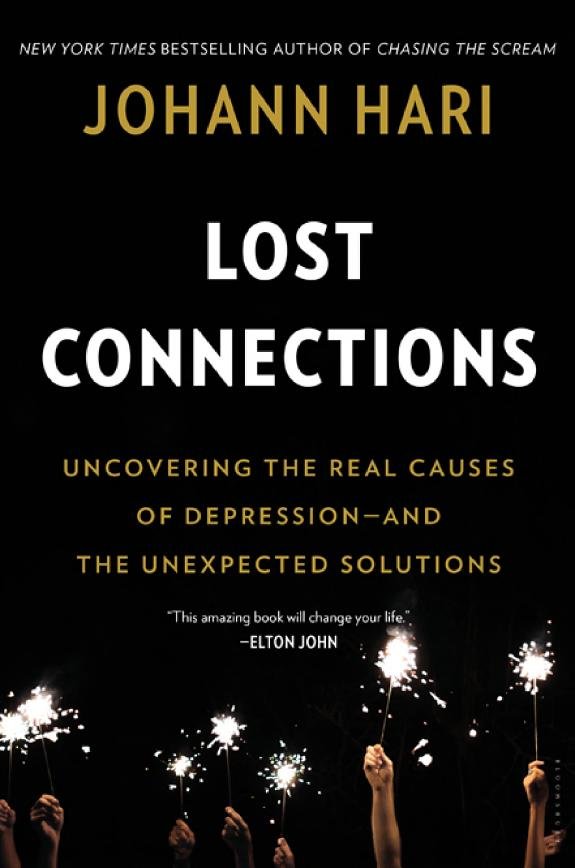
7. Lost Connections by Johann Hari
Johann Hari spent years on antidepressants, and this book began as his attempt to understand why they helped some people and not others, including, eventually, himself. What he found, after interviewing scientists and researchers around the world, is that the dominant story about depression and anxiety, the one about chemical imbalances and brain chemistry, is significantly more complicated than most of us have been told. That is not an anti-medication argument. It is a call for a wider conversation.
Hari identifies nine causes of depression and anxiety, most of them rooted in disconnection: from meaningful work, from other people, from status and respect, from the natural world, from a hopeful future. His reporting is engaging and his subjects are compelling, and he has a journalist’s gift for making research feel urgent rather than academic. Some scientists have pushed back on aspects of his interpretation, and it is worth reading with that in mind, but the core argument, that we have been treating a social problem as a purely biological one, is difficult to dismiss.
The book is more diagnosis than prescription, though the final section does offer some directions toward reconnection. It works best as a provocation, a way of asking whether the conditions of modern life are making people unwell in ways that a pill cannot fully address. That is not a comfortable question, but it is a necessary one.
Hari is not interested in making you feel better about a broken system. He wants you to see the system clearly enough to imagine something different, which is harder and more useful.
This is perfect for readers who have experienced depression or anxiety and felt that something important was missing from the standard explanation, for those interested in the social and structural roots of mental health, and for anyone who appreciates journalism-driven nonfiction that challenges received wisdom. It is not the right book for someone in acute crisis who needs immediate practical tools, or for readers who find critiques of psychiatry anxiety-inducing rather than clarifying.
It Didn’t Start with You
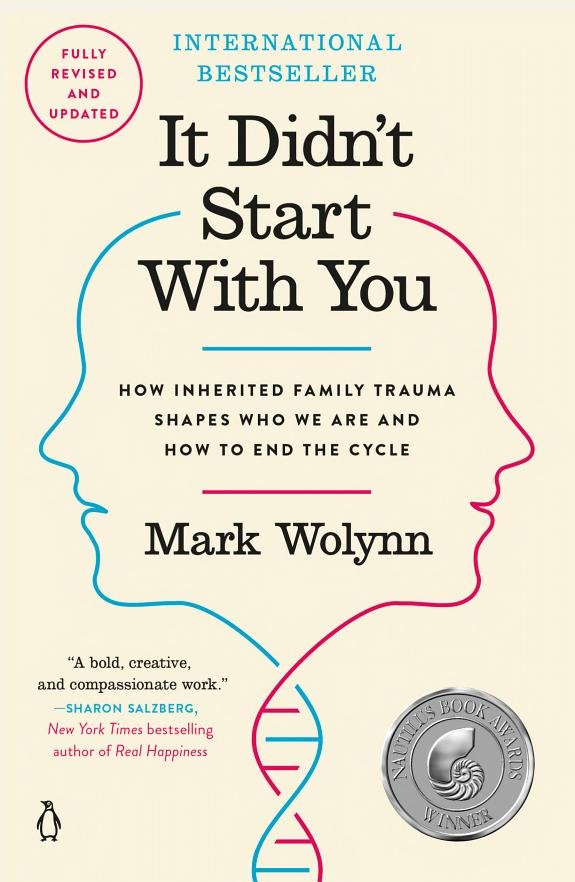
8. It Didn’t Start with You by Mark Wolynn
Mark Wolynn’s book opens with a question that sounds almost too strange to take seriously: what if the fear, grief, or anxiety you carry is not entirely your own? What if some of it was handed down to you, through your parents or grandparents, before you had any say in the matter? The field of epigenetics and intergenerational trauma is still developing, and Wolynn is careful to work at the edge of what the science currently supports, but the clinical evidence he draws on is striking enough to warrant serious attention.
The book is structured around a method Wolynn developed called the Core Language Approach, which involves paying close attention to the specific words and phrases people use when describing their deepest fears and struggles. He argues that these phrases often carry traces of unresolved family trauma, and that identifying those traces can unlock patterns that have resisted other forms of treatment. It sounds esoteric, and in places it is, but the case studies he includes are genuinely fascinating.
This is not a book you read passively. There are exercises throughout, and Wolynn clearly intends it to be worked with rather than just consumed. Some readers will find the exercises revelatory. Others will find the whole framework a stretch too far. The book asks you to take seriously the idea that you are not just an individual but a link in a chain, which is either freeing or unsettling depending on your temperament, and possibly both.
Wolynn is asking whether healing yourself might also mean, in some small way, healing something that came before you. It is an unusual idea, and it lingers.
This is perfect for people who have tried multiple approaches to healing and still feel stuck, for those with a family history of trauma, loss, or mental illness, and for readers who are open to less conventional frameworks and willing to do the reflective work the book asks of them. It is not a good fit for skeptics of anything outside evidence-based psychology, or for those who want a straightforward, linear approach to healing.
None of these books will do the work for you, and none of them pretend to. What they offer is something more modest and more valuable: company. The sense that other people have been in the dark and found their way to something better, not by pretending the dark was not real, but by learning to see inside it.
Different books will matter to different people at different moments. You might pick up Pema Chödrön and find her too abstract right now, then return to her a year later and feel like she is speaking directly to you. You might start with Lori Gottlieb because it sounds the least threatening and end up somewhere you did not expect. That is fine. There is no correct order, no required reading list for grief or recovery. There is just the next book, and the next honest hour you give yourself.
Take your time. You are allowed to go slowly.