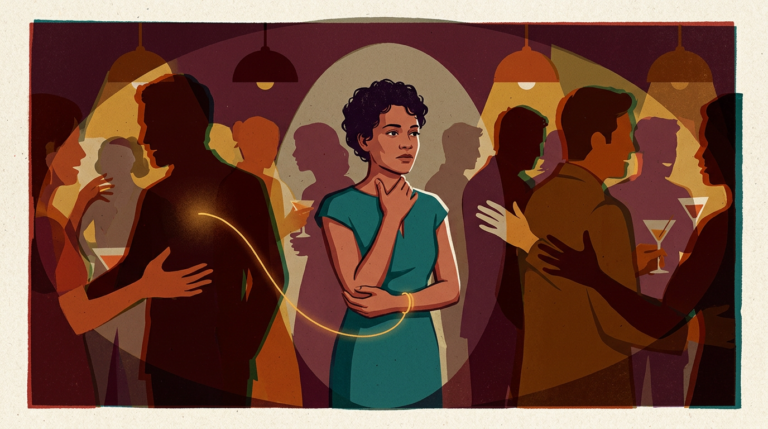

6 Books to Understand Love and Attachment
Most of us spend years stumbling through relationships before we pause to ask a simple question: why do I keep doing this? Why do I pull away when someone gets close, or cling tighter when I feel someone drifting? Love is not a mystery reserved for poets and rom-com screenwriters. There is real science behind it, real psychology, and real patterns that play out in nearly every relationship we have ever had.
The books on this list are not quick fixes or self-help cheerleading. They are serious, well-researched works written by therapists, psychologists, and researchers who have spent careers studying what happens between two people trying to stay connected. Some of them will make you nod slowly and think, so that is what has been going on. Others might be a little uncomfortable, which is usually a sign you are reading the right thing. Either way, each one offers something genuinely useful for anyone curious about love and the invisible forces that shape it.
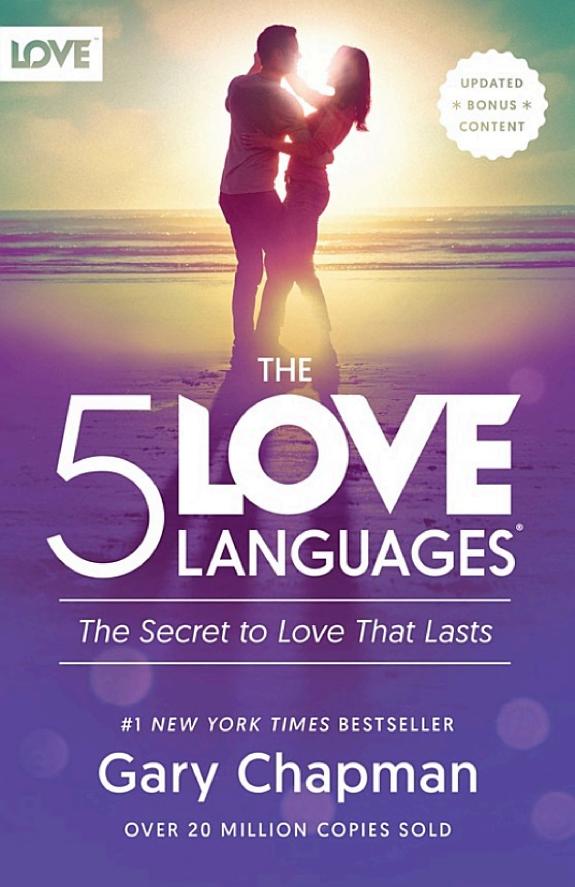
The 5 Love Languages: The Secret to Love that Lasts
1. The 5 Love Languages: The Secret to Love that Lasts by Gary Chapman
Gary Chapman spent years as a marriage counselor before he noticed a pattern. People were not falling out of love because they stopped caring. They were falling out of love because they were speaking entirely different emotional languages without realizing it. Chapman’s central argument is straightforward: there are five primary ways people give and receive love, and if you and your partner are not speaking the same one, you can pour effort into a relationship and still have your partner feel neglected. The five languages he identifies are words of affirmation, acts of service, receiving gifts, quality time, and physical touch.
Chapman’s writing style is warm and pastoral, which makes sense given his background as a minister and counselor. The book is full of real stories from couples he has worked with, and while the prose is not exactly literary, it is clear and approachable. The framework itself is the real value here. It gives couples a shared vocabulary for conversations that often feel too vague or emotionally charged to have productively. Knowing that your partner feels loved through acts of service while you have been writing them heartfelt notes for years is genuinely clarifying.
That said, this book is not for everyone. If you are looking for rigorous academic research or peer-reviewed studies, you will find Chapman’s framework more intuitive than empirical. The five languages are drawn from his clinical observations rather than controlled experiments, and some readers find the categories a little too tidy for the messiness of real human emotion. It also leans toward a fairly traditional view of romantic partnership, so readers looking for more inclusive or non-traditional frameworks may want to supplement it with other reading.
The real insight here is not the list itself but the idea that love is an action you have to learn to translate, not just feel.
This is perfect for couples who feel like they are trying hard but still missing each other, or for anyone who wants a simple, practical starting point for thinking about how they give and receive affection.
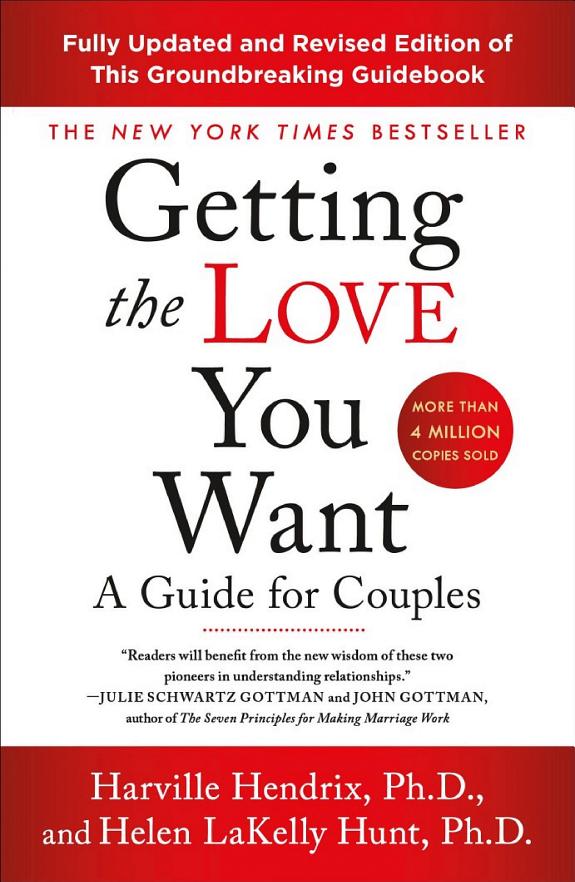
Getting the Love You Want: A Guide for Couples
2. Getting the Love You Want: A Guide for Couples by Harville Hendrix
Harville Hendrix opens this book with a proposition that is equal parts romantic and unsettling: we do not fall in love randomly. We are unconsciously drawn to partners who resemble the people who wounded us in childhood, because some part of us believes that recreating those early relationships will finally give us a chance to heal them. He calls this the Imago, a composite image formed in childhood of the people who shaped us. It sounds a little like something you might hear in a therapy session, and that is exactly where it comes from. Hendrix developed this theory through decades of clinical work and personal experience, including his own marriages.
The book is both theoretical and practical. Hendrix explains the psychology in accessible terms and then offers structured exercises for couples to work through together, including a series of dialogues designed to replace reactive arguments with genuine curiosity. The writing is thoughtful and the exercises are specific enough to actually use, which sets this apart from books that offer insight without any clear path forward. The Imago dialogue process in particular has become widely used in couples therapy, which is a reasonable indicator that it works for a lot of people.
This is not a light read. If you are not ready to look honestly at your childhood and how it shaped your needs and defenses, some of this material will feel heavy or even threatening. Readers who are skeptical of psychoanalytic frameworks may also push back on the idea that unconscious forces are steering their romantic choices. And the exercises really do require both partners to participate willingly, so it is not a book you can use to fix a relationship on your own.
Hendrix argues that conflict in a relationship is not a sign that you chose the wrong person. It is often a sign that you chose exactly the right one for the work you need to do.
This is perfect for couples willing to do real emotional work together, and for anyone who keeps finding themselves in the same relationship patterns with different people.
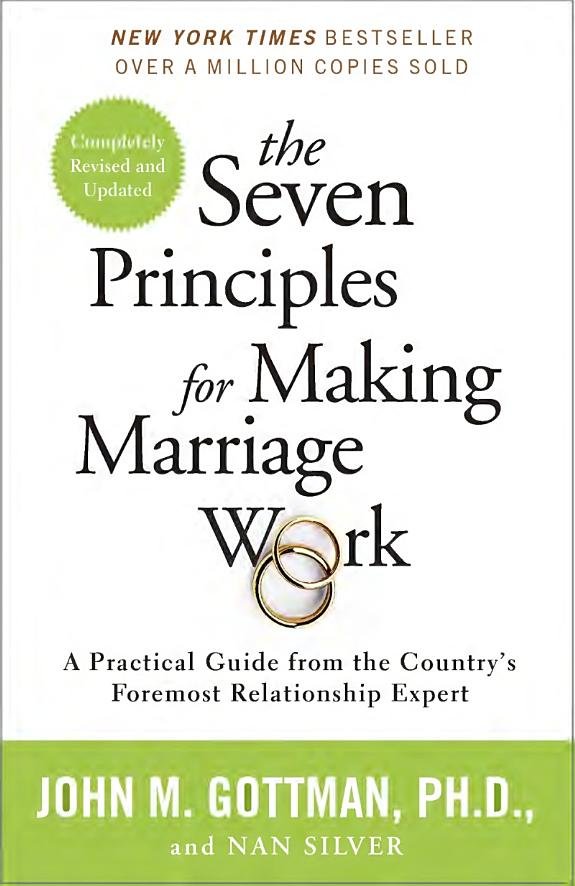
The Seven Principles for Making Marriage Work
3. The Seven Principles for Making Marriage Work by John Gottman and Nan Silver
John Gottman is probably the most cited researcher in relationship science, and for good reason. Over decades of studying couples in his lab at the University of Washington, he and his colleagues developed the ability to predict with startling accuracy whether a couple would stay together or divorce, often after observing them for just a few minutes. This book distills that research into seven practical principles, covering everything from building friendship and fondness to managing conflict and creating shared meaning. It is one of the most research-backed books on romantic relationships available to general readers.
What makes Gottman’s approach stand out is that it is grounded in observation rather than theory alone. He is not telling you what should work in relationships. He is telling you what he has watched actually work, across thousands of couples studied over many years. The four behaviors he identifies as most destructive, which he calls the Four Horsemen, are criticism, contempt, defensiveness, and stonewalling. Contempt in particular, he argues, is the single greatest predictor of relationship failure. That is a specific, sobering, and useful thing to know.
The book is co-written with journalist Nan Silver, which keeps it readable without sacrificing the substance of the research. The exercises and questionnaires included throughout the book are genuinely helpful, though some readers find the sheer number of them a little overwhelming. This book is less suited to readers in crisis who need immediate emotional support. It is more useful as a preventive and educational tool, ideally read before things get bad rather than after.
Gottman’s research suggests that the quality of a couple’s friendship, not their ability to resolve conflict, is the most reliable foundation for lasting love.
This is perfect for couples who want evidence-based guidance, for newlyweds building a foundation, or for anyone who appreciates data and research alongside practical relationship advice.
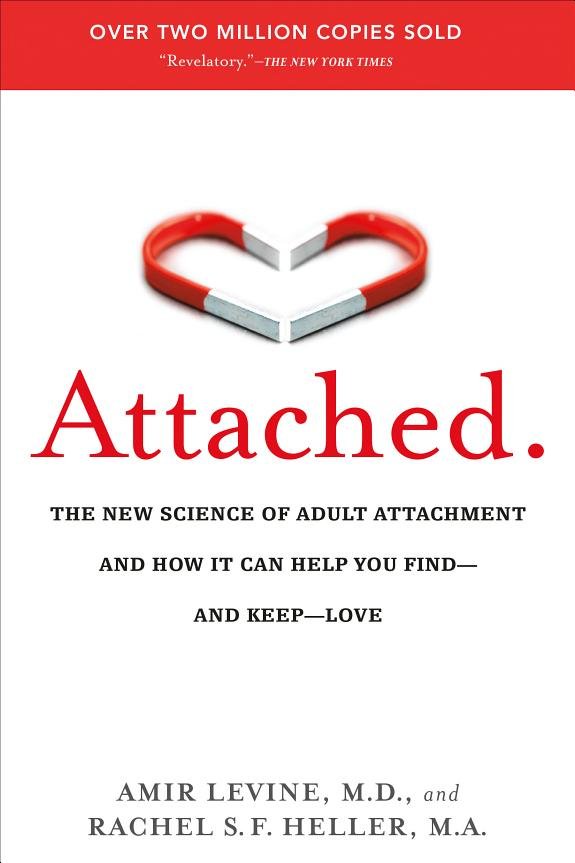
Attached: The New Science of Adult Attachment and How It Can Help You Find – and Keep – Love
4. Attached: The New Science of Adult Attachment and How It Can Help You Find and Keep Love by Amir Levine and Rachel Heller
If you have ever spent an evening analyzing a text message that was two words shorter than usual, this book may explain a lot about you. Amir Levine, a psychiatrist and neuroscientist, teams up with Rachel Heller to translate decades of attachment theory research into something accessible and immediately applicable to adult romantic relationships. The core idea is that we each have an attachment style, broadly categorized as secure, anxious, or avoidant, that shapes how we behave in close relationships. These styles are not personality flaws. They are adaptive strategies developed in response to early caregiving experiences.
The book is particularly good at describing the anxious and avoidant dynamic, which Levine and Heller call one of the most common and painful patterns in adult relationships. The anxious partner craves closeness and reads threat into distance. The avoidant partner values independence and experiences closeness as suffocating. Together, they often trigger the worst in each other, and yet they are drawn together with remarkable frequency. Reading about this dynamic is one of those experiences where the description feels almost uncomfortably accurate, which is either the mark of good writing or the mark of good science. Probably both.
The book is not without limitations. Some readers feel the three-category system is too simplified, and the research base for adult attachment is more contested than the authors sometimes let on. The book also skews heavily toward helping anxious readers understand themselves, and the advice for avoidant readers can feel a little thin. It is also worth noting that attachment styles are not fixed destiny. They are patterns that can shift with awareness and the right relationship experiences.
Understanding your attachment style does not excuse your behavior in relationships, but it does give you a clearer starting point for changing it.
This is perfect for anyone who has ever felt confused by their own behavior in relationships, or who wants a clear framework for understanding why they and their partner seem to want different amounts of closeness.
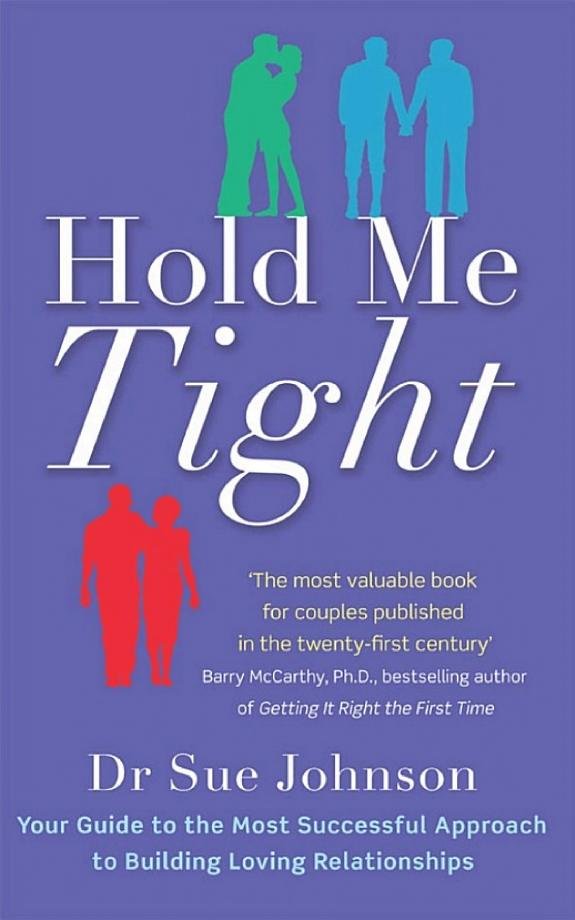
Hold Me Tight: Seven Conversations for a Lifetime of Love
5. Hold Me Tight: Seven Conversations for a Lifetime of Love by Sue Johnson
Sue Johnson is the developer of Emotionally Focused Therapy, one of the most well-validated approaches to couples therapy in existence. In this book, she brings that framework to a general audience through seven structured conversations designed to help partners move from cycles of conflict and disconnection toward genuine emotional safety. The central premise is rooted in attachment theory: we are biologically wired to need close emotional bonds, and when those bonds feel threatened, we panic. That panic is what most relationship conflict is actually about, even when it looks like an argument about who forgot to pay the electricity bill.
Johnson’s writing is warm and direct, and she has a gift for capturing the emotional texture of relationship distress in ways that feel true. She is also honest about the fact that changing these patterns is hard work. The seven conversations she outlines are not simple scripts. They require vulnerability and a willingness to move past the surface argument to the deeper fear underneath it. The book includes case studies from her clinical practice that illustrate each conversation, and these examples do a lot of the heavy lifting in making the concepts feel real and applicable.
This book works best when both partners read it together, or when it is used alongside actual therapy. Readers who are in a relationship with a partner who is unwilling to engage emotionally may find the material more frustrating than helpful, because the conversations Johnson describes require genuine participation from both sides. It is also not a book for people looking for a quick read. The ideas reward slow, reflective engagement rather than skimming.
Johnson’s argument is that underneath almost every relationship fight is a simpler, more vulnerable question: are you there for me?
This is perfect for couples in genuine distress who want a structured, emotionally honest path toward reconnection, and for anyone interested in understanding how attachment needs play out in the heat of conflict.
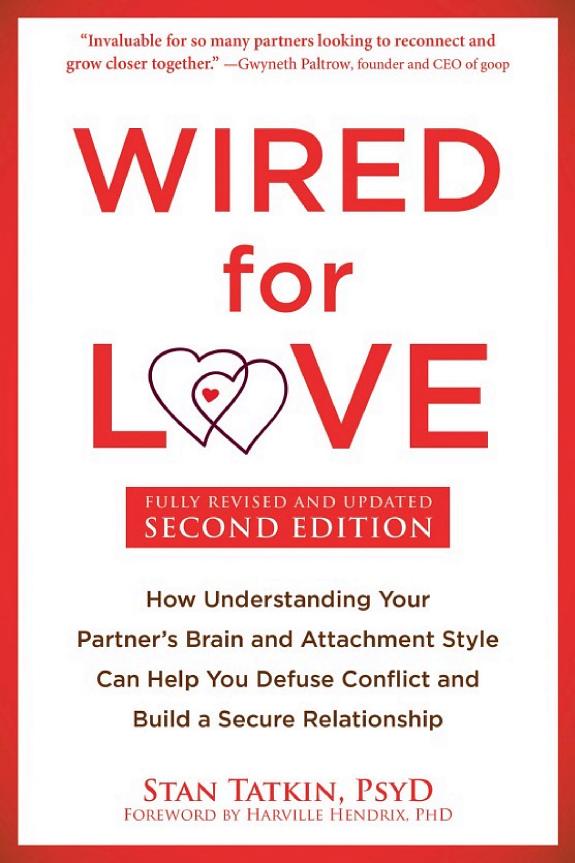
Wired for Love: How Understanding Your Partner’s Brain and Attachment Style Can Help You Defuse Conflict and Build a Secure Relationship
6. Wired for Love: How Understanding Your Partner’s Brain and Attachment Style Can Help You Defuse Conflict and Build a Secure Relationship by Stan Tatkin
Stan Tatkin brings something a little different to this conversation. He is a clinician and researcher who developed the Psychobiological Approach to Couple Therapy, and in this book he combines neuroscience with attachment theory to explain why our nervous systems respond to romantic relationships the way they do. The book introduces two memorable archetypes, the anchor, the island, and the wave, which map roughly onto secure, avoidant, and anxious attachment styles but with a stronger emphasis on how these styles manifest in the body and the brain during moments of stress or conflict. Yes, there are technically three archetypes in a book called two things. Tatkin knows what he is doing.
One of the things that makes this book distinctive is its focus on the couple as a unit, what Tatkin calls a two-person psychological system. Rather than focusing primarily on individual healing, he argues that partners can and should become experts on each other, learning to read each other’s nervous system signals and becoming a source of regulation rather than dysregulation. The practical tools he offers are grounded in this idea, including techniques for de-escalating conflict quickly and building rituals that reinforce felt security.
The neuroscience framing is genuinely interesting, but it can also feel a little reductive at times. Human emotional experience is complex, and explaining it primarily through brain states and nervous system responses occasionally flattens some of that complexity. Readers who prefer a more purely psychological or narrative approach may find the biological emphasis a bit clinical. The book is also most useful for couples who are relatively stable and motivated, rather than those in acute crisis.
Tatkin’s most useful idea is that security in a relationship is not a feeling you have. It is something you and your partner actively build and maintain together, day by day.
This is perfect for couples interested in the science behind their emotional reactions, and for anyone who wants concrete, brain-informed strategies for building a more secure and stable partnership.
Reading about love and attachment will not fix a relationship on its own. Nothing replaces the actual work of showing up, being honest, and choosing to stay curious about another person over time. But these books can give you language for things that previously felt too slippery to name, and that is not a small thing. Understanding why you do what you do in relationships is often the first step toward doing something different.
If you are not sure where to start, pick the book whose description made you feel most seen or most uncomfortable. That is usually the right one. And if you find yourself reading one of these and thinking, I wish my partner would read this, the most honest advice is to read it yourself first and see what it asks of you. That tends to be more useful than you might expect.