

8 Books for Better Time Management in 2024
There is a particular kind of frustration that comes from reaching the end of a busy day and realizing you somehow accomplished almost nothing on your actual list. You were busy, sure. Emails flew. Meetings happened. You refreshed things that did not need refreshing. But the work that actually mattered? Still sitting there, patient and judgmental, waiting for tomorrow.
Time management books get a bad reputation, partly because so many of them promise the moon and deliver a slightly better to-do list. But the good ones, the ones worth your time (ironic as that sounds), go deeper than tips and tricks. They ask harder questions about what you actually value, where your attention really goes, and why you keep saying yes to things that eat your day alive. The eight books below are the ones that have genuinely shifted how readers think about time, not just how they schedule it.
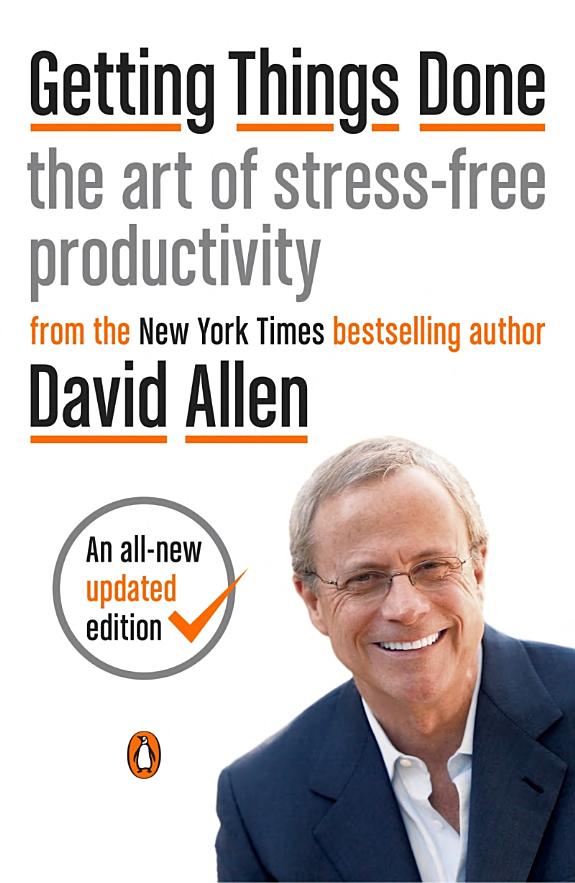
Getting Things Done: The Art of Stress-Free Productivity
1. Getting Things Done: The Art of Stress-Free Productivity by David Allen
David Allen’s GTD system has been around since 2001, and it still has a devoted following that borders on the religious. The core idea is deceptively simple: your brain is terrible at storing tasks, so stop asking it to. Instead, capture everything into a trusted external system, process it deliberately, and free your mind to actually focus on the work in front of you. Allen calls this achieving a “mind like water,” which sounds a bit zen for a productivity book but turns out to be a genuinely useful mental image.
The writing is methodical, occasionally repetitive, and very much written by someone who has spent decades consulting with executives. Allen does not do breezy or casual. He is thorough in the way that a very organized person is thorough, which means some chapters feel like reading a well-structured operations manual. That is not a criticism so much as a fair warning about what you are walking into. The payoff, for readers who commit to the system, is a framework that handles complexity well, especially for people managing many projects at once.
Where GTD shines is in its treatment of what Allen calls “open loops,” the unfinished commitments that rattle around in your head and quietly drain your energy even when you are not actively thinking about them. Getting those out of your head and into a system is genuinely relieving. The book does require real setup time and some ongoing maintenance, so if you want a quick fix, this is not it. But for building a durable productivity foundation, few books come close.
“Your mind is for having ideas, not holding them.” Allen’s whole book is essentially an extended argument for that one sentence, and he makes it convincingly.
This is perfect for professionals juggling multiple projects, people who feel perpetually overwhelmed by their own to-do lists, and anyone who has ever lain awake at 2am remembering something they forgot to do.
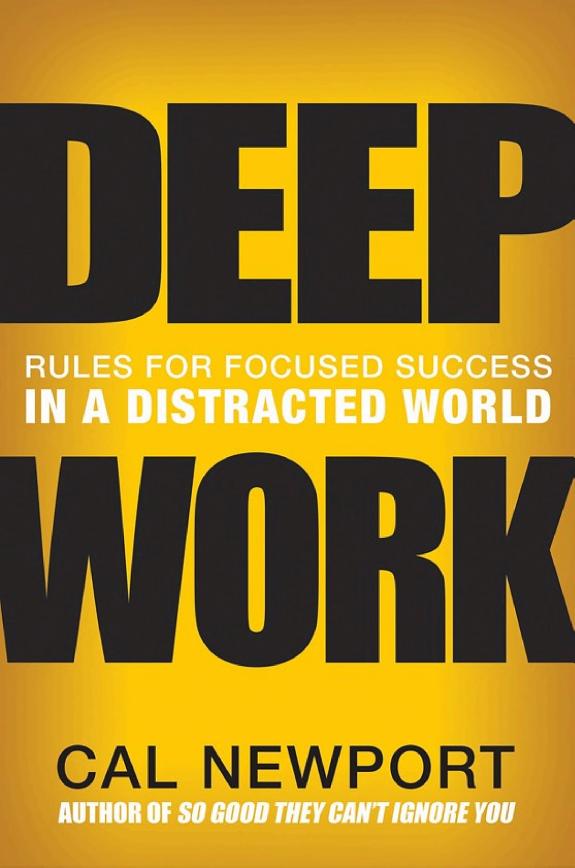
Deep Work: Rules for Focused Success in a Distracted World
2. Deep Work: Rules for Focused Success in a Distracted World by Cal Newport
Cal Newport has a gift for making you feel vaguely ashamed of your own habits while somehow not being preachy about it. Deep Work is built around a distinction that sounds obvious once you hear it but is easy to forget in practice: there is a difference between shallow work, the emails, the meetings, the administrative busywork, and deep work, the cognitively demanding, distraction-free effort that actually produces valuable results. Newport argues, with considerable evidence, that most knowledge workers are drowning in the former while starving the latter.
Newport’s own voice is confident and a little professorial, which suits the material. He is a computer science academic who does not have social media accounts, which he is happy to tell you about, and his arguments for protecting focused time are grounded in both neuroscience and economics. The book is divided into two parts: the case for deep work, which is compelling, and the rules for cultivating it, which are practical and specific. He covers scheduling philosophies, rituals, and how to train your attention the way you would train a muscle.
The book is not without its limitations. Newport writes primarily from the perspective of someone with significant control over their own schedule, and readers in highly reactive jobs, customer service, nursing, teaching, may find some of his prescriptions difficult to apply directly. The principles still translate, but the specific tactics sometimes assume a level of autonomy that not everyone has. That said, the core argument is hard to dismiss: the ability to focus deeply is becoming rarer and more valuable at the same time, which is a genuinely important observation for anyone trying to do meaningful work.
Newport’s central claim is that depth is a skill, not a personality trait. That reframe alone is worth the price of the book for people who have always assumed they were just bad at focusing.
This is perfect for writers, researchers, programmers, and anyone in a knowledge-work role who suspects they are spending most of their day busy without being particularly productive.
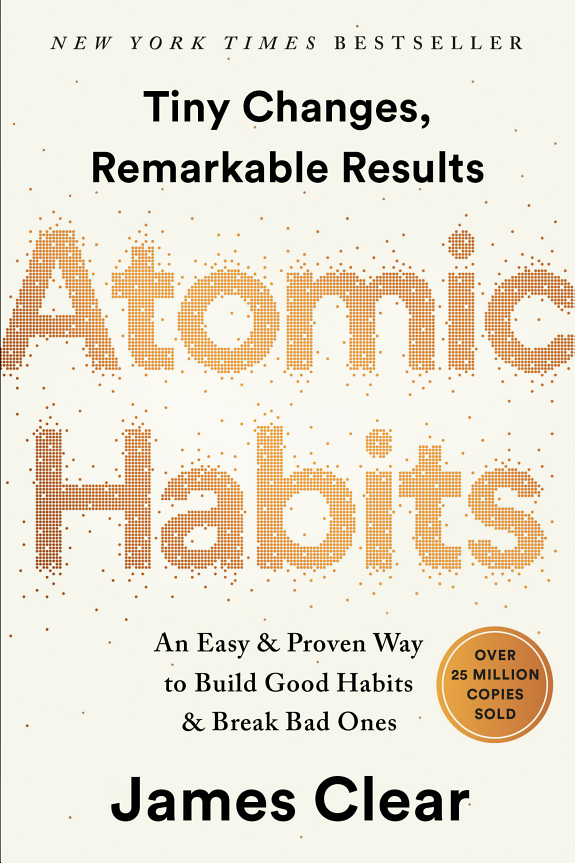
Atomic Habits
3. Atomic Habits by James Clear
James Clear writes about habits the way a good coach talks about training: with patience, specificity, and a firm belief that small things done consistently matter more than dramatic gestures done occasionally. Atomic Habits is not strictly a time management book, but it belongs on this list because so much of how we use our time comes down to the automatic behaviors we have built up over years, the ones we barely notice until they have eaten another hour of our afternoon.
Clear’s central argument is that habits are the compound interest of self-improvement. A one percent improvement each day does not feel like much in the moment, but it accumulates into something significant over time. He structures the book around four laws of behavior change, making cues obvious, making habits attractive, making them easy, and making the response satisfying, and he applies them to both building good habits and breaking bad ones. The framework is clean and memorable, which is part of why the book has connected with so many readers across very different contexts.
The writing is accessible without being dumbed down, and Clear uses just enough research to feel credible without turning the book into an academic paper. He also has a knack for concrete examples that make abstract principles feel immediately applicable. If you are hoping for a deep philosophical exploration of time and meaning, this is not that book. It is practical, optimistic, and occasionally a bit cheerful in a way that some readers find motivating and others find mildly exhausting. Both reactions are valid.
The most useful idea in the book might be identity-based habits: instead of setting a goal, decide who you want to be, and then ask what that person would do. It shifts the whole conversation from willpower to self-concept.
This is perfect for people who know what they want to do but keep failing to do it consistently, readers who have tried and abandoned productivity systems before, and anyone who wants to understand why their daily defaults are working against them.
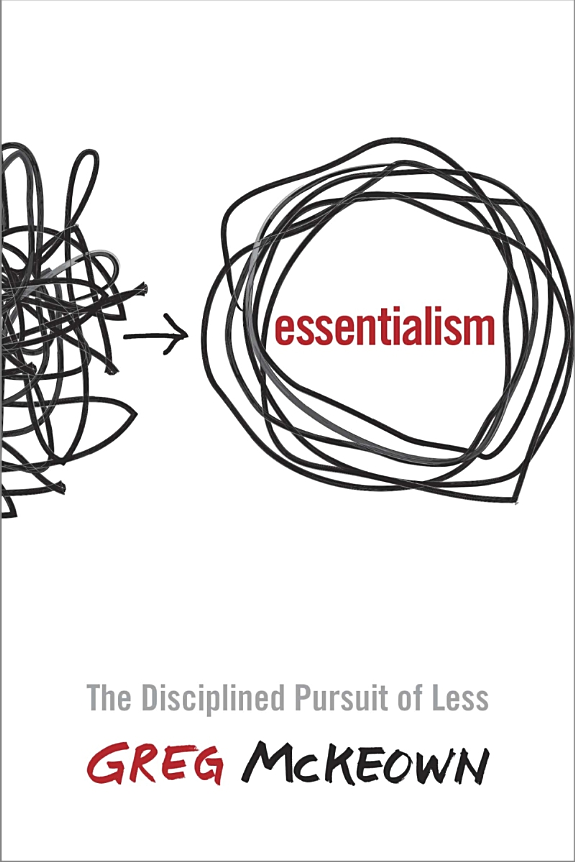
Essentialism: The Disciplined Pursuit of Less
4. Essentialism: The Disciplined Pursuit of Less by Greg McKeown
Greg McKeown is essentially arguing, for three hundred pages, that you need to stop doing so many things. That sounds like it could be a very short book, but McKeown has enough depth and enough good stories to make the case feel fresh and genuinely considered. Essentialism is about the disciplined practice of figuring out what actually matters and then protecting your time and energy for those things with something close to ferocity. The rest, he argues, is noise you have mistaken for signal.
The book’s great strength is its diagnosis of why smart, capable people end up overwhelmed. McKeown identifies what he calls the “paradox of success”: you do well at something, gain more opportunities and responsibilities, become scattered across too many commitments, and end up doing none of them particularly well. The solution is not working harder but choosing more carefully. He is particularly good on the social and organizational pressures that make saying no feel dangerous, and on how to push back without becoming a difficult person to work with.
McKeown writes with conviction and a certain evangelical energy that some readers find inspiring and others find a touch relentless. He is making a moral argument as much as a practical one, and he is not shy about it. The book is also somewhat repetitive in places, circling back to the same core ideas from different angles. Whether that reads as thorough or padded will depend on your patience. But the central question he keeps asking, “Is this the most essential use of my time and resources right now?”, is one worth having stuck in your head.
McKeown’s observation that “if it isn’t a clear yes, then it’s a clear no” is one of those deceptively simple rules that completely changes how you evaluate requests on your time once you actually try applying it.
This is perfect for high achievers who have said yes to too many things, people in leadership roles who feel spread thin, and readers who suspect they are busy with the wrong things but are not sure how to change that.
Eat That Frog!: 21 Great Ways to Stop Procrastinating and Get More Done in Less Time
5. Eat That Frog!: 21 Great Ways to Stop Procrastinating and Get More Done in Less Time by Brian Tracy
The title comes from a Mark Twain quote, roughly: if you eat a live frog first thing in the morning, you can go through the rest of your day knowing the worst is behind you. Brian Tracy applies this to productivity by arguing that your most important, most dreaded task should be the first thing you tackle each day, before email, before small wins, before anything that lets you feel productive without doing the hard thing. It is an old idea, but Tracy makes a genuinely good case for why it works.
Tracy’s writing style is brisk and direct, almost aggressively so. He is not interested in nuance or long theoretical arguments. Each of the 21 chapters is short, punchy, and ends with a clear action. Some readers find this refreshing. Others find it a bit like being coached by someone who has had one too many espressos. The book is thin, which is either a feature or a bug depending on how you feel about brevity. You can read it in an afternoon, which is either efficient or suspicious for a book about time management.
What Tracy does well is address the psychological side of procrastination without getting lost in it. He is practical about why we avoid hard tasks and pragmatic about the solutions. He also makes a good point about the connection between clarity and action: most procrastination is not really about laziness but about uncertainty, not knowing exactly what the next step is. His advice to plan your day the night before and identify your frog in advance is simple enough to actually do, which puts it ahead of more elaborate systems that collapse under their own complexity.
Tracy’s argument that the habit of tackling your most important task first thing is one of the highest-leverage behaviors you can develop is hard to argue with once you have actually tried it for a few weeks running.
This is perfect for chronic procrastinators who want a no-fuss, action-oriented approach, readers who have tried longer productivity books and bounced off them, and people who just need a straightforward push to start doing the things they keep avoiding.
Make Time: How to Focus on What Matters Every Day
6. Make Time: How to Focus on What Matters Every Day by Jake Knapp and John Zeratsky
Jake Knapp and John Zeratsky are former Google and YouTube designers, which gives them a particular credibility when it comes to talking about distraction. They helped build some of the products that eat your attention for breakfast. Make Time is partly an act of atonement and partly a genuinely useful guide to designing your days around what actually matters to you, rather than around whatever demands your attention most loudly.
The book’s central framework is built around four daily steps: choosing a single highlight, your most important task or moment for the day; lasering in by eliminating distractions; energizing your body to support your mind; and reflecting briefly at the end of each day. It sounds simple because it is meant to be. Knapp and Zeratsky are explicitly pushing back against elaborate systems, and their tone is relaxed, self-deprecating, and occasionally funny. They freely admit that they do not follow every tactic every day, which makes the whole thing feel more honest than most productivity books.
The bulk of the book is a menu of 87 tactics across those four categories, and the authors encourage you to pick and choose rather than adopt everything at once. This is either a strength or a weakness depending on how you approach reading. If you want a coherent system, the buffet format can feel a bit loose. If you want flexibility and permission to experiment, it is ideal. The book is also genuinely good on the specific mechanics of smartphone addiction, and their suggestions for reducing phone dependency are among the most practical you will find anywhere.
The idea of choosing a single daily highlight, not a to-do list, not a set of goals, but one specific thing you want to make time for, is small enough to actually work and big enough to actually matter.
This is perfect for people who feel controlled by their devices and notifications, readers who want a lighter and more flexible approach to productivity, and anyone who has tried rigid systems before and found them exhausting to maintain.
168 Hours: You Have More Time Than You Think
7. 168 Hours: You Have More Time Than You Think by Laura Vanderkam
Laura Vanderkam starts from a simple premise: a week contains 168 hours, and most people have very little idea where those hours actually go. Not where they think they go, or where they wish they went, but where they actually go. Her argument is that most of us are not as time-starved as we believe, and that the problem is less about scarcity and more about allocation. This is either a liberating idea or a slightly uncomfortable one, depending on how you feel about having your assumptions challenged before breakfast.
Vanderkam’s approach is grounded in data and personal stories gathered from interviews with high-achieving people who somehow manage careers, families, and personal lives without appearing to be in permanent crisis. She encourages readers to track their time for a week before drawing any conclusions, which is genuinely useful advice that most people will ignore and then regret ignoring. Her analysis of where time typically leaks, television, aimless internet use, low-value commitments, is not groundbreaking, but the framing around 168 hours rather than 24 gives it a different weight.
The book is optimistic in tone, sometimes to a fault. Vanderkam is cheerful about what is possible, and while that energy is often helpful, it can occasionally feel like she is underestimating how constrained some people’s lives actually are. Readers with very demanding jobs, young children, or caregiving responsibilities may find some of her examples easier to admire than to replicate. That said, her core point, that time tracking reveals uncomfortable truths worth knowing, is solid and practical regardless of your circumstances.
Vanderkam’s observation that we tend to overestimate what we can do in a day and underestimate what we can do in a week is one of the more quietly useful reframes in any book on this list.
This is perfect for people who feel chronically busy but cannot quite explain why, readers who want a data-driven look at their own time use, and anyone who suspects they have more room in their week than they currently believe.
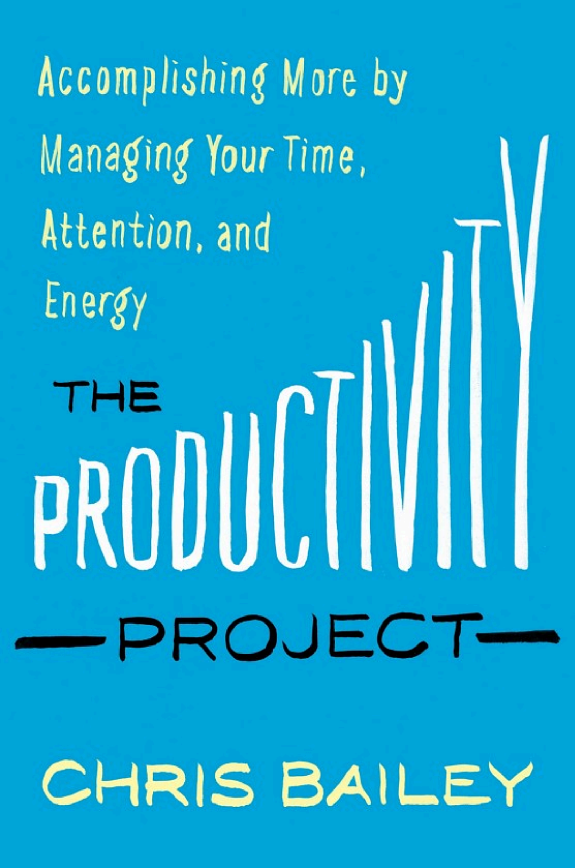
The Productivity Project: Accomplishing More by Managing Your Time, Attention, and Energy
8. The Productivity Project: Accomplishing More by Managing Your Time, Attention, and Energy by Chris Bailey
Chris Bailey spent a year of his life running productivity experiments on himself so you do not have to. He tried working 90-hour weeks and 20-hour weeks. He meditated for 35 hours in a single week. He isolated himself from the internet for months. He is either deeply committed to the subject or has a very high tolerance for discomfort, possibly both. The Productivity Project is the record of what he learned, and it is one of the more honest and self-aware books in this genre because Bailey is candid about what did not work just as readily as what did.
Bailey’s central argument is that time is only one of three resources that determine how much you accomplish. Attention and energy matter just as much, and possibly more. You can have all the time in the world and squander it if your focus is scattered or your energy is depleted. This three-part framework gives the book a useful structure and separates it from books that treat productivity purely as a scheduling problem. His chapters on managing energy, including sleep, exercise, diet, and recovery, are particularly well-considered and grounded in actual research.
The writing is engaging and conversational, and Bailey has a self-deprecating humor that makes the book pleasant to spend time with. He is not trying to present himself as a productivity saint. He is a curious person who ran a lot of experiments and is sharing what he found, which is a refreshing stance in a genre full of people who seem to have everything figured out. The book works best for readers who want to understand the why behind productivity advice rather than just collect tactics to try.
Bailey’s distinction between being productive and being busy is one he returns to throughout the book, and it is a distinction worth sitting with: busyness is often a form of avoidance dressed up as effort.
This is perfect for curious, analytically minded readers who want to understand productivity from the inside out, people who have tried standard advice and found it incomplete, and anyone who wants a book that treats time, attention, and energy as equally important variables.
None of these books will fix your relationship with time on their own. Reading about productivity is, famously, one of the more enjoyable ways to avoid being productive. But the best of these books do something more useful than give you a new system to try: they change how you think about what time is actually for, and that shift tends to outlast any particular habit or schedule.
If you are new to this territory, Deep Work or Atomic Habits are probably the best places to start. If you already have a system but feel like something is still off, Essentialism or The Productivity Project might ask the questions you have been avoiding. And if you just need someone to tell you to stop procrastinating and do the hard thing already, Brian Tracy is waiting for you with a frog and a deadline.
The goal, with any of these books, is not to become a more efficient machine. It is to spend more of your finite hours on the things that actually matter to you. That is worth a little reading time, even if it is technically ironic.