

6 Books That Change How You View Relationships
Most of us learn how to be in relationships the same way we learn to parallel park: through a combination of guesswork, mild panic, and occasional success. Nobody hands you a manual. You just sort of figure it out, collect a few emotional bruises along the way, and hope for the best.
But there is a whole shelf of books written by psychologists, researchers, and at least one stand-up comedian that can actually help. Not in a fix-yourself-in-thirty-days kind of way, but in a slow, quiet, oh-so-that-is-what-has-been-happening kind of way. The six books below cover love from nearly every angle, from the philosophical to the scientific to the surprisingly funny. Whether you are single, partnered, freshly heartbroken, or just curious about why humans are so strange around each other, there is something here for you.
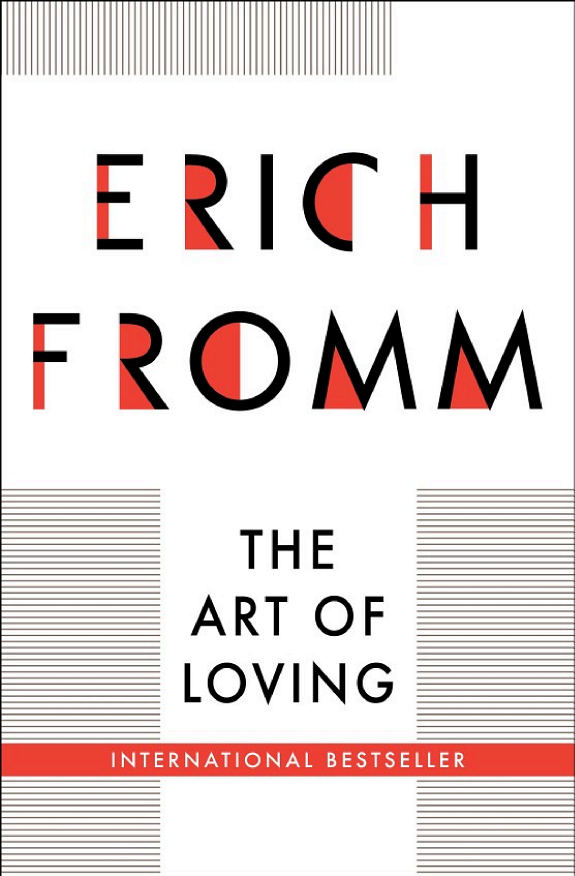
The Art of Loving
1. The Art of Loving by Erich Fromm
Erich Fromm opens this slim, serious book with an idea that stops most readers cold: love is not a feeling that happens to you. It is a practice, a discipline, something you develop through effort and attention the same way a musician develops technique. Published in 1956, the book has aged remarkably well, mostly because Fromm is writing about something that does not change with technology or culture. He is writing about the fundamental human need to overcome loneliness, and why most of us go about trying to satisfy that need in ways that are bound to disappoint us.
Fromm draws on philosophy, psychology, and theology to argue that modern Western society has confused the excitement of falling in love with the sustained, chosen act of loving. We spend enormous energy trying to be lovable, to attract a partner, and almost no energy learning how to actually love. His chapters on love between parents and children, brotherly love, and self-love are not warm and fuzzy. They are rigorous. He expects you to sit with uncomfortable ideas and think them through.
The writing is dense by contemporary standards. Fromm is not trying to be accessible in the way a modern self-help book is. He is a philosopher first, and he writes with the assumption that you are willing to slow down and work a little. That is both the appeal and the limitation of the book. It will not give you a five-step plan. It will give you a framework for rethinking what you even mean when you say you love someone.
“Love is not primarily a relationship to a specific person; it is an attitude, an orientation of character which determines the relatedness of a person to the world as a whole.” This single sentence from Fromm has a way of rearranging how you think about every relationship you have ever had.
This is perfect for readers who enjoy philosophy, who feel like something has always been slightly off about how our culture talks about romantic love, and who are patient enough to read slowly and reflectively. It is not for anyone looking for practical communication tips or quick relationship fixes.
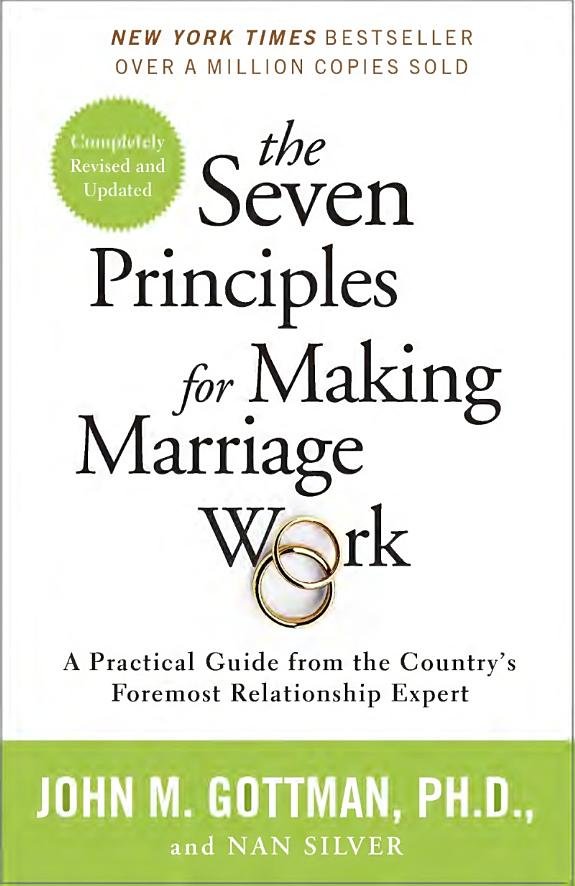
The Seven Principles for Making Marriage Work
2. The Seven Principles for Making Marriage Work by John M. Gottman and Nan Silver
John Gottman spent decades in his “Love Lab” at the University of Washington, observing couples interact and then following up with them years later to see who stayed together and who did not. What he found is that he could predict divorce with startling accuracy just by watching couples talk for a few minutes. That sounds either fascinating or terrifying depending on your current relationship status, and probably both if you are honest about it.
This book lays out the seven principles Gottman identified as central to lasting partnership. They include things like building genuine friendship, turning toward each other during small everyday moments, and managing conflict in ways that do not leave lasting damage. What makes the book stand out from other relationship advice is the research behind it. Gottman is not speculating. He is reporting patterns from thousands of couples observed over years. The concept of “Four Horsemen,” the communication behaviors most predictive of relationship breakdown, contempt, criticism, defensiveness, and stonewalling, is genuinely useful and concrete enough to actually apply.
The book is written for married couples, or at least couples in long-term committed relationships, and it does not pretend otherwise. The exercises at the end of each chapter are earnest and occasionally a little awkward to do with a partner, which is probably a sign that they are working on something real. Gottman writes in a warm, clinical tone that manages to feel both authoritative and human. He is not preachy. He is just reporting what he found.
The central insight of this book is that the quality of a relationship is built not in grand romantic gestures but in the thousands of tiny moments when one partner reaches out and the other either turns toward them or away. That reframe alone is worth the read.
This is perfect for couples who want a research-grounded approach to strengthening their relationship, and for therapists or counselors who work with couples. It is less useful for people who are single or in very early-stage relationships, and anyone allergic to worksheets may find the exercises a bit much.
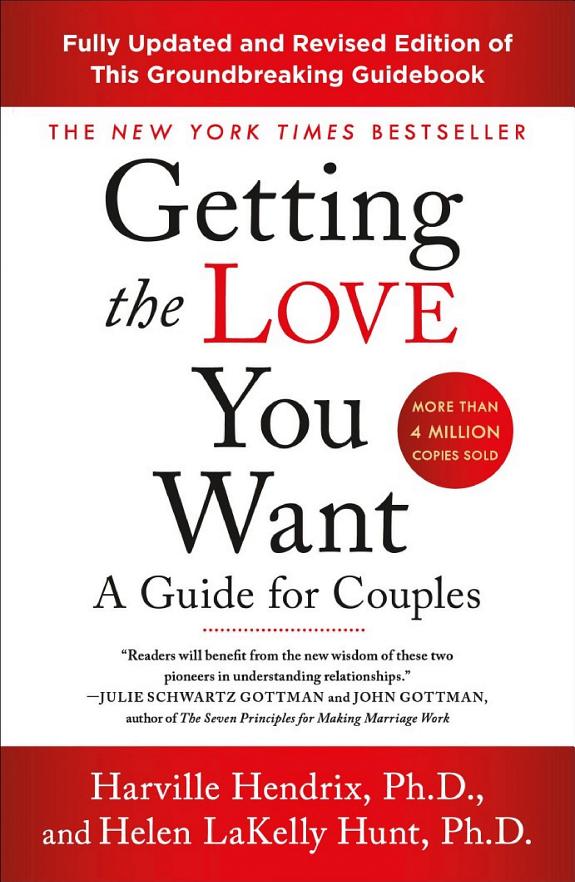
Getting the Love You Want: A Guide for Couples
3. Getting the Love You Want: A Guide for Couples by Harville Hendrix
Harville Hendrix has a theory about why we fall in love with the people we do, and it is not particularly flattering. His argument, drawn from his work as a therapist, is that we are unconsciously attracted to partners who remind us of the caregivers from our childhood, specifically in ways that recreate unresolved emotional wounds. We are not looking for someone who makes us feel good. We are looking for someone who gives us a chance to finally heal something old. This is both a hopeful idea and a slightly unsettling one.
The framework Hendrix builds around this idea is called Imago Relationship Therapy, and the book is essentially a detailed guide to practicing it. There are exercises throughout, including a structured dialogue process called the Imago Dialogue that is designed to help couples communicate without triggering each other’s defenses. The exercises are specific and take real effort. This is not a book you read passively. Hendrix expects you to do the work.
The writing is warm and the case studies are vivid enough to recognize yourself in them, which is alternately comforting and a little embarrassing. Hendrix writes with genuine compassion for how hard it is to be in a long-term relationship, and he never makes couples feel stupid for struggling. The book does lean into psychological theory in ways that some readers will find compelling and others will find a bit too neat, as if every human problem can be traced back to childhood in a tidy line. That is a fair critique. But even if you take the theory with a grain of salt, the practical tools are worth having.
The idea that romantic love is not accidental but a kind of unconscious search for healing is one of those concepts that, once you encounter it, you cannot quite stop applying to every relationship around you.
This is perfect for couples in therapy or considering it, and for anyone who has noticed a frustrating pattern in their relationships and wants a framework for understanding it. It is not the right fit for casual readers looking for light insight, or for anyone who finds psychological theory more irritating than illuminating.
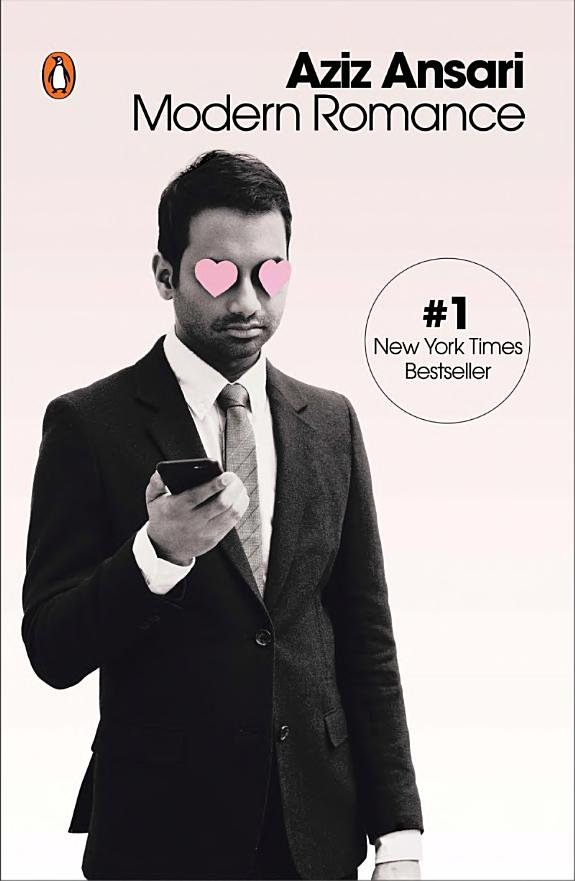
Modern Romance
4. Modern Romance by Aziz Ansari and Eric Klinenberg
This is the one book on this list that will make you laugh out loud, possibly while also feeling a quiet existential dread about the state of dating. Aziz Ansari, comedian and creator of Master of None, teamed up with sociologist Eric Klinenberg to do something genuinely interesting: actual research into how people find romantic partners in the age of smartphones and dating apps. They conducted focus groups, interviewed sociologists and anthropologists, analyzed data from dating platforms, and traveled to other countries to see how dating culture differs around the world. The result is funny, specific, and more rigorous than you might expect from a celebrity book.
The chapters on texting anxiety, the paradox of infinite choice in dating apps, and the way our expectations for marriage have shifted over generations are all genuinely illuminating. Ansari is a sharp observer of social behavior, and Klinenberg keeps the research grounded. The combination works better than it has any right to. There are moments where the book reads like a well-researched New Yorker piece and moments where it reads like a very good stand-up set, and somehow both registers feel appropriate to the subject.
The book is firmly focused on heterosexual dating in the United States, with some international comparisons, and it shows its age slightly in its treatment of dating apps, given how quickly that landscape changes. It was published in 2015, which in app years is roughly the Cretaceous period. Still, the broader observations about modern expectations, the search for a soulmate, and the anxiety of too many options hold up well.
The book makes a quiet, serious point beneath all the jokes: we are the first generation in history expected to find not just a partner but a soulmate, and that shift in expectation has made dating both more hopeful and considerably more exhausting.
This is perfect for anyone who has ever stared at their phone for ten minutes composing a two-sentence text to someone they just matched with, and for people who enjoy social science presented with humor. It is not for readers looking for deep psychological theory or practical relationship-building tools.
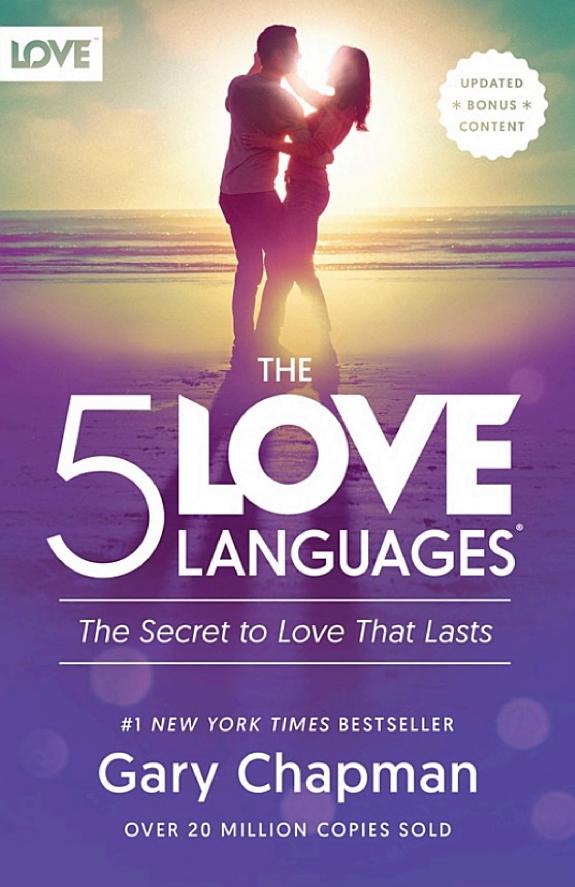
The 5 Love Languages: The Secret to Love that Lasts
5. The 5 Love Languages: The Secret to Love that Lasts by Gary Chapman
Few books have embedded themselves into everyday conversation the way this one has. You have almost certainly heard someone mention their love language at some point in the last decade, probably at a dinner party, probably with the mild intensity of someone who has recently had a small revelation. Gary Chapman, a marriage counselor, published this book in 1992, and it has sold tens of millions of copies since. The central idea is simple: people express and receive love in different primary ways, through words of affirmation, acts of service, receiving gifts, quality time, or physical touch. When partners speak different love languages, they can love each other genuinely and still leave each other feeling unloved.
The concept is genuinely useful. It gives couples a vocabulary for a frustration that is otherwise hard to articulate, the feeling of trying hard and still missing each other. Chapman writes from a Christian perspective, and that worldview shapes the book’s tone and some of its assumptions about marriage and commitment. That will resonate deeply with some readers and feel slightly out of step for others. He is not preachy about it, but it is present throughout.
The criticism most often leveled at the book is that the five categories are somewhat arbitrary, and that the underlying model is simpler than human emotional life actually is. That is fair. Chapman is a counselor, not a researcher, and the book is built on observation and case studies rather than controlled studies. But frameworks do not have to be scientifically airtight to be useful. Many people have found that just having the conversation with a partner about love languages opened up something that had been stuck for years.
The most honest thing about this book is its underlying premise: that loving someone is not enough if you are not expressing that love in a way they can actually receive. That gap between intent and impact is where a lot of relationships quietly fall apart.
This is perfect for couples who feel like they are putting in effort but still not quite connecting, and for anyone who wants a simple, accessible framework to start a conversation about emotional needs. It is less suited to readers who want peer-reviewed research or who are not comfortable with a mild Christian undertone.
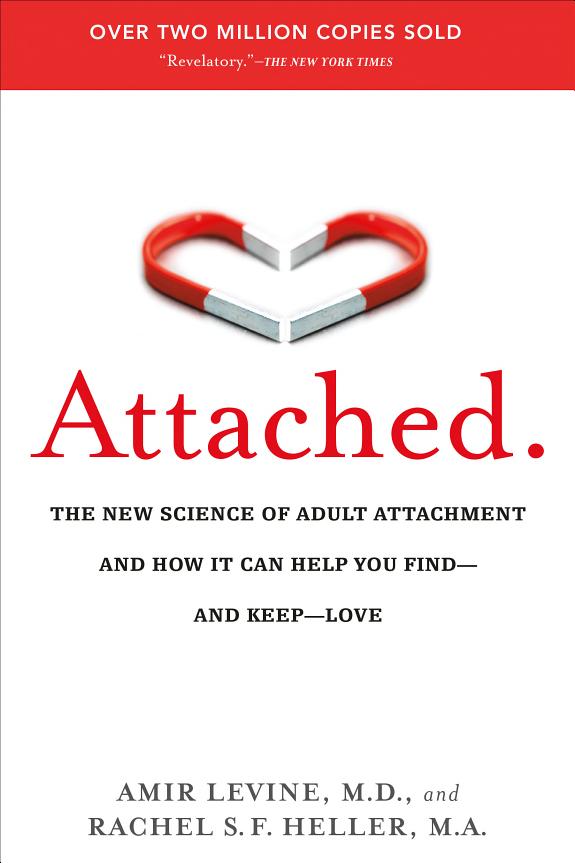
Attached: The New Science of Adult Attachment and How It Can Help You Find – and Keep – Love
6. Attached: The New Science of Adult Attachment and How It Can Help You Find and Keep Love by Amir Levine and Rachel Heller
Attachment theory has been around since the 1960s, when psychologist John Bowlby first described how infants form bonds with caregivers and how disruptions to those bonds affect development. What Amir Levine, a psychiatrist and neuroscientist, and Rachel Heller did in this book was take that framework and apply it rigorously to adult romantic relationships. The result is one of the more clarifying books about why we behave the way we do with romantic partners, particularly when things get difficult.
The book describes three primary attachment styles: secure, anxious, and avoidant. Secure people are generally comfortable with intimacy and interdependence. Anxious people crave closeness but worry constantly about their partner’s availability and commitment. Avoidant people value independence and tend to pull back when relationships get too close. Levine and Heller explain how these styles interact, why anxious and avoidant people are disproportionately drawn to each other, and how understanding your own style can help you make better choices in relationships.
The writing is clear and the case studies are well chosen. This is not a dense academic text. It reads more like a thoughtful, well-researched guide written by people who actually want you to understand the material. The quiz early in the book that helps you identify your attachment style has become something of a cultural touchstone, particularly online, though the authors are careful to note that attachment styles exist on a spectrum and are not fixed forever. One thing to keep in mind is that the book is optimistic about secure attachment in ways that can occasionally shade into oversimplification. Real relationships are messier than any typology can fully capture.
The book reframes what often looks like neediness or coldness in a partner as the predictable behavior of an attachment system doing exactly what it was built to do. That reframe does not excuse bad behavior, but it does make it far less personal and far easier to work with.
This is perfect for anyone who has ever felt confused or frustrated by their own behavior in relationships, or by a partner’s, and for people who respond well to psychological frameworks backed by actual science. It is not ideal for readers who find personality typing systems reductive, or who are looking for something more philosophical and less clinical.
What is interesting about reading these six books together is how much they agree on the fundamentals, even when they approach the subject from completely different directions. Fromm and Gottman, separated by decades and disciplines, both land on the same basic truth: love is something you do, not just something you feel. Hendrix and Levine are both pointing at the same invisible architecture of early experience that shapes how we attach to people. Chapman and Ansari, unlikely as it sounds, are both asking the same question: why is it so hard to actually reach each other?
None of these books will solve anything on their own. Reading about attachment styles does not automatically make you more secure. Knowing the four horsemen does not mean you will never criticize your partner when you are tired and frustrated. But understanding is still a meaningful first step. It changes what you notice, what you ask for, and what you are willing to work on. That is not nothing. That is actually quite a lot.
Pick the one that sounds most relevant to where you are right now. Read it slowly. Talk about it with someone you trust. And maybe, just maybe, resist the urge to immediately diagnose everyone you know with an attachment style at the next dinner party. Or do. No judgment here.