6 Books for Women Learning to Put Themselves First
There is a particular kind of exhaustion that comes from spending years making yourself smaller so everyone else can feel comfortable. You say yes when you mean no. You apologize for taking up space. You run on fumes and call it strength. And then one day, usually on a Tuesday when nothing dramatic has even happened, something quietly snaps and you think: I cannot keep doing this.
If that sounds familiar, you are not alone, and more importantly, you are not broken. You have just been running a system that was never designed with you in mind. The six books on this list will not fix everything overnight, and none of them promise to. What they will do is offer you language for things you have felt but never quite named, honest frameworks for change, and the occasional reminder that wanting more for yourself is not selfish. It is necessary.
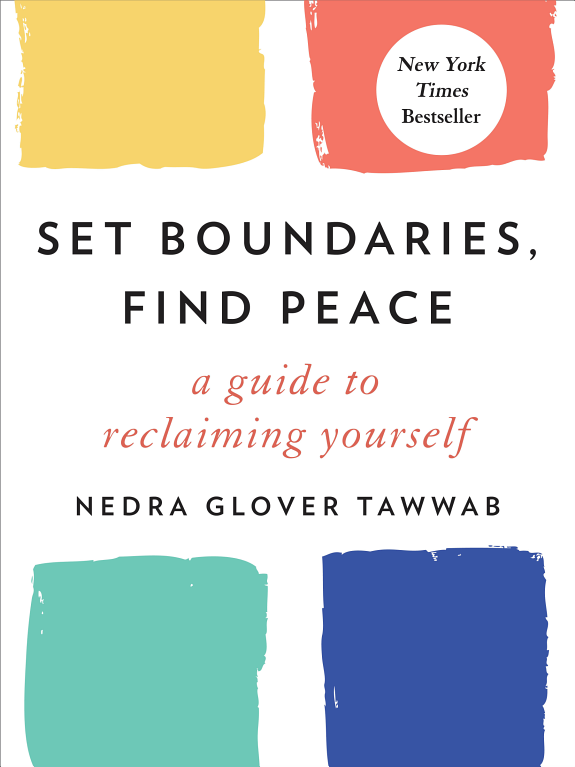
Set Boundaries, Find Peace
1. Set Boundaries, Find Peace by Nedra Glover Tawwab
Nedra Glover Tawwab is a licensed therapist who has spent years watching people destroy their own peace in the name of keeping everyone else happy. Her writing voice reflects that experience. It is direct, warm, and refreshingly free of the kind of vague self-help language that sounds profound but leaves you with no idea what to actually do on Monday morning. She explains boundaries not as walls you build to keep people out, but as honest expressions of what you need to function.
The central idea here is that most relationship problems, including the ones you have with yourself, come down to unclear or nonexistent boundaries. Tawwab walks through every major relationship category, family, romantic partners, friendships, coworkers, and explains how poor boundaries develop, what they look like in practice, and how to start changing them. She is especially good on the guilt that comes with setting limits for the first time, which she treats as normal and manageable rather than a sign that you are doing something wrong.
What makes this book stand out from similar titles is its specificity. There are real scripts, real scenarios, and real acknowledgment that the people in your life may not respond well when you change the rules. Tawwab does not pretend that setting boundaries is painless. She just argues, convincingly, that the pain of not setting them is worse.
Boundaries are not about punishing other people. They are about protecting your own ability to show up in the world without resentment eating you alive.
This is perfect for women who know they need to say no more often but freeze up every single time, especially those who grew up in households where their needs were treated as inconveniences.
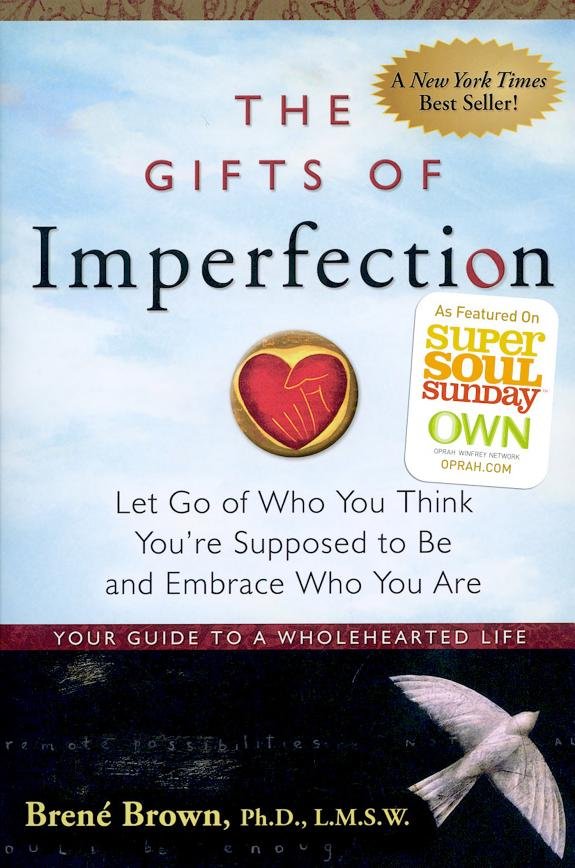
The Gifts of Imperfection
2. The Gifts of Imperfection by Brené Brown
Brené Brown is a researcher who studies shame, vulnerability, and belonging, and her writing has the unusual quality of feeling both rigorously grounded and genuinely personal. The Gifts of Imperfection is arguably her most accessible book, structured around what she calls guideposts for wholehearted living. The premise is simple and a little uncomfortable: the life you want is on the other side of letting go of who you think you are supposed to be.
Brown tackles the exhausting performance of worthiness, the idea that you have to earn your place at the table by being productive enough, thin enough, cheerful enough, self-sacrificing enough. She argues that this performance is not just tiring but fundamentally at odds with genuine connection. You cannot really be known by people if you are always showing them an edited version of yourself. That idea sounds obvious when you say it out loud, but most of us have been living the opposite way for decades.
The book is organized around specific things to cultivate, like rest, play, creativity, and gratitude, and specific things to release, like perfectionism, comparison, and the need for certainty. Each section is short enough to read in a single sitting, which makes it easy to return to. This is not a book you read once and shelve. It is one you come back to when you have started performing again without realizing it.
Perfectionism is not about high standards. It is about fear. And it is very good at disguising itself as ambition.
This is perfect for high-achieving women who look successful from the outside but privately feel like frauds waiting to be found out, and who are ready to stop tying their worth to their output.
Daring Greatly
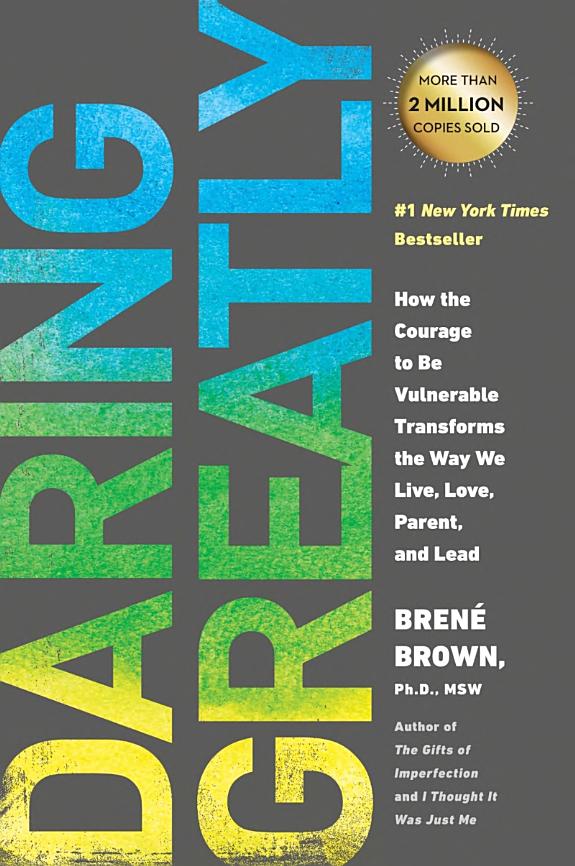
3. Daring Greatly by Brené Brown
Yes, two Brené Brown books on one list. She earned it. Where The Gifts of Imperfection is warm and guiding, Daring Greatly is a bit more ambitious in scope. It takes its title from a Theodore Roosevelt speech about showing up in the arena and getting your face dirty rather than sitting in the cheap seats offering criticism. Brown uses that image to build a case for vulnerability as courage, not weakness.
The central argument is that vulnerability, the willingness to be seen without guarantees, is the birthplace of everything most women actually want: love, belonging, creativity, trust, and joy. The reason most of us avoid it is shame. Brown spends a significant portion of the book unpacking how shame operates differently for women than for men, which is one of the most useful sections in any of her books. For women, shame is largely organized around the impossible expectation of doing everything perfectly while appearing effortless. Sound familiar?
Brown also goes into how vulnerability shows up in parenting, leadership, and relationships, which makes the book feel broader and more applicable than a straightforward self-help read. It is worth noting that if you are already deeply familiar with Brown’s TED talks and other books, some of this ground will feel well-trodden. But for readers coming to her work fresh, or who have only seen the talks, this is the book that earns the most of her ideas their full weight.
You cannot get to courage without walking through vulnerability. There is no shortcut, and the people who tell you there is one are usually selling something.
This is perfect for women who intellectually understand they should ask for what they want but find themselves paralyzed by the fear of rejection, judgment, or simply being too much.
Untamed
4. Untamed by Glennon Doyle
Glennon Doyle writes like she is talking directly to you from across a kitchen table, coffee in hand, completely uninterested in pretending she has it all figured out. Untamed is her memoir about dismantling the life she had built to please everyone else and rebuilding one that actually fit her. It is funny, raw, occasionally infuriating in the best way, and unlike most books in this genre, it does not resolve into a tidy lesson at the end of every chapter.
The book opens with a story about a cheetah at the zoo, and from there Doyle builds an argument about how women are conditioned from childhood to be tame, to shrink, to perform a version of themselves that is palatable and unthreatening. She calls this conditioning the “Knowing,” a voice inside that gets buried under years of approval-seeking. The book is largely about finding that voice again and trusting it even when every external signal tells you not to.
Doyle’s writing is not for everyone, and she would be the first to say so. She is unapologetically political, spiritual in a non-traditional way, and willing to make claims that some readers will find overstated. If you prefer measured, evidence-based writing, this may frustrate you. But if you are someone who has spent years doing what was expected and quietly wondering if there is something else, her voice will feel like permission you did not know you needed.
The braver thing is not to be fearless. It is to feel the fear completely and do it anyway, which is something entirely different from pretending the fear is not there.
This is perfect for women at a crossroads, especially those who have followed all the rules and still feel vaguely hollow, and who are ready to sit with some uncomfortable questions about what they actually want.
Burnout
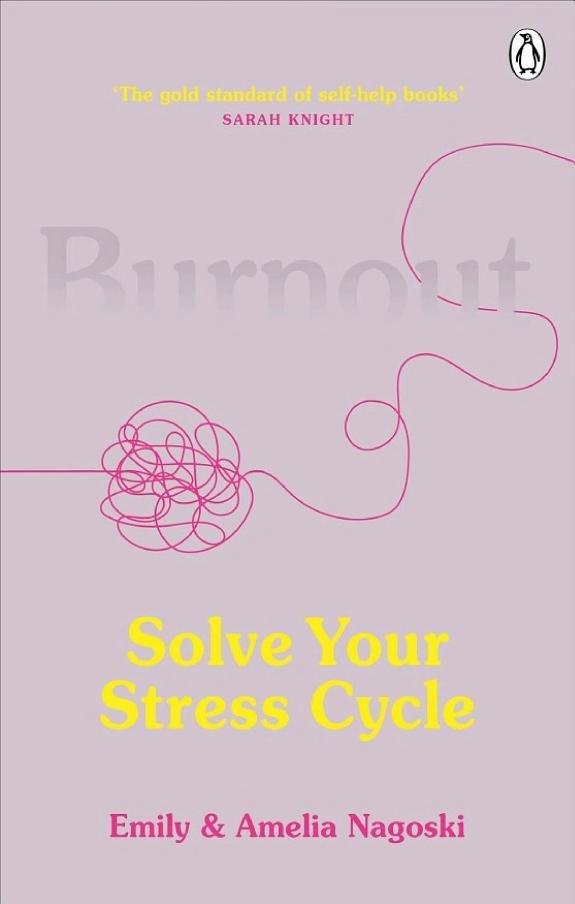
5. Burnout by Emily Nagoski and Amelia Nagoski
This is the only book on this list written by two sisters, and the collaboration shows in the best way. Emily Nagoski is a sex educator and researcher, and her sister Amelia is a conductor and musician, and together they bring both scientific rigor and genuine warmth to a subject that most self-help books handle with frustrating vagueness. Burnout is not about working less or practicing more self-care in the bubble-bath sense of the term. It is about the biology of stress and why women, specifically, are so prone to getting stuck in it.
The central framework is the stress response cycle. The Nagoskis explain that stress is not just a feeling but a biological process with a beginning, middle, and end, and that most modern women never actually complete the cycle. They deal with the stressor, the difficult meeting, the family crisis, the endless to-do list, but they never allow their nervous system to register that the threat has passed. The result is a body perpetually stuck in high alert, which eventually looks like burnout, numbness, or both.
They also spend considerable time on what they call the “Human Giver Syndrome,” the cultural expectation that women exist primarily to give their time, attention, and emotional labor to others. This section is one of the most clarifying things you will read on the subject of why putting yourself first feels so viscerally wrong even when you know it is right. The science here is accessible and the tone, despite covering some genuinely grim territory, manages to be funny in places. Which is no small feat.
Completing the stress cycle is not a luxury. It is maintenance. Your body is not a machine, and unlike a machine, it cannot simply be switched off and back on again when you need it to work.
This is perfect for women who have read all the wellness advice and tried all the strategies but still feel utterly depleted, and who want to understand the physiological reasons why rest alone is not enough.
Drop the Ball
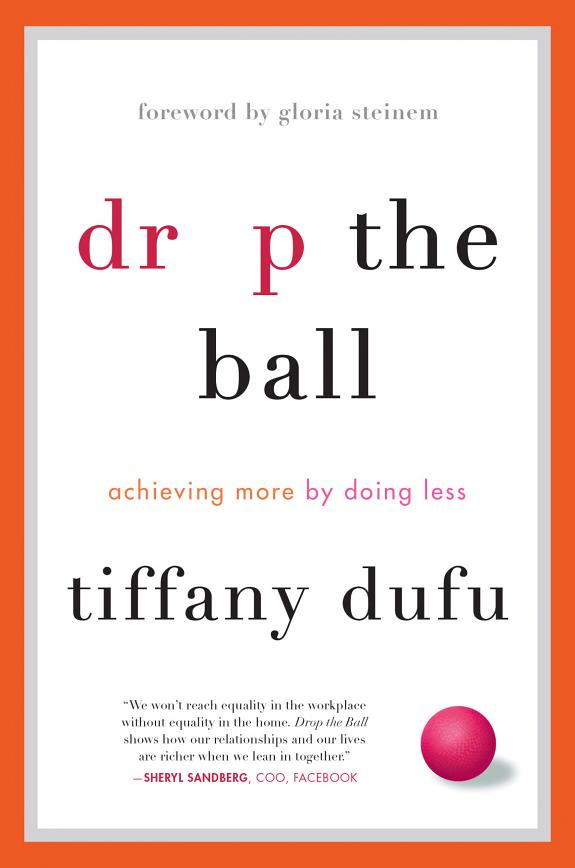
6. Drop the Ball by Tiffany Dufu
Tiffany Dufu spent years trying to be exceptional at everything simultaneously: career, marriage, motherhood, friendship, community involvement. She was good at most of it, but the cost was staggering. Drop the Ball is her account of what happened when she finally stopped trying to do everything and started asking what actually mattered. It is part memoir, part practical guide, and one of the most honest books about the intersection of ambition and domesticity that you will find.
The core argument is that women have been sold a version of “having it all” that requires them to do it all, and that this is both unsustainable and unnecessary. Dufu is not arguing for lowering your ambitions. She is arguing for ruthless prioritization and, crucially, for letting other people, including the men in your life, carry real weight instead of just nominal help. She is very good on the specific ways women undermine this by redoing tasks that were done imperfectly, or by not asking for help because it feels easier to just handle things themselves.
What distinguishes this book from similar titles is Dufu’s willingness to talk about race and the particular pressures on Black women, who carry the additional weight of the “Strong Black Woman” archetype that leaves almost no room for vulnerability or need. She does not treat this as a digression but as central to the conversation, which makes the book richer and more honest than it would otherwise be. If you are not a woman navigating those specific pressures, you will still find the broader arguments useful. But the specificity is worth acknowledging.
Asking for help is not a sign that you are failing. It is a sign that you have finally stopped pretending you were built to do this alone.
This is perfect for ambitious women, particularly those juggling careers and home life, who feel like they are constantly falling short in every area because they refuse to let anything slide.
None of these books will hand you a new life on a Wednesday afternoon. But each one offers something genuinely useful: a framework, a vocabulary, a story that makes you feel less alone in the particular exhaustion of being a woman who has spent too long putting herself last on the list. Some will resonate immediately. Others might sit on your shelf for a year before the timing is right. That is fine. The right book at the wrong moment is just a book. The right book at the right moment is something else entirely.
Start wherever you are. If you are bone-tired and need science, try Burnout. If you are mid-crisis and need permission, try Untamed. If you are quietly suffocating under everyone else’s needs and cannot name why, Set Boundaries, Find Peace might be the place to begin. There is no wrong door here. They all lead somewhere better than where most of us have been standing.