
5 Best Children’s Books of All Time
Some books just refuse to leave. You read them as a kid, forget about them for a decade or two, and then one day you’re sitting on the floor of a nursery holding a worn-out copy and wondering how a picture book made you feel things. That is the strange, quiet magic of the very best children’s literature. It doesn’t talk down to kids. It doesn’t rush. It trusts that small people can handle big feelings, strange worlds, and the occasional anarchic cat in a tall striped hat.
This list gathers five books that have genuinely stood the test of time, not because critics said so, but because children keep reaching for them. They have been read aloud in countless voices, in countless languages, in countless bedrooms with the lamp turned low. Each one earns its place not through nostalgia alone but through something rarer: honest, confident storytelling that holds up no matter how many times you return to it. These are the books worth passing on.
The Cat in the Hat
1. The Cat in the Hat by Dr. Seuss
Theodore Geisel, writing as Dr. Seuss, had a very specific challenge when he sat down to write this book in 1957. His editor, Bennett Cerf, bet him he couldn’t write a compelling story using only 236 words from a beginner reading list. Geisel won the bet, and the result became one of the most recognized books in the English language. The voice here is unmistakable: bouncy, rhythmic, slightly conspiratorial, as if Seuss is leaning in and whispering that rules are interesting precisely because some days they beg to be tested.
The story itself is deceptively simple. Two bored children, a rainy afternoon, and a very tall cat who arrives uninvited and turns the house into cheerful chaos. What makes it work is the tension between the fun-seeking Cat and the anxious fish who keeps insisting that none of this is allowed. Most children recognize both impulses immediately. They have been both the fish and the kid watching the cat with wide, delighted eyes. The ending, where everything is tidied before Mother returns, is satisfying in a way that feels almost conspiratorial between Seuss and the reader.
The illustrations are sparing and bold, all tilted angles and precarious towers of objects. Seuss understood that a drawing of something about to fall is far more interesting than a drawing of something sitting still. The limited color palette, mostly red, white, and black, gives the whole book an almost theatrical quality. It looks like a stage set for something wonderfully irresponsible.
This is not the book for children who need calm, predictable narratives before sleep. The Cat in the Hat is pure energy on the page. But for a rainy afternoon or a child who is just learning to read and needs a reason to care about words, it remains unmatched.
“Seuss didn’t write down to children. He wrote sideways, at exactly their level, and trusted them to keep up.”
This is perfect for early readers who need a book that makes reading feel like an event rather than a chore, and for parents who don’t mind a story that quietly celebrates a little harmless mayhem.
Goodnight Moon
2. Goodnight Moon by Margaret Wise Brown
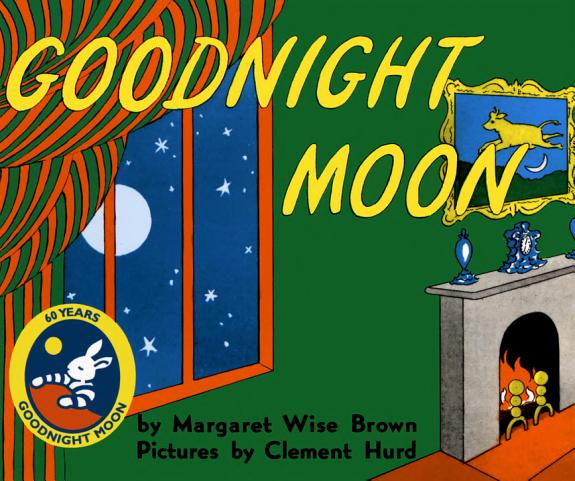
Margaret Wise Brown wrote Goodnight Moon in 1947, and it is still the book most parents reach for when a small child simply will not sleep. There is a reason for that. Brown understood something that many writers for children miss entirely: repetition is not boring to a young child. It is comforting. The gradual darkening of the great green room, the slow saying goodbye to each familiar object, mirrors exactly what a tired mind needs as it releases its grip on the day.
The text is spare to the point of being almost austere. A young bunny says goodnight to the moon, to the stars, to a bowl of mush, to a quiet old lady whispering hush. That’s essentially it. And yet the cumulative effect is genuinely soothing in a way that feels almost physiological. Clement Hurd’s illustrations shift from bright to dim as the pages turn, the room growing darker with each spread. Children notice this. They always notice this. It’s one of those small design decisions that elevates a good book into something that works on multiple levels at once.
Brown’s voice is gentle but not saccharine. She doesn’t explain or moralize. She simply names things, bids them goodnight, and trusts that the act of naming is itself enough. For very young children, who are still learning that the world continues to exist when they close their eyes, there is something quietly reassuring about that ritual.
If you are looking for plot, look elsewhere. Goodnight Moon has no conflict, no arc, no lesson. That is entirely the point. It is not a story so much as a ceremony, and it performs that ceremony with uncommon grace.
“Brown wrote the book that figured out what bedtime actually needs: not excitement, not resolution, just the gentle permission to let go.”
This is perfect for toddlers and infants, and for any caregiver who has spent forty-five minutes trying to convince a two-year-old that sleep is a reasonable idea.
Where the Wild Things Are
3. Where the Wild Things Are by Maurice Sendak
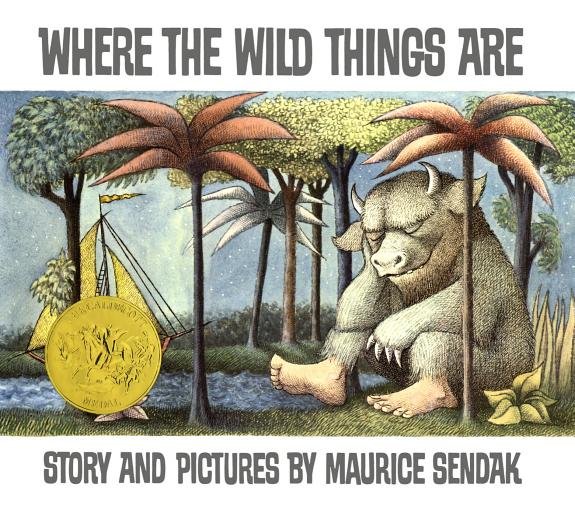
Maurice Sendak’s editors were not sure about this book when he first submitted it. The wild things were considered too frightening. The story, in which a boy is sent to his room and escapes into a fantasy of monsters and kingship, was thought to be too dark for young readers. Sendak disagreed, and he was spectacularly right. Published in 1963, Where the Wild Things Are went on to win the Caldecott Medal and to demonstrate something important: children are not frightened by the wild things. They recognize them.
Max, the boy at the center of the story, is in trouble from the first page. He’s wearing a wolf suit and chasing the dog with a fork. He talks back to his mother and gets sent to his room without supper. Then the room becomes a forest, a boat appears, and Max sails to where the wild things are. He tames them with a magic trick, becomes their king, and eventually decides he wants to go home because he is lonely and hungry and someone loves him best of all. The wild rumpus in the middle of the book spans three magnificent wordless spreads that children return to again and again.
Sendak’s illustrations grow as Max’s imagination expands. The pictures start small, surrounded by white space, and gradually fill the entire page as the fantasy takes over. When Max decides to return home, the pictures shrink again. It is visual storytelling at its most deliberate and its most effective. The whole book is only 338 words, but it contains more emotional truth about childhood anger and comfort than many longer works manage.
This is not the right book for very sensitive children who are genuinely scared of monsters, and the story’s ambiguity about what is real and what is imagined can frustrate adults who like things resolved neatly. But for children who have ever felt furious and misunderstood, which is most of them, this book is a rare kind of recognition.
“Sendak didn’t protect children from their own feelings. He drew those feelings large and gave them claws, and then showed that you could come home from them.”
This is perfect for children between three and seven who have big feelings they don’t have words for yet, and for parents who want to open a conversation about anger without it feeling like a lecture.
The Tale of Peter Rabbit
4. The Tale of Peter Rabbit by Beatrix Potter
Beatrix Potter originally wrote and illustrated The Tale of Peter Rabbit in 1902 as a private letter to a sick child, which tells you something about her intentions from the start. She wasn’t writing for a market or a curriculum. She was telling a story she found genuinely worth telling, in the precise, unpatronizing way she thought it deserved. That directness is still audible on every page. Potter’s prose has a calm, almost journalistic quality, as if she is simply reporting what happened to Peter that afternoon in Mr. McGregor’s garden, and you are welcome to draw your own conclusions.
Peter, of course, ignores his mother’s instructions and goes straight to the forbidden garden. He eats too much, gets chased, loses his jacket and shoes, and barely escapes with his life. His better-behaved siblings eat blackberries and go to bed feeling fine. Peter gets chamomile tea and a stomachache. It is not exactly a subtle moral, but Potter delivers it without the slightest hint of finger-wagging. She seems almost fond of Peter for his recklessness, and children pick up on that immediately.
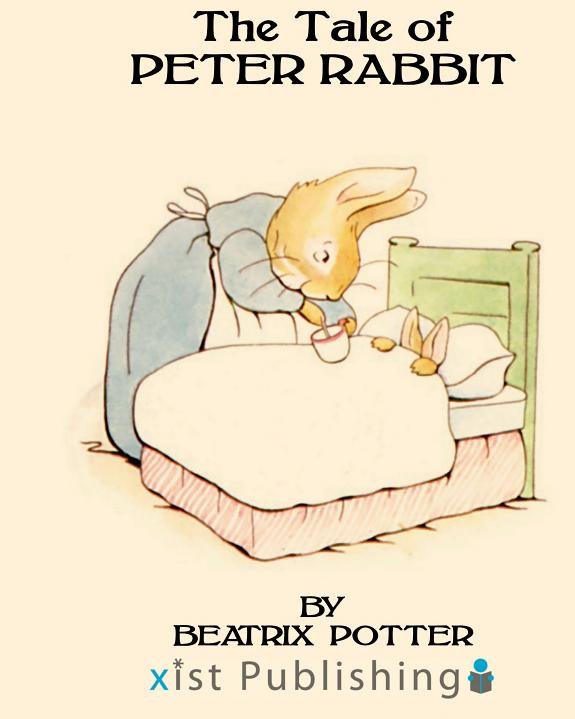
The watercolor illustrations are small and exquisite, painted with the eye of a trained naturalist. Potter knew her flora and fauna. The vegetables in McGregor’s garden look like real vegetables. The rabbit looks like a real rabbit who happens to be wearing a blue jacket. That specificity gives the whole world of the book a solidity that more cartoonish illustrations often lack. It feels like a place you could actually visit, which is probably why generations of children have wanted to.
The language is slightly formal by contemporary standards, with words like “exertion” and “implored” appearing without apology. Some parents find this charming. Others find themselves doing a lot of improvised paraphrasing. If you are firmly in the second camp, this might test your patience, but for children who are ready for slightly richer vocabulary, it is genuinely rewarding.
“Potter trusted her readers completely. She never simplified, never explained, and never once talked down to the small people she was writing for.”
This is perfect for children who are ready to graduate from very simple picture books and for parents who appreciate illustrations that reward close looking rather than just glancing.
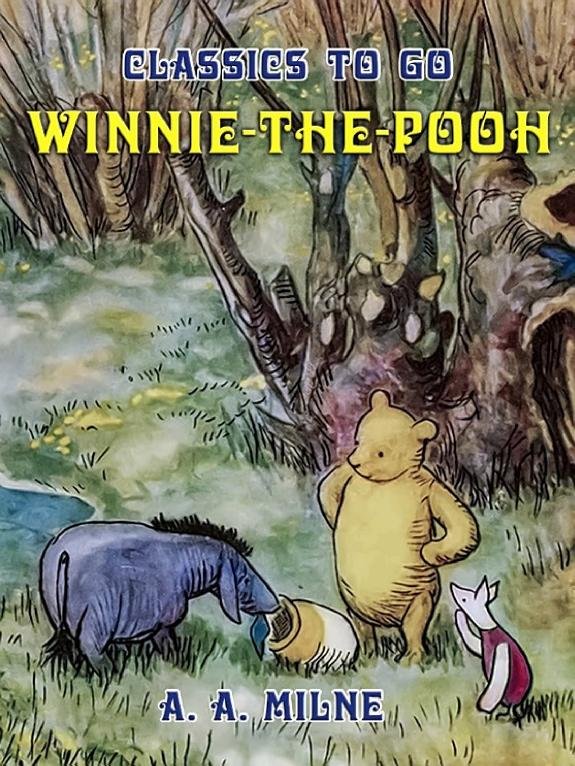
Winnie-the-Pooh
5. Winnie-the-Pooh by A.A. Milne
A.A. Milne wrote Winnie-the-Pooh in 1926 for his son Christopher Robin, basing the characters on the stuffed animals that lived in the nursery. The result is one of those rare books that genuinely works on two levels without trying too hard at either. Children enjoy the stories for their warmth and gentle humor. Adults tend to read them and feel a complicated mixture of nostalgia and something that might, if they are honest, be a little close to grief. The Hundred Acre Wood is one of literature’s great invented places, and part of its power is that you know, even as you read, that it exists only in the particular light of childhood.
Milne’s voice is one of the most distinctive in children’s literature. He writes with a kind of affectionate irony that never tips into condescension, narrating the small adventures of Pooh and his friends with a straight face and a very dry wit. Pooh himself is a bear of very little brain, as he cheerfully admits, but he is also loyal, contented, and possessed of a certain accidental wisdom that the more anxious characters around him entirely lack. Eeyore’s gloom, Piglet’s timidity, Owl’s pomposity, Tigger’s chaos: each character is a recognizable type, but Milne gives them enough specificity that they feel like individuals rather than archetypes.
Ernest Shepard’s line illustrations are inseparable from the text. They have a loose, unhurried quality that suits the book’s pace perfectly. Nothing in the Hundred Acre Wood is urgent. That is rather the point. These are stories about the pleasures of small expeditions, of honey and rain and friends who show up even when they are not particularly needed.
Readers who want plot-driven stories with stakes and resolutions will find Winnie-the-Pooh frustrating. The chapters meander pleasantly and resolve without much drama. But for children, and for adults, who simply want to spend time in a world that is fundamentally kind, there are few better places to be.
“Milne wrote about friendship and contentment in a way that never sentimentalizes either. The Hundred Acre Wood is warm without being saccharine, which is a harder trick than it looks.”
This is perfect for children who are ready for chapter-length stories read aloud over several evenings, and for adults who want a book they can genuinely enjoy reading rather than merely endure.
What these five books share is not a formula. They don’t all rhyme, they don’t all have happy endings in the conventional sense, and they were written across several decades by people with very different sensibilities. What they share is honesty. Each one takes its young reader seriously. None of them preach or explain or soften the edges of the world into something unrecognizable. They trust children to feel things fully, and children respond to that trust every single time.
If you are building a shelf for a young reader, or rebuilding one for yourself, these are the books worth starting with. Not because they are famous, though they are, but because they have earned their place through something more durable than reputation. They are simply, stubbornly good. The kind of good that lasts a lifetime and then gets handed to the next one.