
5 Best Bedtime Audiobooks for 5-Year-Olds
There is something almost magical about a calm voice reading a good story in the dark. For five-year-olds, the right audiobook at bedtime is not just entertainment. It is a signal to the brain that the day is truly winding down, that the world can wait, and that sleep is actually a reasonable idea. If you have ever spent twenty minutes convincing a wide-awake child that yes, it really is bedtime, you already know how useful a well-chosen audiobook can be.
The five picks below are not random. They are classics and clever finds that hold up beautifully in audio format, with language that is gentle, rhythmic, and genuinely pleasant to listen to. Some have narrators who feel like a warm hug. Some have a sneaky way of making little eyes heavy without the child even noticing. All of them are worth keeping in your bedtime rotation.
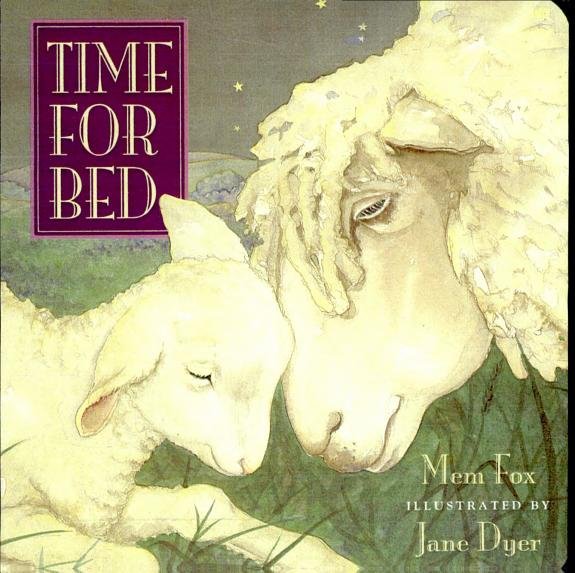
Time for Bed
1. Time for Bed by Mem Fox
Mem Fox is one of those authors who writes as if she has personally tucked in every child on earth and knows exactly what they need to hear. “Time for Bed” follows a series of animal mothers settling their babies down for sleep, and the rhythm of the text is so steady and soft that it practically does the parenting for you. Fox uses rhyming couplets throughout, and in audio form that repetition becomes genuinely hypnotic. The narration, paired with the lilting cadence of the original text, creates something close to a lullaby in prose form.
What works especially well here is the universality of the images. Every little creature, from the fish to the sheep to the mouse, is being told it is time to sleep, just like your child. There is something quietly reassuring about that. It normalizes bedtime without making a fuss about it, which is honestly a better strategy than most negotiation tactics a tired parent can muster at eight o’clock on a Tuesday.
The audio version is short, which is either a selling point or a drawback depending on how long your child’s bedtime routine runs. For most five-year-olds it is just right. It does not overstimulate, it does not introduce plot complications that demand resolution, and it ends on a note so peaceful you might find yourself dozing off before your child does.
This is not the book for a child who wants adventure or humor before bed. If your five-year-old needs excitement to settle, they may find this one a little slow. But for children who respond to rhythm and gentle repetition, it is genuinely lovely.
“Time for Bed” works because it does not try to entertain. It simply soothes, and sometimes that is exactly the right ambition for a bedtime story.
This is perfect for children who love animals, parents who want something calm and brief, and anyone who appreciates a bedtime story that actually sounds like a lullaby.
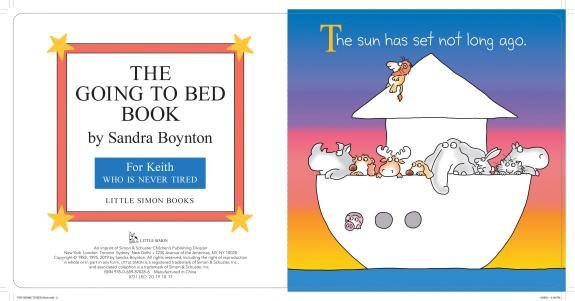
The Going to Bed Book
2. The Going to Bed Book by Sandra Boynton
Sandra Boynton has built an entire career on the delightful absurdity of animals doing human things, and “The Going to Bed Book” is one of her best. A large boat full of various creatures goes through the whole bedtime routine, brushing teeth, taking baths, exercising on deck, and eventually settling in to sleep as the moon rises. It is funny in a quiet, understated way that does not rile children up so much as give them something to smile at while their bodies start to slow down.
In audio format, Boynton’s text benefits enormously from a good narrator. The sentences are short and bouncy, with just enough silliness to keep a five-year-old engaged without sending them into a second wind. The rhythm is consistent and comfortable, and by the time the animals are rocking gently on the waves, most children are well on their way to following suit.
What sets this one apart is the humor. It does not pretend bedtime is purely serene and effortless. There is something almost conspiratorial about it, as if Boynton is winking at the parents while also genuinely charming the children. That balance is harder to pull off than it looks, and she manages it with characteristic ease.
If your child is the type who finds quiet stories boring rather than calming, this one might hold their attention a little better than the more purely gentle options on this list. It is still a wind-down book, but it has a bit more personality. It is not ideal for very sensitive children who might find even mild silliness stimulating at bedtime, but for most five-year-olds it hits a lovely middle note.
Boynton understands that bedtime does not have to be solemn to be soothing. A little gentle humor and a boat full of animals can do the job just as well.
This is perfect for children who need a small dose of fun before they can truly relax, and for parents who appreciate a bedtime book that does not take itself too seriously.
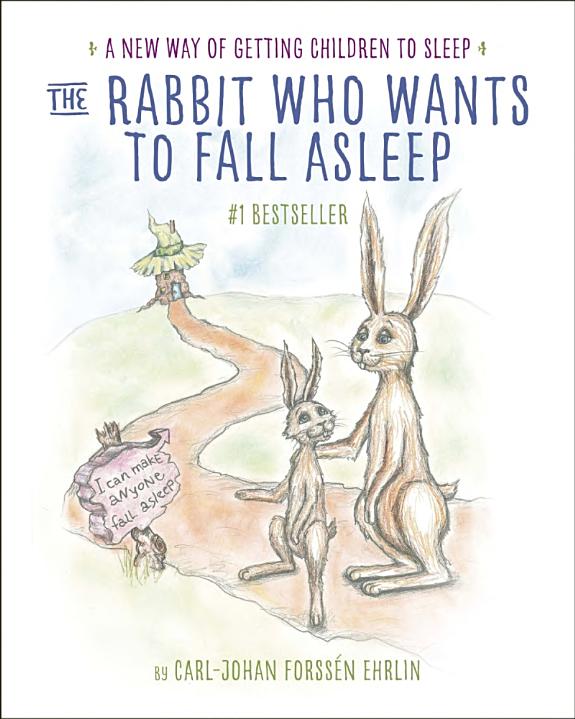
The Rabbit Who Wants to Fall Asleep
3. The Rabbit Who Wants to Fall Asleep by Carl-Johan Forssén Ehrlin
This one is a little different from the others on this list, and that is precisely why it earns its place. Swedish psychologist Carl-Johan Forssén Ehrlin wrote this book using relaxation and sleep psychology techniques, embedding them into a simple story about a rabbit who is trying, very much like your child, to fall asleep. The text includes direct addresses to the listener, deliberate pacing cues, and language designed to slow breathing and encourage drowsiness. It sounds clinical when described that way, but in practice it reads like a gentle, slightly dreamlike story.
In audio format, this book is genuinely something else. A calm narrator reading it aloud, following the pacing built into the text, creates an almost meditative atmosphere. Parents who have tried it often report that their children were asleep before the story ended. Some parents report the same thing about themselves, which is either a testament to the book’s effectiveness or a sign that bedtime routines are exhausting. Probably both.
It is worth being honest about what this book is. It is not a literary classic. The writing is functional rather than beautiful, and the story itself is fairly thin. What it does well is serve its very specific purpose. If you are looking for rich language and memorable imagery, look elsewhere on this list. If you are looking for something that reliably helps a five-year-old disengage from the day and drift toward sleep, this is a remarkably effective tool.
Children who are highly active or resistant to sleep may respond particularly well to this one, since it works with their nervous system rather than simply hoping they will calm down on their own. It is not for children who find direct relaxation cues annoying rather than soothing, and some older or more strong-willed five-year-olds may resist being told to feel sleepy. But for many families, this becomes a reliable part of the nightly routine.
Forssén Ehrlin set out to write a book that helps children fall asleep, and he did exactly that. The simplicity of the goal is matched by the quiet effectiveness of the result.
This is perfect for children who struggle to switch off at night, parents who have tried everything else, and anyone who wants a bedtime story that doubles as a gentle sleep technique.
Goodnight Moon
4. Goodnight Moon by Margaret Wise Brown
“Goodnight Moon” has been sending children to sleep since 1947, which is either a testament to its enduring genius or proof that some things are simply too embedded in culture to question. Margaret Wise Brown wrote a book that says goodnight to everything in a room, one object at a time, and somehow turned that into one of the most beloved children’s books ever written. The rhythm is slow and ceremonial, and there is something deeply satisfying about the way the room gradually dims across the pages.
As an audiobook, “Goodnight Moon” is wonderfully suited to the format. The text is minimal and repetitive, and a gentle narrator can stretch it into something genuinely meditative. There is no plot to follow, no problem to resolve, just a quiet acknowledgment that the day is ending and everything in the world is settling in for the night. For a five-year-old, that is a surprisingly comforting concept.
Some children at age five have already moved past “Goodnight Moon” and may find it babyish. That is a fair assessment. The book is technically aimed at younger children, but many five-year-olds still love it, especially in audio form where the familiar words feel like a ritual rather than a lesson. If your child has been hearing it since infancy, the audiobook version can feel like a warm, familiar friend showing up at exactly the right time.
It is not for children who need narrative engagement before they can relax. There is no story here in any traditional sense, and a child who wants to know what happens next will be disappointed. But for children who find comfort in repetition and familiarity, this remains one of the most reliable bedtime companions ever put to print or recording.
“Goodnight Moon” works not because it is complicated, but because it is not. It asks nothing of the listener except to be still, and that is sometimes the most generous thing a book can do.
This is perfect for children who find comfort in familiar rituals, families who have loved this book since the baby years, and any listener who responds to slow, ceremonial language as a sleep cue.
Guess How Much I Love You
5. Guess How Much I Love You by Sam McBratney
Sam McBratney’s gentle story about a little hare and a big hare trying to outdo each other with declarations of love has a warmth that is hard to replicate. The premise is simple. Little Nutbrown Hare keeps finding new ways to describe how much he loves his father, and Big Nutbrown Hare gently, lovingly, always manages to top him. It is sweet without being cloying, and the ending, where the big hare whispers his final declaration to a child already asleep, is one of the most quietly lovely endings in children’s literature.
In audio form, the conversational back and forth between the two hares translates beautifully. A good narrator can give each character a distinct voice without overdoing it, and the natural pauses built into the dialogue give the story a breathing, unhurried quality. By the time the little hare drifts off to sleep within the story, many listening children will be following along without quite realizing it. It is a lovely bit of narrative sleight of hand.
What makes this one particularly good for five-year-olds is the emotional content. Children this age are beginning to grapple with big feelings, including love and the desire to be understood, and this story meets them there without being heavy about it. It is funny in a small, affectionate way, and the relationship between the two hares feels genuinely tender rather than saccharine.
It may not work as well for children who are not in a cuddly, affectionate mood at bedtime, and some more independent five-year-olds might find the emotional warmth a bit much. But for children who like to feel close and connected before they sleep, this is a near-perfect choice. The audio version, heard in the dark with a trusted adult nearby, can turn bedtime into something both child and parent actually look forward to.
“Guess How Much I Love You” understands that what children need at bedtime is not just calm, but connection. It offers both, quietly and without fuss.
This is perfect for children who need to feel emotionally close before they can settle, parents who want a bedtime story that doubles as a small act of love, and anyone who has ever tried to measure something that cannot really be measured.
Bedtime audiobooks are not a shortcut or a substitute for the real thing. They are their own kind of ritual, one that can settle a restless child, give a tired parent a small moment of breathing room, and turn the end of the day into something genuinely peaceful rather than just another thing to get through. The five books on this list each do that in their own way, some through rhythm, some through humor, some through a quiet emotional warmth that sneaks up on you.
Not every book will work for every child, and that is fine. Try a couple, pay attention to which ones make your five-year-old’s eyes go heavy and which ones spark a second wind, and build your own rotation from there. The best bedtime audiobook is simply the one that works for your particular child on any given night. And if you find yourself drifting off before the story ends, well, that is probably a sign you picked a good one.